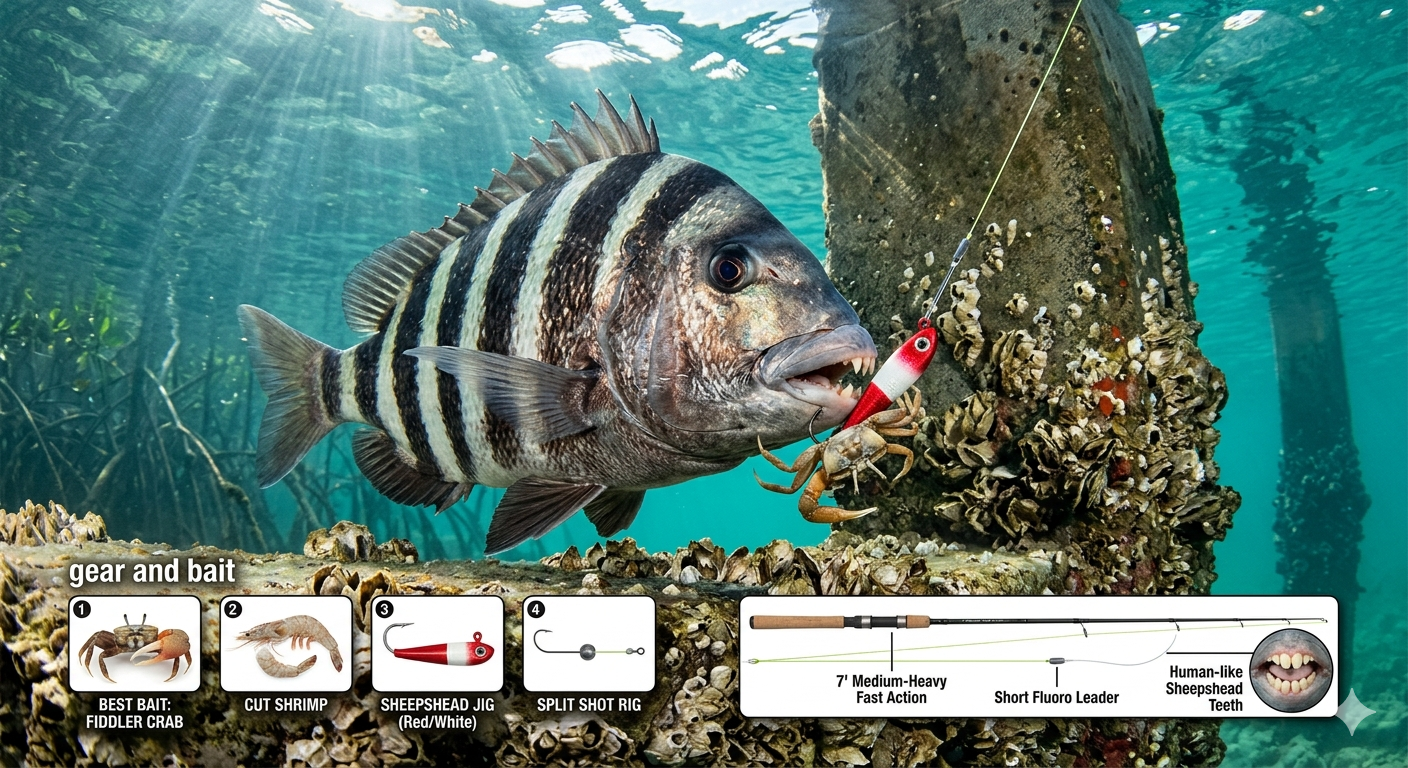

Catching sheepshead (Archosargus probatocephalus), often called the “Convict Fish” due to their black-and-white stripes and notorious bait-stealing abilities, is a rite of passage for Southwest Florida (SWFL) anglers. As the water cools, these toothy bandits move inshore, stacking up against structure from Sarasota down to the Everglades.

The secret to catching them isn’t just about where you fish, but how you “feel” the bite. Here is your definitive guide to mastering sheepshead fishing in SWFL.
Specific Areas of Focus
Sheepshead are structure-oriented fish. They use their human-like teeth to crush barnacles, crabs, and oysters found on hard surfaces. In SWFL, focus on these hotspots:
1. Bridges and Jetties
Bridges are the most reliable producers. The concrete pilings are massive barnacle buffet lines.
- The Sanibel Causeway: A legendary spot. Fish the pilings of the bridges or the rock-lined edges.
- Matlacha Pass Bridge: Often called the “fishingest bridge in the world,” it’s a sheepshead magnet in the winter.
- Venice Jetties: The rocks here provide a perfect habitat for crabs and shrimp, attracting large “keeper” sheepshead.
2. Piers and Docks
- Naples Pier: A classic choice. Focus on the pilings at the very end or near the “T” section where the water is deeper.
- Fort Myers Beach Pier: Another consistent producer, especially after a cold front.
- Residential Docks: Any older dock with heavy barnacle growth in the back bays of Pine Island Sound or Estero Bay will hold fish.
3. Mangroves and Oyster Bars
During high tide, sheepshead will move into the mangroves to “tail” for crabs. Delnor-Wiggins Pass State Park and the backcountry of Charlotte Harbor are prime locations for this stealthy approach.
Recommended Equipment
You need tackle that is sensitive enough to feel a “thief” but strong enough to pull a 5-pound fish out of a jagged piling.
| Component | Recommendation |
| Rod | 7′ Medium to Medium-Heavy power with a Fast Action tip. Avoid soft-tipped rods; you need a stiff backbone for hook sets. |
| Reel | 3000 to 4000 series spinning reel with a smooth drag. |
| Main Line | 15–20 lb Braided Line. Braid has zero stretch, allowing you to feel the subtle “tap” of a sheepshead. |
| Leader | 15–20 lb Fluorocarbon. It’s invisible underwater and abrasion-resistant against barnacles. Keep it short (12–18 inches). |
| Hooks | Small but stout. Use a #1 or #2 J-Hook or a 1/0 Circle Hook. Their mouths are small and hard; a big hook will just get spit out. |
Baits and Rigging
Sheepshead are rarely caught on artificial lures. Natural bait is essential.
Top Baits
- Fiddler Crabs: The gold standard. Hook them through the back near the rear leg so they stay alive and kick.
- Live Shrimp: If the shrimp are large, cut them into pieces. A sheepshead will often pick a whole shrimp apart without ever hitting the hook. Use the tail half for a better hook-up ratio.
- Sand Fleas: Excellent if you can find them in the surf or buy them frozen.
- Barnacles: Scrape them off a piling to create a “chum slick” and then use a small, tender one on your hook.
The Best Rigs
- The Sheepshead Jig: A specialized lead-head jig (like a “Bottom Sweeper”) that allows the bait to sit vertically on the bottom. This is the most popular way to feel the bite.
- Knocker Rig: An egg sinker that slides all the way down to the hook. This keeps the bait pinned directly to the piling where the fish are feeding.
- Split Shot Rig: For shallow water or light currents, a simple hook and one or two large split shots 6 inches above the hook is often all you need.
Pro Tips for Success
- The “Slow Lift” Technique: Don’t wait for a huge tug. Gently lift your rod tip every few seconds. If you feel any resistance or a slight “heavy” feeling, set the hook immediately.
- Scrape the Pilings: Use a garden hoe or a shovel to scrape barnacles off the bridge pilings you are fishing. This acts as a natural chum and will call sheepshead in from surrounding areas.
- Fish the “Eddy”: Sheepshead prefer to sit on the down-current side of a piling where they don’t have to fight the tide.
- Watch the Tide: The best bite usually occurs on a moving tide (incoming or outgoing). When the water goes slack, the bite often dies.
Note: As of 2026, Florida regulations for sheepshead are a 12-inch minimum (total length) with a daily bag limit of 8 fish per person. Always check the latest FWC rules before heading out.

