
Fishing in the Gulf of Mexico offers children an unforgettable experience—the thrill of a saltwater fight, the beauty of the coast, and valuable lessons in conservation. However, the unique environment of the Gulf, from its strong currents to its harsh sunlight and boating traffic, demands strict adherence to safety protocols.

Ensuring a safe and enjoyable trip requires preparation, education, and compliance with federal and state regulations. Here is a comprehensive guide to keeping children safe while fishing the Gulf, citing guidelines from key regulatory bodies.
Part I: On the Water Safety (Vessel & Equipment)
The single most critical area of focus is water safety, primarily revolving around personal flotation devices (PFDs).
Life Jackets (PFDs): The Non-Negotiable Rule
Regulatory Source: U.S. Coast Guard (USCG) and Florida Fish and Wildlife Conservation Commission (FWC)
Federal and state laws establish strict PFD requirements for children on vessels:
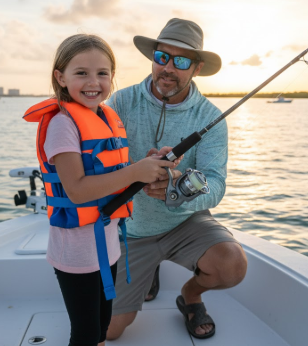
- Federal Requirement: All children under 13 years of age must wear a U.S. Coast Guard-approved wearable PFD (Type I, II, III, or V) while on a vessel that is underway. The only exceptions are if the child is below deck or within an enclosed cabin.
- FWC State Law (Florida): Children under 6 years of age must wear a PFD while on a vessel under 26 feet in length while underway. Note: Always check the specific laws of the Gulf state you are in, as requirements may vary.
- Best Practice: Encourage all non-swimmers, regardless of age, and all children while on the open water or on the bow, to always wear a properly fitted USCG-approved PFD. It is vital that the PFD is correctly sized for the child’s weight to prevent it from riding up over their chin.
Vessel Readiness and Emergency Protocols
Supervising adults are responsible for the vessel’s complete safety profile.
- Communication: Always file a “Float Plan” with a trusted person ashore. This includes your destination, expected return time, boat description, and number of passengers.
- First Aid Kit: A well-stocked, easily accessible first aid kit is essential, especially for treating common hook injuries, cuts from shells, and seasickness.
- Weather Check: The Gulf weather can change rapidly. Check the forecast before departure and throughout the trip. Never venture out if thunderstorms, high winds, or rough seas are predicted.
Part II: Fishing Gear and Handling Safety
Hooks, knives, and the handling of live fish present unique safety challenges for young anglers.
Hook Safety and Gear Management
Regulatory Source: FWC Fishing Clinics & Best Angling Practices
The FWC’s Youth Education programs emphasize proper handling of gear:
- Casting Zones: Teach children to always look behind and around them before casting. Assign specific “shooting zones” to prevent hooks from snagging another person. For beginners, practice casting on land with weighted objects (like practice plugs or hula hoops) before getting on the boat.
- Barbless or Crimped Hooks: For younger children, consider using barbless hooks or crimping the barb down with pliers. This does not significantly reduce the catch rate but makes hook removal (from a fish or a child) much faster and less traumatic.
- Dehooking Tools: Keep pliers and a dehooking tool readily available. Teach older children how to use them to remove hooks quickly without excessive handling of the fish or proximity to the hook point.
- Proper Gear: Use a simple, kid-sized spin-cast or small spinning reel set-up that is easy for them to manage.
Safe Fish Handling
Children must be taught to respect fish, especially those with sharp fins, teeth, or regulatory requirements.
- Toxic Species: Educate children on identifying and avoiding contact with venomous species common to the Gulf, such as Catfish (sharp spines) and Stingrays.
- Support the Fish: Teach the horizontal rule: never hold a fish vertically by the jaw or gills. Instruct them to support the fish’s weight evenly under the belly when handling it for a picture.
- Releasing Fish: If a fish is deeply gut-hooked, the best conservation practice—supported by FWC—is to cut the leader as close to the hook as possible and leave the hook in, rather than attempting prolonged removal, which often does more harm.
Part III: Environmental and Personal Safety
Protection from the sun and heat is paramount for a comfortable and safe trip.
Sun and Heat Protection
The intense Gulf sun requires proactive measures to prevent burns and dehydration.
- Sunscreen: Apply broad-spectrum, water-resistant sunscreen (SPF 30 or higher) at least 15 minutes before sun exposure and reapply every two hours, or immediately after swimming or excessive sweating.
- Clothing: Use UV-protective clothing, including long sleeves and pants, even on hot days. A wide-brimmed hat and polarized sunglasses are essential for protecting the eyes and reducing glare off the water.
- Hydration: Bring plenty of fresh water and encourage frequent breaks for drinking, even if the children don’t feel thirsty. Dehydration is a major risk on the water.
Behavior and Boating Awareness
- Stay Seated: Teach children to keep weight low and distributed evenly on the boat. Remain seated as much as possible, especially when the boat is underway or in rough conditions.
- Respect the Wildlife: While exciting, teach children to maintain a safe and respectful distance from marine mammals (Dolphins, Manatees) and sea turtles.
Regulatory Sources for Gulf Anglers
For the most accurate and up-to-date information, anglers should consult:
- U.S. Coast Guard (USCG): Provides federal regulations on vessel safety equipment, including PFD requirements, fire extinguishers, and sound signaling devices.
- Florida Fish and Wildlife Conservation Commission (FWC): Provides state-specific regulations on fishing licenses, size and bag limits, and detailed educational resources on ethical angling and fish handling.
- NOAA Fisheries/Gulf of Mexico Fishery Management Council (for Federal Waters): Governs recreational fishing in federal waters beyond 9 nautical miles, including specific species regulations (e.g., certain reef fish).
By adhering to these rules and embracing a culture of safety, adults can ensure that a child’s fishing trip in the Gulf of Mexico is not only fun and educational but also safe and responsible.