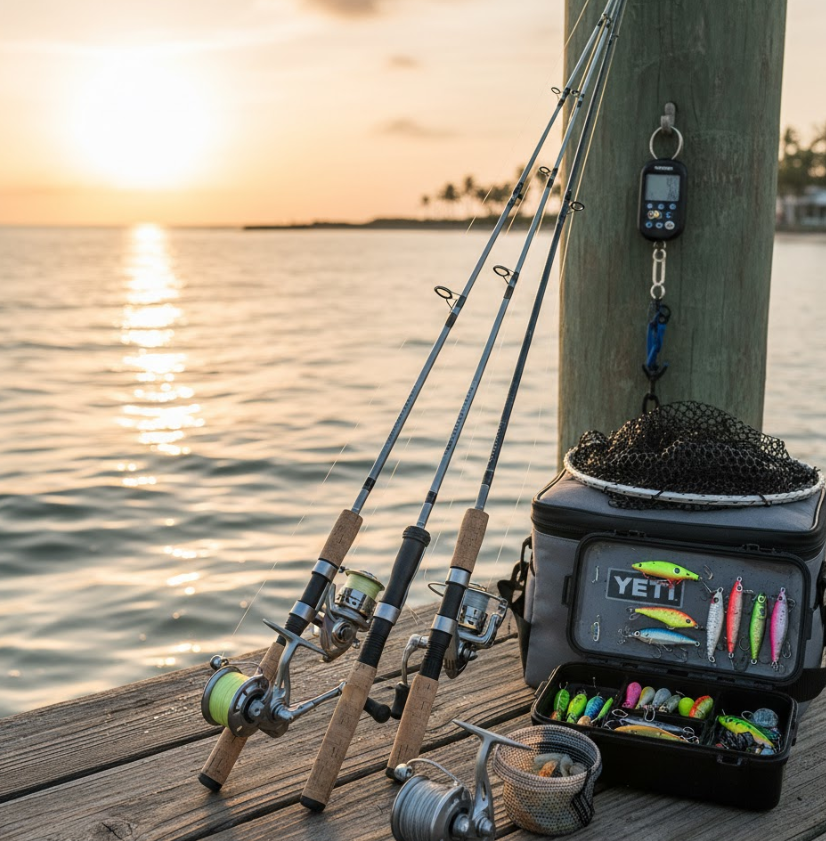
Our mix of fertile grass flats, mangrove estuaries, and freshwater lakes, is currently embracing a significant trend: the evolution of light and ultralight fishing tackle. Moving beyond traditional heavy setups, modern innovations are giving anglers an edge, providing better casting distance, superior sensitivity, and an unparalleled fight experience, all while being perfectly suited for the diverse species of the region.
The Technology Driving the Change
The light tackle revolution is powered by advancements across rods, reels, and line:
High-Modulus Carbon Blanks in Rods
The core of the innovation is the rod blank. Modern rods use high-modulus carbon fiber (often denoted as IM8, IM10, or proprietary carbon blends) that are both incredibly light and remarkably strong.
- Key Benefit in SWFL: These blanks offer extreme sensitivity, allowing anglers to feel the subtlest “tick” of a mangrove snapper or a largemouth bass inhaling a soft plastic lure—crucial in the often murky or current-laden waters of the region.
- Brand & Specification Examples:
- Temple Fork Outfitters (TFO) Tactical Inshore Series: Favored by many local guides for its blend of sensitivity and backbone. A popular specification is a 7′ 6″ Medium-Heavy action rod (like the TAC IS 765-1) which can handle a delicate presentation for snook or redfish while still having the power to keep a larger fish out of structure.
- St. Croix Rods Triumph Inshore: Known for their fast action tips, which aid in casting light lures and baits with accuracy—a must when targeting fish under mangrove overhangs.
Lightweight, Corrosion-Resistant Spinning Reels
Reel technology focuses on minimal weight and maximum resistance to the corrosive saltwater environment.
- Key Benefit in SWFL: Lighter reels balance perfectly with the new carbon rods, reducing angler fatigue during a long day of casting the flats or shorelines. Advanced sealing and high-quality bearings are non-negotiable for saltwater use.
- Brand & Specification Examples:
- Daiwa BG (Black Gold) or Shimano Nasci/Stradic Series: A popular choice for inshore and light offshore fishing in SWFL is the 2500 to 3000 series size. This size is large enough to hold ample line for a running snook or small tarpon, yet light enough for all-day casting.
- Specifications: Look for a reel that holds 150-200 yards of 10-20 lb braided line and features sealed bearings (e.g., “Saltwater Sealed” or a high IPX rating) and strong, smooth carbon drag systems.
High-Performance Braided Line & Fluorocarbon Leaders
The move away from monofilament as a main line is a massive shift, especially for light tackle.
- Key Benefit in SWFL: Braided line (like PowerPro or Daiwa J-Braid) with a 10-15 lb test rating has an incredibly thin diameter and zero stretch, maximizing casting distance and transmitting even the lightest bite directly to the rod tip. A nearly invisible Fluorocarbon leader (typically 20-40 lb test for snook/redfish) is then tied on to provide abrasion resistance against shells and teeth, and stealth in clear water.
Application in Southwest Florida’s Fisheries
Light tackle is not just for small fish; it’s a presentation and technique that is proving exceptionally effective on trophy fish in both salt and fresh water.
Saltwater Inshore: Snook, Redfish, and Trout
In the skinny water of Pine Island Sound, Charlotte Harbor, or the 10,000 Islands, a light setup is essential for finesse fishing.
- The Go-To Setup: A 7′ Medium Action fast-tip rod paired with a 2500-3000 series reel, spooled with 10-15 lb braid and a 20-30 lb fluorocarbon leader.
- Expert Insight: Local captains, like Captain Greg Stamper of Snook Stamp Charters, often emphasize the importance of matching your tackle to the lure size for optimal performance. Light gear allows for pinpoint casting of soft plastics (like DOA Shrimp or Bass Assassin Sea Shads) and small topwater plugs, which are key to tempting wary fish in the mangroves.
- Light Tackle Snapper: For bottom fishing for Mangrove Snapper near reefs or bridges, light gear with a long, light fluorocarbon leader (e.g., 16 lb test) and a small hook is the most effective finesse approach.
Freshwater Lakes & Canals: Largemouth Bass & Exotics
Southwest Florida’s canals and retention ponds are bass havens, and light tackle shines for a more nuanced approach.
- The Finesse Setup: A 6’6″ to 7′ Medium-Light action rod with a 1000-2000 series spinning reel, spooled with 6-10 lb braid and an 8-12 lb fluorocarbon leader.
- Targeting Largemouth Bass: The sensitivity of modern carbon rods is unmatched for detecting the delicate strike of a bass on a light jig or soft plastic worm. Ultralight gear is also perfect for throwing miniature versions of popular bass lures, such as small Mule Fishing Mule Minnows or tiny jerkbaits, often referred to as “finesse fishing.”
- Exotic Species: The canals of South Florida are also home to feisty exotics like Peacock Bass and Cichlids. Ultralight tackle makes catching these smaller, hard-fighting fish a thrilling challenge.
Summary: Why Go Light?
The shift to modern light and ultralight tackle in Southwest Florida is driven by performance:
| Feature | Light Tackle Innovation | Angling Advantage in SWFL |
| Rod | High-Modulus Carbon | Extreme sensitivity to detect subtle bites. |
| Line | Thin Diameter Braid | Superior casting distance on the flats; instant hooksets. |
| Leader | Fluorocarbon | Near-invisibility for clear water; high abrasion resistance. |
| Overall | Reduced Weight | Less fatigue, more accurate casting, and a more engaging fight. |
By embracing these innovations and specifications, anglers in Southwest Florida are not only protecting their gear from the harsh environment but are also maximizing their time on the water, transforming a gentle tap into a memorable hookset, regardless of whether they’re pursuing a massive Snook in a mangrove tunnel or a trophy Largemouth Bass in a canal.