
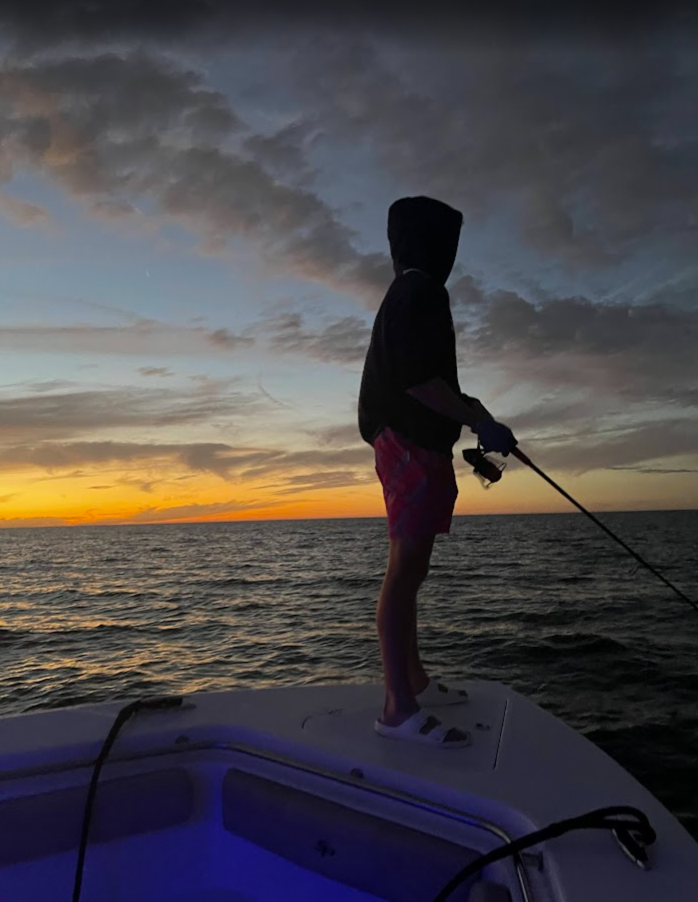

Saltwater fishing, particularly across the dynamic waters of Tampa Bay, Sarasota, Venice, and Naples, undergoes a profound transformation as the sun sets. The vibrant, sun-drenched marine world of the day gives way to a mysterious, often more productive, and certainly different nocturnal realm. For the Southwest Florida angler, mastering the night is the key to unlocking the region’s most aggressive and largest game fish.

Understanding these differences across the region’s unique geographical features and knowing which species hunt when the lights go out is essential.
Part 1: The Fundamental Shift – Nighttime Biology
The core difference between day and night fishing lies in the behavior of marine life, dictated by light, sound, and temperature.
| Factor | Daytime Behavior | Nighttime Behavior |
| Predators | Wary, hold deep or near structure, less aggressive. | Ambush Mode: Snook, Tarpon, and Groupers move into shallow water and lights to feed aggressively. |
| Prey (Baitfish) | Dispersed, rely on speed and sight to evade predators. | Concentrated: Attracted to artificial lights (plankton $\rightarrow$ baitfish $\rightarrow$ predators), making them easy targets. |
| Senses Used | Sight is dominant. | Scent & Vibration become dominant. Lures/baits need more noise/smell to be detected by the fish’s lateral line. |
| Temperature | Shallow water (flats) can be too hot in summer; fish retreat to deep channels. | Cooler night water in summer makes shallows/flats feeding areas viable again. |
Part 2: Location-Specific Night Fishing Strategies & Key Species
Southwest Florida offers distinct habitats, each requiring a tailored approach and attracting specific nocturnal hunters.
1. Tampa Bay (The Bridge Hub: Skyway, Gandy)
Tampa Bay is the premier bridge fishing destination, offering deep-water access for both inshore and nearshore giants.
- Hotspots: Skyway Fishing Pier State Park (24-hour access), Gandy Bridge and Courtney Campbell Causeway (for shore/kayak access).
- Target Species (Highly Active at Night):
- Snook (Linesider): The undisputed king of night bridge fishing. They use the strong current and shadows for maximum ambush efficiency. Look for them holding close to the pilings.
- Tarpon (Silver King): Especially during the migratory season (May-July). They roll and feed in the upper water column and channels around bridge lights.
- Mangrove Snapper (Grey Snapper): Smaller ones are plentiful, but trophy-sized Mangroves gather around pilings and structure after dark.
- Black Sea Bass & Sheepshead: Frequently caught bottom-fishing directly under the lights near structure.
- Technique: Use heavy tackle (50 lb leader) to deal with structure-hugging fish. Flair Hawk Jigs are the top artificial lure for Snook; live Pass Crabs or large Threadfins are ideal for Tarpon.
2. Sarasota & Venice (Inlets & Dock Lights)
This area is famous for its Intracoastal Waterway (ICW) system, offering countless opportunities around private docks and passes.
- Hotspots: Venice Inlet, Big Sarasota Pass, and the endless lighted residential docks along the ICW and Sarasota Bay.
- Target Species (Highly Active at Night):
- Snook: The primary nocturnal target. They use the dock lights to blind and concentrate baitfish.
- Spotted Seatrout: They frequently feed in the upper water column under the dock lights, often alongside Snook.
- Redfish (Red Drum): Less light-dependent than Snook, but they will patrol the shadow lines and shallow edges near deep-water docks, grubbing on crabs and shrimp.
- Flounder: Often caught on the sandy bottom directly under the dock lights or just off the edge, especially with a slow-dragged scented jig.
- Technique: Stealth is key. Approach docks quietly. Use small, dark-colored jigs (1/4 oz or less) or soft plastics that mimic small baitfish or shrimp. Fly fishing with small gummy minnow patterns is highly effective around dock lights.
3. Naples (Mangroves and Offshore)
Naples fishing is split between its extensive, quiet backwaters and its access to productive nearshore reefs.
- Hotspots: Gordon Pass, Naples Bay Mangrove Canals, and nearshore Artificial Reefs/Wrecks (1 to 20 miles out).
- Target Species (Highly Active at Night):
- Mangrove Snapper: Found everywhere, from the pilings of the Naples Pier to the nearshore wrecks. They are one of the most consistent nighttime biters.
- Gag & Red Grouper: Primarily offshore. These bottom dwellers become less wary at night and are more willing to move up the water column to strike jigs or live baits drifted over structure.
- Snook: Concentrated at the mouths of the passes and around major bridge lights (e.g., Gordon River Bridge).
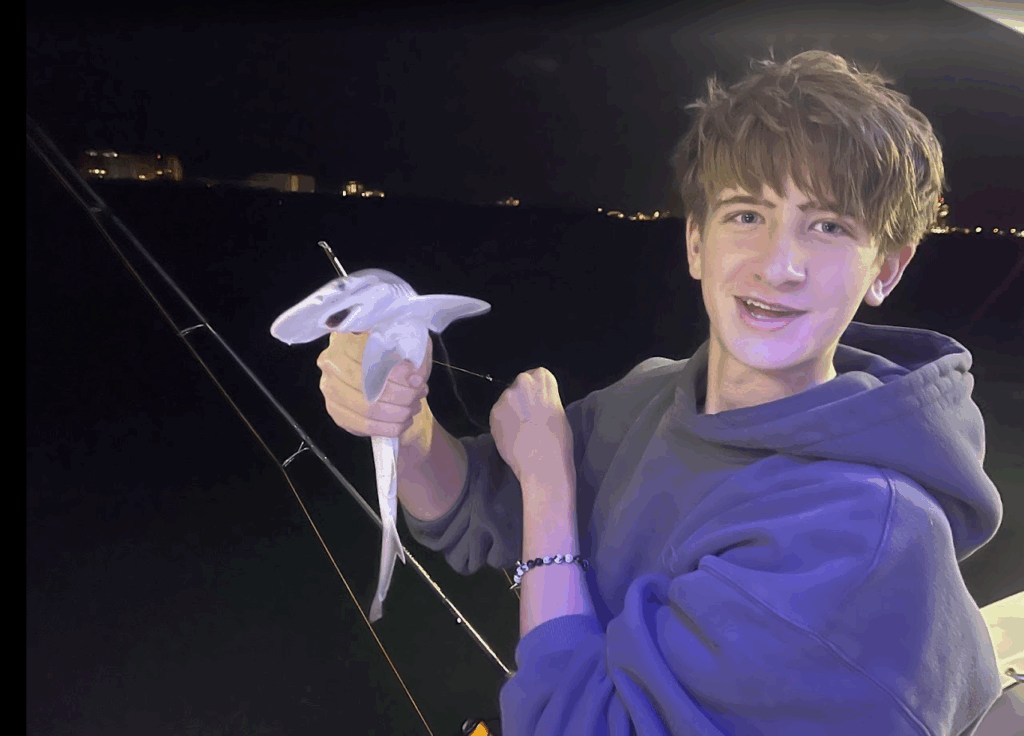
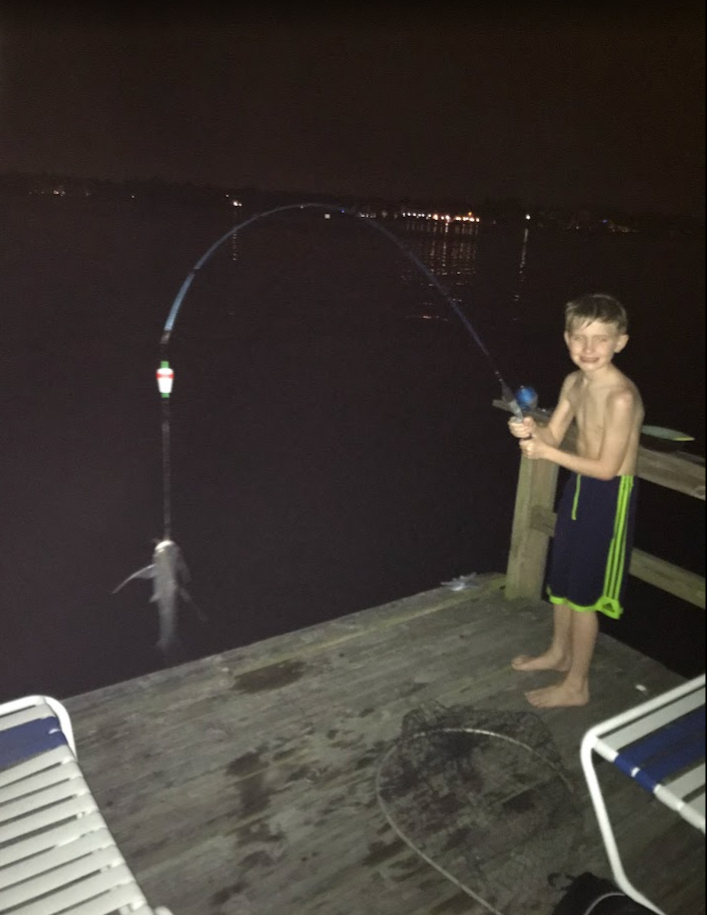
- Sharks (Blacktip, Lemon): Become highly active on the flats and nearshore structure. Ideal targets for heavy-duty rod and cut bait.
- Technique: Offshore: Anchor chumming is vital to bring Snapper and Grouper off the structure. Inshore: Utilize scented soft plastics or cut bait when fishing the dark mangrove edges, relying on the fish’s superior sense of smell.
Part 3: Nocturnal Gear & Safety Checklist
To ensure a successful and safe night trip in SWFL, preparation is paramount.
| Category | Night-Specific Gear | Rationale & Safety |
| Lures/Bait | Flair Hawk Jigs, Dark-colored soft plastics (black, purple), Live Shrimp/Crabs, Scented Artificials. | Dark colors create a better silhouette against the moon/lights; scent is critical for Redfish and bottom fish. |
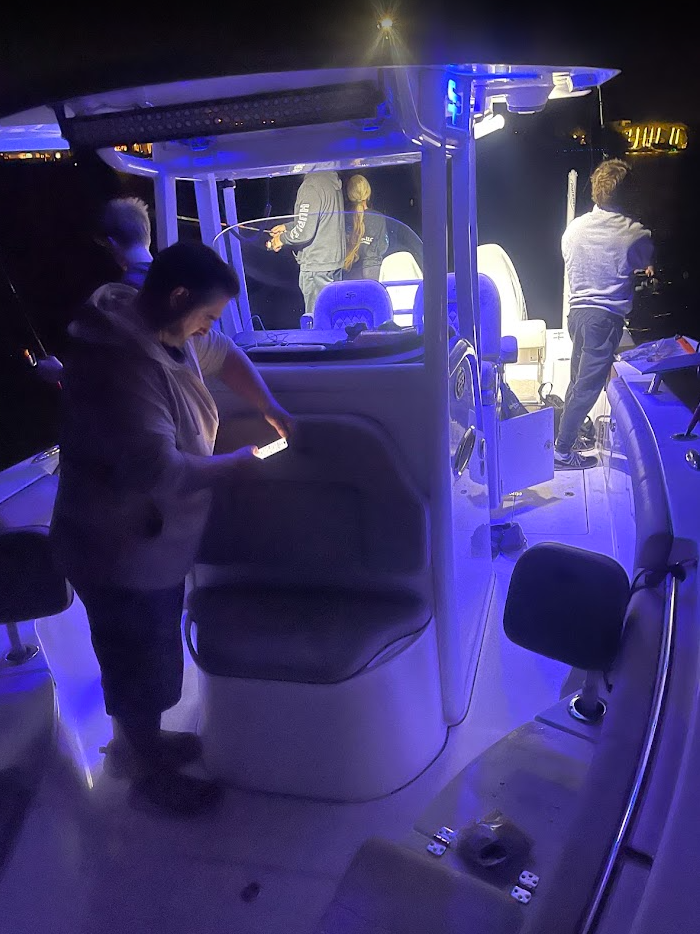
| Lighting | Red Headlamp (preserves night vision), Submersible Green/White LED Light (boat/dock). | The submerged light attracts plankton, which attracts bait, which attracts predators (the entire food chain). Red light prevents blinding yourself. |
| Tackle | Heavy Leader (40-80 lb fluoro), Strong hooks/swivels. | Night-feeding fish are aggressive and often strike close to structure. Heavy leader prevents cut-offs from Snook/Tarpon. |
| Safety | Charged Phone/VHF Radio, Non-slip footwear, Bug Spray. | Navigation and obstacle avoidance are harder in the dark. No-See-Ums are notorious in SWFL at night, especially near mangroves. |
By strategically targeting the illuminated areas and adapting your gear to the increased reliance on non-visual senses, you will find that the waters of Southwest Florida are often most rewarding after the sun has set.