The Florida Red Tide is one of the most significant environmental challenges facing Southwest Florida (SWFL). Often described as a “silent killer,” this biological phenomenon is a complex mix of natural cycles and modern environmental pressures.
As of early January 2026, here is a comprehensive breakdown of what Red Tide is, why it happens, and what the year ahead looks like for our coastal communities.
🦠 What is Red Tide?
Red Tide is a Harmful Algal Bloom (HAB) caused by a microscopic, single-celled dinoflagellate called Karenia brevis.
While there are many types of algae, brevis is unique to the Gulf of Mexico. It produces potent neurotoxins known as brevetoxins. When these cells bloom in high concentrations, they can:
- Discolor the water (turning it a rusty red, brown, or murky green).
- Release toxins into the air through wave action, causing respiratory distress in humans.
- Decimate marine life by attacking the central nervous systems of fish and mammals.
The Causes: Natural vs. Human-Induced
It is a common misconception that Red Tide is caused solely by pollution. However, the truth is a “two-stage” process:
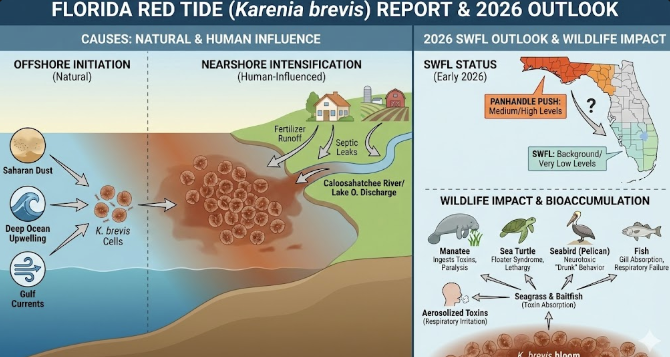
- Offshore Initiation (Natural): Blooms typically begin 10–40 miles offshore in the deep waters of the Gulf. They are triggered by natural ocean currents, iron-rich dust from the Saharan desert, and upwelling of nutrient-rich deep water.
- Nearshore Intensification (Human-Influenced): Once winds and currents push a bloom toward the coast, it encounters human-contributed nutrients. Nitrogen and phosphorus from fertilizer runoff, leaking septic systems, and Lake Okeechobee discharges act like “super-food,” turning a natural event into a long-lasting environmental disaster.
2026 Outlook for Southwest Florida
As we enter the first quarter of 2026, the outlook for Southwest Florida is cautiously optimistic but highly localized.
- Current Status: As of mid-January 2026, brevis levels in Collier, Lee, and Sarasota counties remain at “Background” to “Very Low” concentrations. This means that while the organism is present, it is not currently forming a massive bloom that would cause fish kills or respiratory irritation.
- The “Panhandle Push”: In contrast, the Florida Panhandle (specifically Bay and Gulf counties) is seeing “Medium” to “High” concentrations. Scientists are closely monitoring currents to see if these northern blooms will be carried south toward SWFL.
- Seasonal Risk: The highest risk for SWFL typically occurs in late summer and fall. If the 2026 hurricane season brings significant rainfall, the resulting runoff could fuel a bloom late in the year.
Impact on Specific Wildlife
The neurotoxins produced by brevis move through the food chain in a process called bioaccumulation.
1. Manatees (The Most Vulnerable)
Manatees are often the hardest hit. They don’t just swim in the toxins; they eat them. Brevetoxins settle on seagrass, the manatee’s primary food source. Ingesting these toxins causes “brevetoxicosis,” which leads to seizures and paralysis. Because manatees are mammals, they must surface to breathe; if paralyzed, they can drown in shallow water.
2. Sea Turtles
Sea turtles experience “floater syndrome.” The toxins cause them to become extremely lethargic and lose their ability to dive. You may see them bobbing at the surface, unable to lift their heads. Loggerheads are statistically more susceptible to long-term neurological damage from Red Tide than other species.
3. Birds (Pelicans and Gulls)
Birds are affected when they eat “baitfish” (like sardines or menhaden) that have consumed the algae.22 Impacted birds often look “drunk”—they may be unable to stand, have drooping wings, or experience tremors.
4. Fish
Fish are the first to die during a bloom because the toxins enter their bloodstream directly through their gills, causing immediate respiratory failure.
Specific Locations to Watch
- Charlotte Harbor & Lee County: Due to the outflow of the Caloosahatchee River, these areas are “nutrient hotspots.” If Lake Okeechobee releases are high this summer, these coastal waters will be at higher risk for bloom intensification.
- Sarasota (Mote Marine Lab Area): This is the epicenter of Red Tide research. Watch for reports near Lido and Siesta Key, which often act as early-warning indicators for the rest of the coast.
- Collier County (Naples/Marco Island): Currently seeing clear water, but historically prone to “patchy” blooms that can move in overnight with a change in wind direction.
Human Health and Economics
For residents, the 2026 season requires vigilance. Even if you don’t see dead fish, onshore winds can carry aerosolized toxins that cause coughing and sneezing. Those with asthma or COPD should avoid the beaches entirely during “Medium” or “High” count days.
Economically, SWFL businesses are still recovering from previous years. A major bloom can cost the region millions in lost tourism revenue and cleanup costs.