
The development of the Florida Keys is a story of human stubbornness versus a geography that never wanted to be conquered. To understand how 125 miles of water and limestone became a global destination, we have to look past the “Great Man” theory of Henry Flagler and look at the wreckers, the bridge-builders, and the environmentalists who shaped the “Conch Republic.”
The Wrecking Era (1820s–1880s)
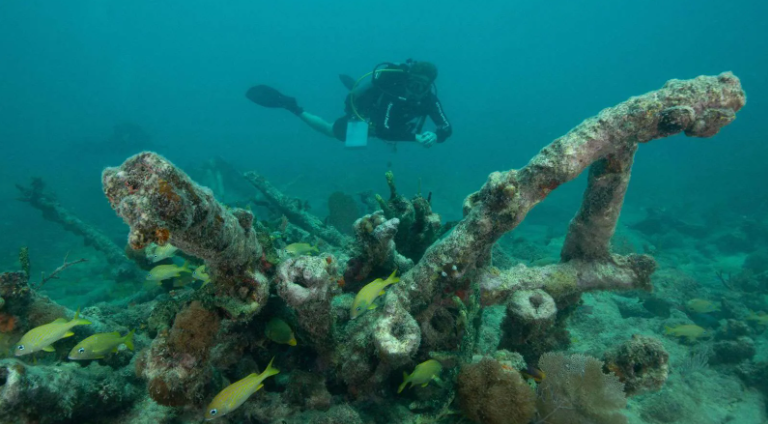
Before a single rail was laid, the Keys were built on the “Wrecking” industry. Key West was once the wealthiest city per capita in the United States, fueled entirely by the salvage of ships that crashed on the treacherous Florida Reef.
- Judge William Marvin: He was the legal architect of the Keys. As the preeminent judge in the Admiralty Court, he codified the “Laws of Wrecking.” By professionalizing the salvage industry, he ensured that Key West became a massive hub of capital and legal infrastructure. This wealth eventually funded the early local infrastructure that Flagler would later utilize.
- A.S. “Cap” Sands: One of the most influential early businessmen in the Upper Keys. Long before tourism, Sands established the pineapple farming industry in Key Largo and Plantation Key. By 1890, the Keys were exporting over a million pineapples a year. His need for better transportation to the mainland was one of the early economic pressures that made the idea of a railroad seem viable.
The Over-Sea Railroad (1905–1912)
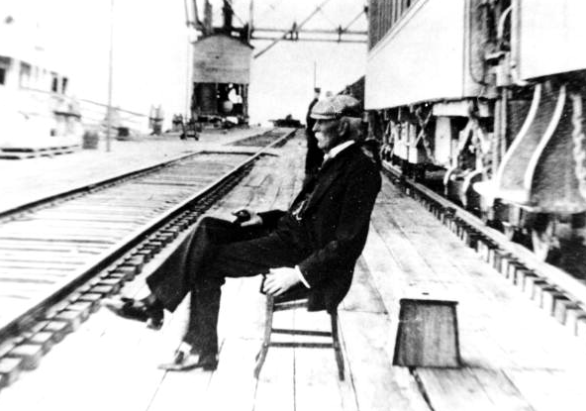
While Flagler provided the capital, the physical bridge to the Keys was a product of high-stakes engineering and immense human cost.
The Engineers Who Died for the Vision
- Joseph Carroll Meredith: He was the original Chief Constructing Engineer. Flagler called him the “best bridge builder in the world.” Meredith’s health collapsed under the stress of the project—mosquitoes, yellow fever, and the logistical nightmare of hauling fresh water by rail from the mainland to thousands of workers. He died in 1909, three years before the project’s completion, having laid the foundational designs for the Long Key Viaduct.
- William J. Krome: After Meredith’s death, Krome took over. He was a master surveyor who mapped the “Everglades Route” that others deemed impossible. He is the reason the railroad didn’t just hug the coast but leaped across the open ocean.
- M.F. Comer: A dredging and concrete contractor. He pioneered the use of arch-bridge construction in salt water. He was responsible for the massive concrete piers of the Seven Mile Bridge, many of which still stand today, over a century later, having survived dozens of hurricanes.
The Greek and Italian Laborers
The Keys were not built by Florida locals. Flagler’s recruiters brought in thousands of immigrants. Specifically, Greek divers were brought from Tarpon Springs and the Mediterranean to set the underwater footings for the bridges. They worked in diving bells and early pressurized suits, facing shark attacks and the “bends” to ensure the railroad’s foundations reached the solid coral bedrock.
The “Seven-Mile” Engineering Feat
Building the original Seven Mile Bridge (then known as the Knights Key-Pigeon Key-Moser Channel-Pacet Channel Bridge) required a specific, repetitive process that transformed construction from a craft into an assembly line.
1.Dredging the Berths:Breaking the coral.
Massive dredges would clear the soft silt away from the limestone bedrock to create a stable “footprint” for each pier.
2.Setting the Cofferdams:Creating dry space in the ocean.
Workers lowered huge steel cylinders (cofferdams) to the sea floor. Water was pumped out, allowing men to work on the “dry” ocean floor to drill into the coral.
3.The Tremie Pour:Concrete in the deep.
Using a “tremie pipe” to prevent the concrete from washing away in the current, engineers poured the foundations. This required a special mix of cement that hardened specifically in saltwater.
4.The Steel Truss Placement:Connecting the spans.
Giant steam cranes moved the pre-fabricated steel trusses onto the concrete piers. These spans had to be perfectly aligned to handle the vibration of 100-ton locomotives.
The Highway Era (1935–1980s)
After the 1935 Labor Day Hurricane destroyed the railroad, the focus shifted to the Overseas Highway (US-1). This era was defined by the transition from rail tycoons to heavy-construction contractors.
- Alonzo Cothron: While Flagler built the bridges, Cothron built the land. Based in Islamorada, Cothron’s dredging operations literally created the footprint of the modern Keys. He specialized in “Keystone” (fossilized coral) excavation.
- Specific Landmark: Whale Harbor. Cothron transformed this area from a shallow mangrove swamp into a deep-water harbor and commercial hub. He was also instrumental in constructing the modern spans in the 1980s that replaced the narrow, terrifying “old” bridges.
- Richter Perky: A developer who saw the potential for tourism in the Lower Keys. He attempted to build a massive resort on Sugarloaf Key.
- Specific Landmark: The Perky Bat Tower. To combat the mosquitoes that plagued his guests, Perky built a $10,000 “bat hotel” designed by Dr. Charles Campbell. Though the bats flew away immediately, the tower remains a monument to the eccentric lengths developers went to make the Keys habitable.
- The Saunders Family: Jerry Saunders and his family were the “bridge tenders” and early road contractors who maintained the precarious highway during the mid-20th century. They helped transition the Keys from a series of remote fishing camps into an interconnected community.
The Modern Layout
Today’s Florida Keys are a hybrid of Flagler’s 1912 vision and the 1982 “New Bridge” project.
| Contributor | Focus Area | Lasting Legacy |
| B.M. Duncan | Chief Highway Engineer (1930s) | The person who figured out how to pave over the railroad tracks to create the first highway. |
| Edna S. Smathers | Conservation/Development | Influenced the preservation of the “Old Seven” bridge as a state park rather than having it demolished. |
| The Pinder Family | Agriculture/Retail | Transitioned the Upper Keys from pineapple fields into the first “roadside attractions,” setting the stage for modern tourism. |
| Figg & Muller | Engineering Firm (1980s) | Designed the Pre-cast Segmental Bridges (the new Seven Mile) that use high-tension steel cables to hold massive concrete boxes together. |
Note on “The Fill”: Most of the land between the bridges that you drive on today is actually “fill”—pulled from the ocean floor by Alonzo Cothron and his contemporaries. Without this dredging, the Keys would be significantly smaller and almost entirely inaccessible to automobiles.