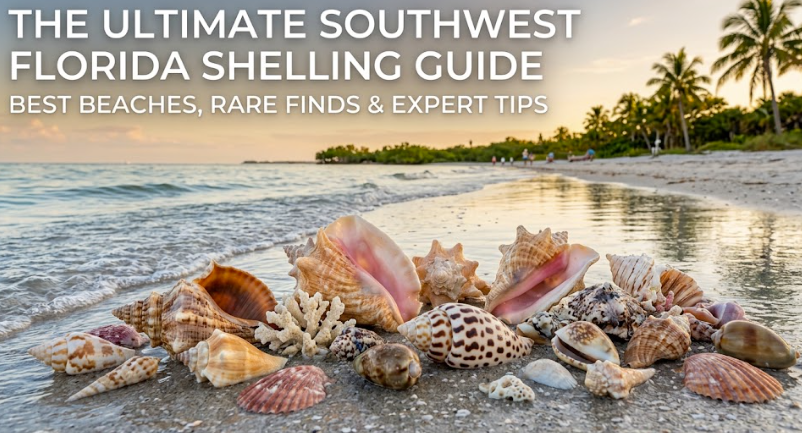
Southwest Florida is world-renowned as a beachcomber’s paradise. Thanks to a broad gentle continental shelf, ideal Gulf currents, and dynamic barrier islands, millions of marine treasures wash ashore along the Gulf Coast each year.
Whether you are looking to do the famous “Sanibel Stoop,” explore remote barrier islands, or hunt for the elusive Scaphella junonia, this comprehensive guide covers the best beaches, timing strategies, essential gear, and local legal guidelines.
Ranked: Best Shelling Beaches in Southwest Florida
1. Sanibel Island: The Undisputed Shelling Capital
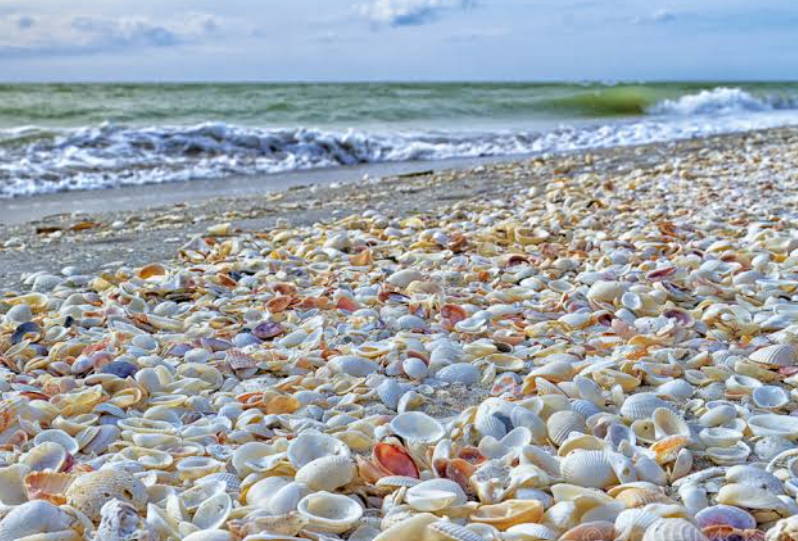
Sanibel Island ranks as Southwest Florida’s most popular shelling destination. Unlike most barrier islands that run north-to-south, Sanibel curves east-to-west. This unique geographic orientation acts like a giant scoop, capturing shells rolling up from the Caribbean and deep Gulf waters.
- Top Spots: Bowman’s Beach (for remote stretches), Blind Pass (strong currents bringing in deep-water species), and Lighthouse Beach (great for smaller shells like coquinas and Wentletraps).
- Vibe: Praised for scenic nature walks, vast shell mounds, and wildlife viewing.
2. Captiva Island: Deeper Drops & Massive Conch Shells
Located just north of Sanibel across Blind Pass, Captiva shares the same rich waters but features a steeper beach drop-off.
- What Makes It Different: The quick drop-off means waves break harder right at the shoreline. Instead of carpeted tiny shell beds, Captiva often yields larger, heavier specimens like full Lightning Whelks, Horse Conchs, and Fighting Conchs rolling in through the surf.
- Top Spot: Turner Beach at Blind Pass.
3. Marco Island (Tigertail Beach & Beyond)
At the southern tip of the region, Marco Island offers expansive sandbars and tidal lagoon environments.
- Highlight: Tigertail Beach is famous for its tidal lagoon and the tidal spit known as Sand Dollar Island. Walking across the lagoon at low tide opens up vast tidal flats rich with live sand dollars (leave live ones!), olives, and fighting conchs.
- Pro Tip: Rent a kayak or take a shelling boat charter south into the Ten Thousand Islands (like Koreshan State Park’s neighboring coastal cays or Keewaydin Island) to reach untouched shell beds.
4. Barefoot Beach Preserve (Bonita Springs)
Tucked between Naples and Fort Myers Beach, Barefoot Beach remains one of the area’s most underrated shell paradises.
- Why Visit: This undeveloped barrier island features over 340 acres of natural coastal land. Because access is slightly more restricted and residential development is minimal, its beaches remain largely unspoiled, offering peaceful seashell hunting without the massive crowds of Sanibel.
When to Go: Timing Your Shelling Excursion
To maximize your finds, plan your outing around environmental cycles:
- Low Tide: Arrive 1 hour before to 1 hour after extreme low tide. Spring tides (during Full and New Moons) produce the lowest water levels, exposing sandbars and deep shell troughs that are usually underwater.
- Post-Storm Conditions: Strong westerly or northwesterly winds and strong winter fronts churn up the ocean floor, washing heavy deep-water shells straight onto the sand. The first morning after a storm passes is prime time.
- Early Mornings: Beat both the afternoon sun and competing beachcombers by hitting the tide line at dawn.
The Holy Grail & Rare Shell Identification
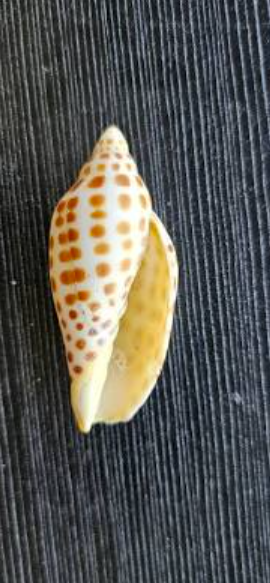
While common finds include Fighting Conchs, Calico Scallops, Sunray Venuses, and Lettered Olives, SWFL beaches hold several prized rarities:
| Shell Name | Rarity | Description & How to Identify |
| Junonia (Scaphella junonia) | Extremely Rare | Cream-colored spindle shell with distinct reddish-brown squarish spots in neat rows. Inhabits deep offshore waters; usually washes up only after major storms. |
| Lion’s Paw (Nodipecten nodosus) | Very Rare | Large, heavy scallop shell with thick, coarse ribs covered in knob-like nodes. Vibrant orange, red, or purple hues. |
| Scotch Bonnet (Semicassis granulata) | Rare | Substantial helmet shell with a grid-like grid pattern of faint orange squares on a white shell. |
| Wentletrap (Epitonium) | Rare / Hard to Spot | Tiny, pure-white high-spired spiral shell featuring delicate raised ribs. Looks like a miniature winding staircase. |
Essential Shelling Tools and Gear
Having the right gear makes hours on the beach comfortable and productive:
- Mesh Shell Bag: Allows sand and water to drain automatically while keeping your hands free.
- Sand Scoop / Shelling Pole: A long-handled wire basket lets you sift through surf and tidal pools without straining your back (a classic cure for “Sanibel Stoop” fatigue!).
- Water Shoes / Booties: Essential for walking over sharp, densely packed shell mounds or wading through rocky inlets near Blind Pass and Tigertail Lagoon.
- Sun Protection & Polarized Sunglasses: Polarized lenses cut water glare, allowing you to spot submerged shells below the surface.
- Small Container or Pouch: For fragile treasures like Wentletraps, paper figs, or delicate sand dollars.
Shelling Etiquette & Law in SWFL: What’s Legal and What’s Not
Before picking up a shell, know Florida’s wildlife conservation rules:
- Strictly NO Live Shelling: In Lee County (which includes Sanibel and Captiva) and Collier County (Marco Island, Naples), harvesting any live shell, sea star, sand dollar, or sea urchin is strictly illegal.
- How to Check: Turn the shell over. If an animal (like a hermit crab or mollusk trap door/operculum) is inside, gently place it back in the water.
- Sand Dollars & Sea Urchins: Live sand dollars are dark brown/purple and covered in tiny, velvet-like spines. Only collect white, smooth, non-living specimens.
- Bag Limits: Check local county regulations regarding daily bag limits on empty shells if collecting in large quantities for commercial purposes (personal recreational collecting of empty shells is generally permitted).
- Leave No Trace: Tread lightly on dune systems, respect nesting sea turtle zones (May–October), and pack out all trash.