

Southwest Florida is currently navigating a period of significant climatic tension. As of January 2026, the region is grappling with a pronounced rainfall deficit that is reshaping everything from local lawn care ordinances to the multi-million dollar agricultural industry.

While the “Sunshine State” is no stranger to dry winters, 2026 is proving to be an outlier due to a combination of global weather cycles and a missed recharge during the previous hurricane season.
The Rainfall Deficit: A “Quiet” Crisis
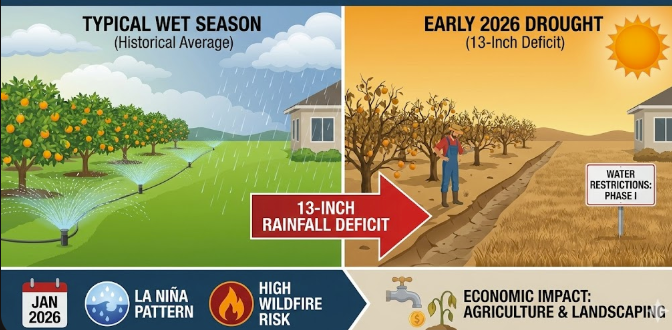
The primary driver of the current weather pattern is a 13-inch rainfall deficit carried over from the latter half of 2025. Typically, Southwest Florida relies on tropical systems and late-summer thunderstorms to “recharge” the aquifers—the underground limestone layers that hold our drinking water.
Because the 2025 hurricane season was notably quiet in terms of landfalling moisture for our region, the water table entered the new year at dangerously low levels. In response, the Southwest Florida Water Management District (SWFWMD) declared a Phase I Water Shortage effective through July 1, 2026. This declaration covers counties from Sarasota down through Lee and Collier.
The La Niña Influence
The 2025-2026 winter is dominated by a La Niña pattern. For Florida, this historically results in:
- Above-average temperatures: January has already seen “shorts weather” more frequently than “jacket weather.”
- Below-average precipitation: The polar jet stream is pushed further north, steering rain-bearing fronts away from the Gulf Coast.
Impact on the Local Economy
The economic ripples of this dry spell are felt most acutely in the rural “heartland” of SWFL and the tourism-driven coastal strips.
1. Agriculture & Federal Aid
In January 2026, the federal government opened applications for emergency loans of up to $2 million for small businesses and agricultural cooperatives in counties like Charlotte, Lee, and Hendry.
- Increased Costs: Farmers are having to pump significantly more water to keep citrus groves and vegetable fields hydrated, leading to skyrocketing electricity and fuel costs.
- Crop Yields: The lack of natural “soft” rain (as opposed to harsh irrigation) can lead to smaller fruit sizes and lower overall yields for the 2026 harvest.
2. The “Crispy Lawn” Effect on Real Estate
The Phase I water shortage emphasizes voluntary conservation, but many municipalities are already enforcing strict once-a-week watering schedules. For the high-end real estate markets in Naples and Sarasota, the loss of lush, green tropical landscaping can impact curb appeal and property perceptions during the peak “Snowbird” buying season.
🔥 Community and Environmental Consequences
Beyond the checkbook, the weather shift is changing daily life and the health of our local ecosystems.
Wildfire Risk: An Early Start
The “Brown Season” has arrived early. With the water table falling and vegetation drying out, the Florida Forest Service is monitoring an elevated risk for brush fires.
- Air Quality: Even small “muck fires” in the Everglades can send plumes of smoke into coastal communities like Bonita Springs and Fort Myers, posing health risks for residents with respiratory issues.
- Burn Bans: Expect to see county-wide burn bans implemented much earlier than the usual March/April window.
The “First Flush” Paradox
Environmental scientists are concerned about what happens when the rain eventually returns. During long droughts, pollutants—nitrogen from fertilizers, oils from roads, and pet waste—build up on the parched ground.
Note: When the first heavy rains of the 2026 wet season arrive (likely in June), they will create a “first flush.” This concentrated pulse of nutrients will flow into our bays and estuaries, potentially fueling harmful algal blooms like Red Tide.
🔭 Outlook for the Remainder of 2026
The current forecast suggests that drier-than-normal conditions will persist through at least April. Residents should prepare for:
- Stricter Water Mandates: If the deficit continues to grow, Phase I (voluntary) will likely move to Phase II (mandatory restrictions and fines).
- High Fire Danger: Extreme caution is advised with outdoor grilling and equipment that can spark.
- Warmer Spring: Expect an early transition into summer-like heat by late March.