
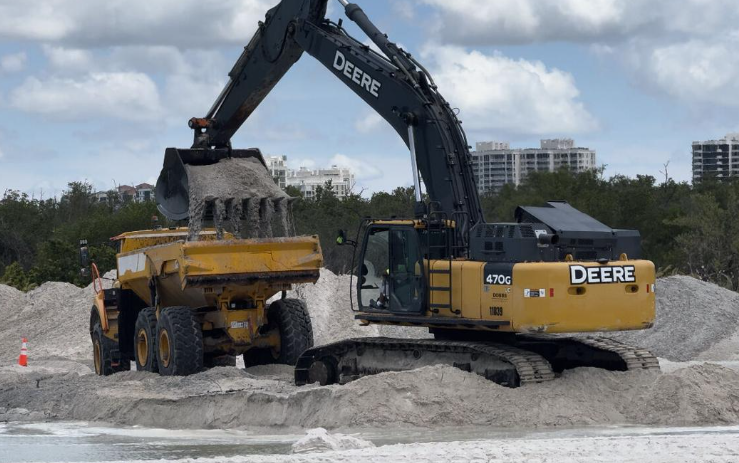
The coastline of Southwest Florida is currently undergoing its most significant physical transformation in decades. Following the back-to-back challenges of Hurricanes Ian (2022) and Milton (2024), the region has transitioned from emergency “patch-and-repair” mode into a structured era of Resilient Renewal.
As of April 2026, the constant hum of dredges and the sight of massive black pipelines have become the soundtrack of the shoreline. From the refined sands of Lido Key down to the rugged passes of Collier County, these projects are doing more than just moving sand—they are rebuilding the foundation of the regional economy.
Project Spotlight: Locations & Timelines
The 2025–2026 cycle is a mix of massive sand-pumping operations and delicate dune stabilization. Here is where the heavy lifting is happening:
1. Sarasota County: Lido Beach & New Pass
- Status: Finishing April 2026.
- The Scope: A $12 million federal project in partnership with the U.S. Army Corps of Engineers. Approximately 200,000 to 300,000 cubic yards of sand were dredged from New Pass to restore 1.2 miles of eroded shoreline.
- Next Phase: Starting in Fall 2026, the city will begin raising the protective dunes by another 2 feet (to an elevation of 6.6 feet) to provide a 25-year storm buffer.
2. Lee County: Fort Myers Beach & The Islands
- Status: Renourishment largely complete; stabilization ongoing.
- The Scope: Fort Myers Beach has successfully expanded its beach berm, providing a much-needed “shock absorber” for the town.
- Captiva/Sanibel: In early 2026, work shifted to escarpment leveling—smoothing out the steep 5-foot “cliffs” created by recent tides—and installing 3-foot sand fencing to protect the newly built 12-foot-high dunes.
3. Charlotte County: Manasota Key & Port Charlotte
- Status: Active Planning & Execution (2026).
- The Scope: Restoration at Port Charlotte Beach Park is nearing completion, with the new recreation center and pool slated for a Fall 2026 opening. Meanwhile, Manasota Key residents are currently in the assessment phase for a massive multi-year renourishment project designed to protect the vulnerable Gulf Road corridor.
4. Collier County: Wiggins Pass & Doctor’s Pass
- Status: Bidding/Mobilization (Spring/Summer 2026).
- The Scope: Collier County opened bids in March 2026 for a major maintenance dredge of Wiggins and Doctor’s Pass. This is critical for maintaining channel depths that were shoaled in by the late-2024 storm season.
Economic & Tourism Impact: The “Resilience Premium”
The Southwest Florida tourism engine runs on white sand. Without it, the “brand” of the region evaporates.
- Tourism Rebound: Visit Florida projections suggest that Lee and Collier counties will match or exceed pre-hurricane visitor levels by the end of 2026. The restoration of the beaches has allowed major resorts, such as the South Seas Island Resort on Captiva, to reopen signature amenities like their new water park and Gulf-side restaurants.
- Real Estate Stability: These projects act as a massive insurance policy for coastal property values. By widening the beach, the “velocity zone” of storm surges is pushed further away from multi-million dollar investments.
- The “Unsettled” Economy: While visitor numbers are high, local businesses report a shift in spending. Tourists are “lounging more and spending less,” opting for free beach days over high-ticket excursions. The presence of the beaches is keeping the hotels full, even if the “splurge” spending has cooled.
Shipping and Recreational Boating
For the maritime community, dredging is the difference between a day on the water and a grounded hull.
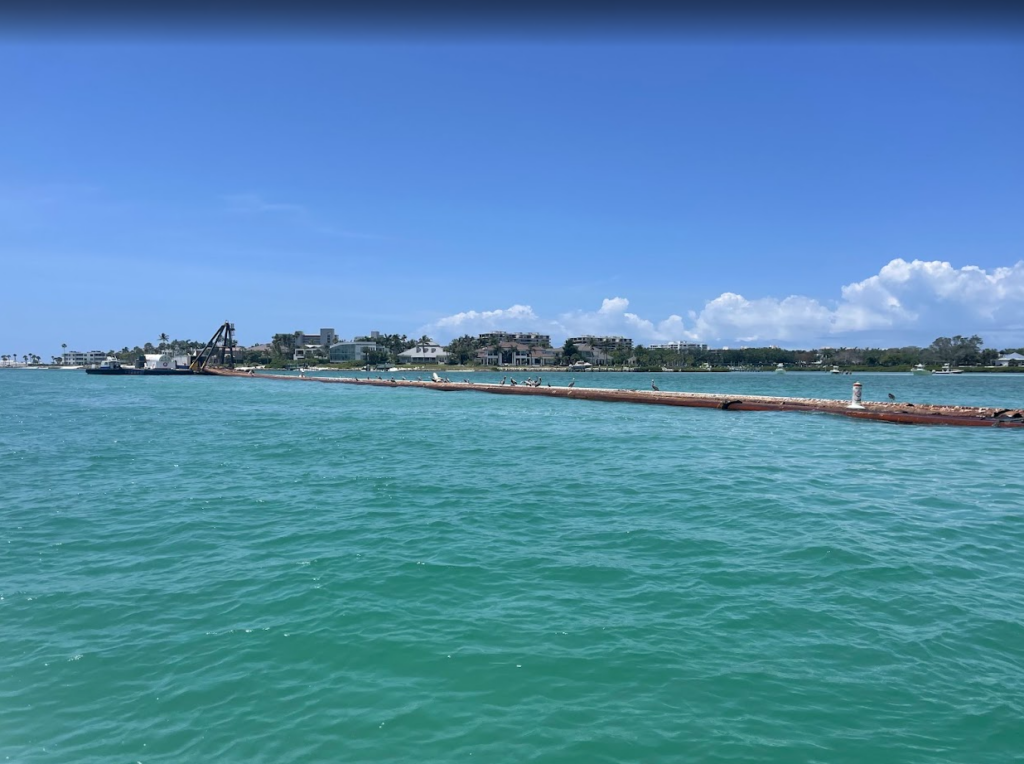
- Navigational Safety: The dredging of New Pass and Wiggins Pass is vital for the thousands of recreational boaters and commercial fishing charters. These passes often “migrate” or fill with sand after storms; 2026 dredging ensures a reliable depth of at least 8 to 12 feet in key channels.
- Shipping & Ferries: The Key West Express, which operates out of Fort Myers Beach, relies on the constant maintenance of the Matanzas Pass. Successful dredging ensures this high-speed ferry—a major economic driver—can maintain its daily schedule without tide-related delays.
- Temporary Disruptions: Boaters should expect “Idle Speed” zones and temporary channel shifts near active dredge sites. In Naples, beach access points like Horizon Way have faced 60-day closures to serve as staging areas for sand-hauling equipment.
The Bottom Line
Southwest Florida in 2026 is a region that has stopped apologizing for the mess and started celebrating the progress. While the sight of a 30-inch steel pipe on the sand isn’t “postcard perfect,” it is the literal lifeline of the region. As the 2026 hurricane season approaches, the Gulf Coast stands behind a wider, higher, and more engineered line of defense than ever before.
Pro Tip for Visitors: If you’re heading to Lido or Captiva this summer, keep an eye out for “Sea Turtle Monitors.” Renourishment projects are strictly timed to work around nesting season, and you might see the staked-off nests appearing on the “new” sand almost as soon as the pipes are pulled away.
How are these beach projects affecting your local area or upcoming travel plans?