
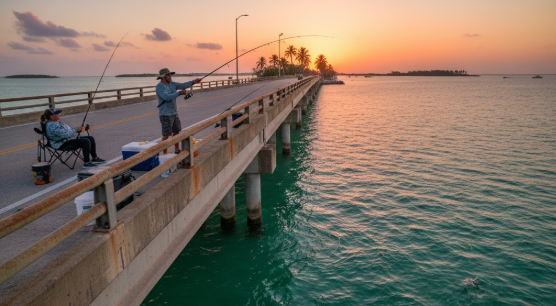
For many anglers in Southwest Florida, the ultimate fishing experience doesn’t require a boat, a high-dollar charter, or a deep-sea journey. It requires a bucket, a tackle box, and a piece of concrete spanning the emerald green waters: a bridge.
From Sarasota down to Naples, these towering structures create a world-class fishing ecosystem. The pilings act as artificial reefs, concentrating baitfish and drawing in a predictable, diverse array of predatory game fish. Bridge fishing is accessible, often free (or very low cost), and offers an authentic slice of the Gulf Coast’s vibrant fishing culture.
Here is your guide to the specific locations, the trophy catches, and the community you’ll find under the shadows of SWFL’s overpasses.
The Catches: What’s Biting Beneath the Bridge?
The unique structure of bridge pilings and adjacent channels attracts fish from the open Gulf, the back bays, and the brackish rivers. The strong tidal currents funnel bait right to you, making the fishing highly dynamic.
| Primary Target | When to Catch Them | Signature Bait/Tackle |
| Snook (Trophy Catch) | Most active at night and during strong tidal flows, especially in summer. | Live shrimp, whitebait, or lipped jerkbaits cast parallel to the structure. |
| Sheepshead (The ‘Bridge Specialist’) | Late Fall to early Spring; they love the cooler water. | Live fiddler crabs or pieces of peeled shrimp fished tight to the pilings. |
| Mangrove Snapper | Year-round, but most consistent in warmer months and at night. | Live shrimp or small pieces of cut bait dropped directly down the bridge column. |
| Redfish (Red Drum) | Year-round, often found near the shadow lines and oyster bars near the bridge approaches. | Cut pinfish, crabs, or scented soft plastics fished on the bottom. |
| Tarpon (Seasonal Behemoth) | Late Spring through Summer migration, especially around major passes. | Live crabs (pass crabs) or large live mullet floated near the structure. |
| Black Drum | Cooler months, often found in the deeper channels near the bridge. | Clams, oysters, or cut dead shrimp fished on a bottom rig. |
Pro Tip for Bridge Anglers: Mind the “Cut-Off Zone.” Fish hooked near the pilings will immediately try to “cut you off” on the sharp concrete and barnacles. Use heavy leader (50-80 lb. test) and apply maximum rod pressure to pull the fish away from the structure immediately after the strike.
The Community: People You’ll Meet
Fishing from a bridge is a highly social affair, creating a unique and diverse “concrete neighborhood.” Here is a snapshot of the people you’ll often encounter:
- The Night-Time Snook Hunter: Often quiet and intensely focused, equipped with headlamps, live wells full of meticulously netted bait, and high-end gear. They are masters of the shadow line bite and are excellent sources of technical fishing advice if approached respectfully.
- The Sheepshead Specialists: Usually older, seasoned anglers, they often have the smallest tackle boxes but the biggest coolers. They spend time scraping barnacles to create a natural chum and are the best people to learn tide patterns from.
- The Families & Newcomers: Bridge spots are the perfect, low-cost entry point for fishing. You’ll see families setting up folding chairs, kids landing their first Mangrove Snapper, and vacationers trying their luck. They contribute to the laid-back, inclusive atmosphere.
- The Bait Guy: Sometimes, you’ll find a local selling freshly caught live shrimp or whitebait right out of a truck on the bridge approach. This is an unofficial SWFL tradition and a sign you’re in a prime spot.
Bridge Hotspots
While nearly any bridge in the region can hold fish, a few locations have earned legendary status for their accessibility, structure, and productivity (from North to South):
1. The Matlacha Bridge (Pine Island/Cape Coral)
- The Vibe: Often called “The Fishingest Bridge in the World.” It’s a low-key, historic drawbridge on the way to Pine Island. It’s more of a classic, neighborhood-style fishing spot.
- The Catch: Famous for its incredible Sheepshead bite in the winter, and great numbers of Snook and Redfish near the adjacent mangrove-lined banks.
- The Location: A smaller structure that crosses Matlacha Pass, where the water flows are manageable but highly effective.
2. The Sanibel Causeway Bridges (Fort Myers)
- The Vibe: High-speed action meets high accessibility. There are multiple, expansive fishing spots available from the adjacent parking and rest areas on the causeway islands, allowing you to fish different channels.
- The Catch: An absolute magnet for migratory species. Expect Tarpon, Snook, Cobia, and huge schools of Spanish Mackerel during their seasonal runs. The deep channels are also excellent for Grouper when seasons permit.
- The Location: The arches connecting the mainland to Sanibel Island over San Carlos Bay.
3. Matanzas Pass Bridge Approach (Fort Myers Beach)
- The Vibe: Offers dedicated fishing piers/decks under the high arch on the San Carlos Island side (Fisherman’s Wharf). It’s perfect for the angler who wants structure fishing without being on the main bridge traffic.
- The Catch: Consistent Mangrove Snapper and Snook action, particularly after dark when the lights attract bait. It offers great access to the productive Estero Bay waters.
4. The Venice Fishing Pier (Sarasota/Venice)
- The Vibe: While not technically a bridge, this long pier functions exactly like a bridge to the serious angler—it’s a long concrete structure over deep water. It’s a highly maintained, regulated, and family-friendly spot.
- The Catch: Known for seasonal Pompano, Mackerel, and Whiting near the end, and excellent Flounder and Sheepshead around the pilings closer to shore.
Know Before You Go: Regulations
- Fishing License: Florida residents fishing from the shore or a structure fixed to the shore (like a bridge or pier) are generally exempt from a saltwater fishing license, but always confirm the latest regulations with FWC (Florida Fish and Wildlife Conservation Commission).
- Snook Permit: If you are targeting Snook, a separate Snook Permit is required, even for Florida residents.
- Safety: Always fish from designated sidewalks or fishing decks. Be aware of traffic, wear polarized sunglasses to protect your eyes from errant hooks, and respect all posted signage regarding fishing restrictions.
