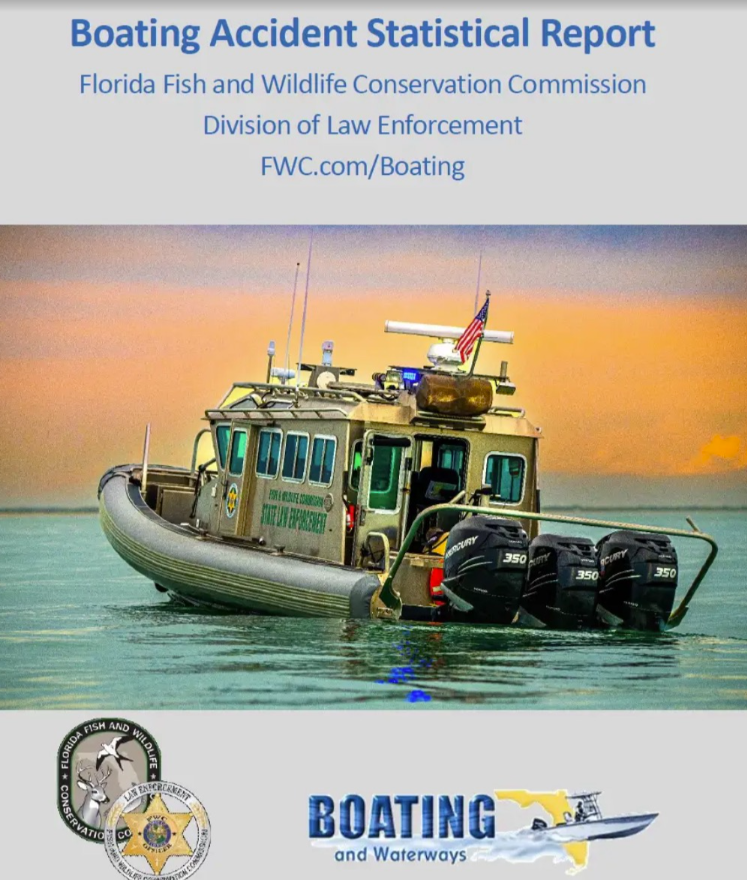
As our Florida waterways continue to see record numbers of residents and visitors, the latest data from the Florida Fish and Wildlife Conservation Commission (FWC) offers a sobering reminder of the importance of safety. The 2025 Boating Accident Statistical Report, released in May 2026, highlights the ongoing challenges of managing our increasingly congested marine environment.
Key Findings: A Year in Review
In 2025, Florida recorded 694 “reportable” boating accidents, a slight increase from the 685 incidents reported in 2024 and 659 in 2023. While the number of accidents trended upward, there was a significant decrease in loss of life compared to the previous year.
- Fatalities: 51 (down from 81 in 2024, which marked an all-time high).
- Injuries: 439.
- Property Damage: Approximately $25.6 million.
- Leading Causes: The top contributors to these accidents remain consistent, with collisions with fixed objects and collisions with other vessels leading the way, followed by incidents involving swamping, ejection from the vessel, and flooding.
Understanding the Trends
The report points to a clear correlation between the rising number of registered vessels—now nearly 1.03 million, plus an estimated million non-registered vessels—and waterway congestion.
A critical takeaway from the 2025 data is that drowning remains the leading cause of death, accounting for over half of all fatalities. Notably, nearly 10 deaths resulted from individuals falling overboard, underscoring the vital role of life jackets. Most fatal accidents involved vessels 21 feet or shorter, and operators aged 35 or older were the most represented demographic in these incidents.
Improving Boater Safety in Southwest Florida
With Southwest Florida counties like Lee featuring prominently in the state’s accident statistics, proactive safety measures are more important than ever. Whether you are a seasoned captain or a casual weekend boater, consider these essential steps to ensure you and your passengers return to the dock safely:
- Prioritize Education: Statistics consistently show that an overwhelming majority (83%) of operators involved in fatal accidents had no formal boater education. Taking a state-approved boating safety course is one of the most effective ways to improve awareness and handling skills.
- Wear Your Life Jacket: Accidents happen unexpectedly, leaving little time to reach for gear. Modern, low-profile inflatable life jackets make it easier than ever to wear one comfortably for the entire trip.
- Maintain 360-Degree Awareness: Improper lookout or inattention is a primary cause of collisions. Always scan the horizon and be aware of your surroundings, especially in high-traffic corridors or when navigating near divers and other recreational users.
- Respect the Zones: Familiarize yourself with local speed zones, including manatee protection areas and idle-speed zones. Using FWC’s official resources to map your route before you leave the dock helps you avoid both legal violations and hazardous shallows.
- Check Your Gear: Before every outing, perform a “safety sweep.” Ensure you have properly functioning navigation lights, a sound-producing device (whistle or horn), a fire extinguisher, and required personal flotation devices for every person on board.
- Use Modern Tech: If you are planning an extended trip, consider investing in an Emergency Position Indicating Radio Beacon (EPIRB) or a Personal Locator Beacon (PLB). These tools can be life-saving in an emergency.
Our waters are a shared resource that defines the Florida lifestyle. By staying informed, educated, and vigilant, we can collectively work to lower these numbers and ensure that every day on the water is a safe and enjoyable one.
For more information, including complete statistical breakdowns and safety course schedules, visit the official FWC Boating Safety page.