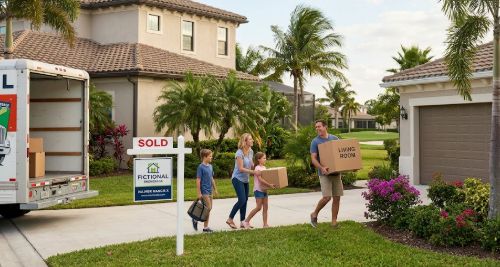
People who move to Southwest Florida tend to describe the decision in one of two ways. Those who moved for the weather, the water, and the lifestyle usually say they should have come sooner. Those who moved without doing their homework sometimes say they wished they’d known more before they signed a contract. The difference between those two groups comes down to preparation.
Southwest Florida is genuinely one of the most extraordinary places to live in the United States — for the right person, at the right stage of life, with the right expectations. It offers natural beauty, outdoor recreation, and a quality of daily experience that few American regions can match. It also carries real costs, specific risks, and meaningful limitations that anyone relocating here deserves to understand before they arrive.
This guide covers everything a prospective resident needs to think through: the real estate market as it actually stands in 2026, the honest picture of the job market, the school quality differences between counties, the insurance and cost of living realities, and the outdoor lifestyle that — if you take advantage of it — justifies everything else.
Defining Southwest Florida: What Region Are We Talking About?
Southwest Florida is most commonly understood to encompass five counties along the Gulf Coast: Sarasota, Charlotte, Lee, Collier, and Hendry. The major population centers are Sarasota and Venice in the north; Punta Gorda and Port Charlotte in Charlotte County; Fort Myers, Cape Coral, Bonita Springs, and Estero in Lee County; and Naples and Marco Island in Collier County.
Each of these areas has a distinct character, price point, school district, and lifestyle profile. “Moving to Southwest Florida” is not a single decision — it’s a decision between meaningfully different communities that happen to share a coastline. Understanding those differences is step one.
The Real Estate Market in 2026: An Honest Assessment
Where the Market Stands
After the extraordinary pandemic-era price surge of 2021–2022 and the correction that followed, Southwest Florida’s real estate market enters 2026 in a stabilization phase after experiencing significant corrections throughout 2025, transitioning from the pandemic-era seller’s market to a more balanced, buyer-friendly environment characterized by increased inventory, longer days on market, and strategic pricing opportunities.
The important framing here: this is a correction, not a collapse. Prices have moderated approximately 6–10% from 2022 peaks in most markets, representing a return to sustainable levels after pandemic-era overvaluation. Long-term fundamentals remain strong with continued population growth and economic expansion.
For buyers entering in mid-2026, 2026 is shaping up to be the third best year on record for home closings in Southwest Florida, with the Ellis Team’s Current Market Index showing building momentum despite headwinds from interest rates, inflation, and oil prices.
The outlook for the real estate market in 2026 can be summarized as steady — showing measured improvement without dramatic swings. Mortgage rates are expected to sit in the low sixes, price growth should be muted and broadly stable, and rising inventory means buyers have options and negotiation room that the 2021–2022 market never offered.
The Luxury Segment
For higher-budget buyers, the picture is particularly favorable. The luxury segment has shifted to a distinct market dynamic, with high-net-worth buyers having significant negotiation leverage in waterfront communities across Cape Coral, Sanibel, and Fort Myers for the first time in 24 months.
New Construction and Growth Corridors
Major growth corridors include Burnt Store Road in Charlotte County and eastern Corkscrew Road in Lee County, with every national homebuilder now active in the Charlotte County corridor. Babcock Ranch continues to be a significant driver, though residential permits declined from 1,526 homes in 2024 to 863 in 2025 — a natural market adjustment rather than a collapse, as builders work through inventory created during the boom.
What Different Budgets Get You
The price range across Southwest Florida varies dramatically by county and proximity to water.
Naples (Collier County) remains the region’s premium market — a world-class destination where median single-family home prices in the coastal neighborhoods run $1M+. Downtown Naples, Port Royal, Aqualane Shores, and the beachside communities command prices that reflect both the lifestyle and the scarcity of available land. East Naples and Golden Gate offer more accessible entry points while still benefiting from Collier County’s exceptional schools and services. Ave Maria, a master-planned community 30 miles east of Naples, offers new construction at price points that feel entirely different from the coast.
Fort Myers and Cape Coral (Lee County) offer the region’s widest range of price points. Cape Coral — with its 400+ miles of canals — offers boating-access homes at prices far below comparable water-access properties in Collier County. Fort Myers proper, Estero, Bonita Springs, and the Sanibel/Captiva islands each carry their own market dynamics. Sanibel has largely recovered from Hurricane Ian in 2022, though inventory remains limited and prices reflect both the island’s unique character and continued rebuild demand.
Sarasota and Charlotte Counties offer a different price profile — still Gulf-coast beautiful, but generally more accessible than Naples, with strong cultural amenities, exceptional schools, and a broader range of housing stock from historic neighborhoods to new master-planned communities.
The Insurance Reality: The Number You Must Calculate
No honest real estate discussion in Southwest Florida can avoid the insurance question, and no buyer should sign a contract without fully understanding it.
Floridians pay, on average, $8,292 a year for home insurance — more than double the national average — and insurance experts project the average Florida premium will rise to $8,458 by the end of 2026.
The good news is that reform is working. Florida’s tort reform legislation has reduced lawsuit abuse that was driving up insurer losses, and carriers are passing those savings along through rate reductions of 5–10%. Florida now has 30+ active homeowners carriers in 2026, a sharp rebound from the 2022 low.
The cost varies significantly by location within the region. Southwest Florida (Lee, Collier, and Charlotte counties) averages around $4,005 per year for a standard dwelling policy, but coastal properties with flood zone exposure and high replacement values can run significantly higher. Flood insurance — which is separate from homeowners coverage and covers storm surge and rising water damage — is an additional cost that buyers must factor in, particularly for properties within FEMA-designated flood zones near the coast.
The practical guidance: Before making any offer, get insurance quotes from at least three carriers for the specific property. Calculate the total annual cost of ownership including mortgage, property taxes, homeowners insurance, flood insurance, and HOA fees if applicable. In Southwest Florida, this total carrying cost can be meaningfully higher than buyers accustomed to other markets expect.
Key Questions to Ask Before You Buy
What flood zone is the property in, and what does that mean for flood insurance cost and mortgage requirements? How old is the roof, and does it meet current wind-mitigation standards? Has the property experienced any storm damage, and has it been properly remediated? What is the HOA fee structure and what does it cover? Is the property on city water and sewer, or well and septic? For waterfront properties, what are the dock rights and any deed restrictions on use?
None of these questions are complicated. All of them have significant financial implications if left unasked.
The Job Market: Opportunities, Strengths, and Honest Limitations
The Regional Economy
Southwest Florida’s economy is large, growing, and anchored in several stable sectors — but it is not a diversified metro economy in the way that Tampa, Miami, or Orlando are. Understanding that distinction is essential for anyone who needs employment income to support their life here.
The Region’s Largest Employers
Southwest Florida’s leading employers span healthcare, education, government, and retail industries. Lee Health tops the list at over 16,500 employees, highlighting the region’s strong emphasis on healthcare and public services. Naples-based Arthrex employs 4,440 workers, ranking among the region’s largest home-grown companies as a global orthopedic product developer. Publix remains one of Southwest Florida’s largest employers and serves as Florida’s top private employer statewide.
Healthcare is the dominant employment sector in the region. NCH Healthcare System anchors Collier County. Lee Health operates multiple hospital campuses across Lee County. Physicians Regional Medical Center serves Naples. For healthcare professionals — physicians, nurses, therapists, technicians, and administrators — Southwest Florida represents a genuinely strong employment market with ongoing demand driven by the region’s aging population.
Where the Opportunities Are Strong
Healthcare and medical services represent the single most robust employment sector — high demand, competitive salaries, and continuing growth as the region’s retiree and snowbird population ages.
Construction and real estate remain active sectors. Population growth, infrastructure investment, and ongoing development keep demand for skilled trades, construction management, real estate professionals, and related services consistently strong. High-demand jobs in Florida that are growing much faster than average include electrician, physician assistant, software developer, financial advisor, and information security analyst, with strong demand also for construction managers, real estate brokers, and truck drivers.
Hospitality and tourism employ a significant portion of the regional workforce. The seasonal nature of the industry means some positions are year-round and others contract significantly in summer. Management and ownership positions in hospitality offer strong career trajectories; entry-level positions carry the volatility of a seasonally dependent sector.
Entrepreneurship and small business are notably vibrant in Southwest Florida. The region has attracted significant numbers of business owners, consultants, and professionals who have relocated from higher-cost markets — bringing their businesses, clients, and remote working arrangements with them. For entrepreneurs and remote workers, Florida’s zero state income tax represents a direct and meaningful financial advantage.
Professional services — law, finance, accounting, insurance, marketing — maintain steady demand from the region’s business and high-net-worth residential communities. Naples in particular has a remarkably dense concentration of wealth management, private banking, and luxury real estate professionals serving a nationally prominent affluent population.
The Honest Limitations
Southwest Florida is not a strong market for mid-level corporate careers in technology, finance, media, or the creative industries. The region lacks the anchor corporate headquarters and large professional employer base that generate those career ecosystems in larger metros. Young professionals seeking rapid career advancement in those sectors will find the market limiting compared to Tampa, Miami, or Orlando.
Salaries in Southwest Florida are generally lower than comparable roles in larger Florida metros and significantly lower than Northeast or West Coast markets. The offset — no state income tax, lower cost of living than major metros, and quality of life that most professionals in coastal cities pay enormous premiums to approximate on weekends — is real, but it requires honest personal math to evaluate.
Remote work has changed this calculus significantly for many people. A professional earning a San Francisco or New York salary while living in Naples is in an extraordinarily favorable economic position. If your income is location-independent, Southwest Florida’s combination of low tax, moderate cost of living, and exceptional quality of life is difficult to beat anywhere in the country.
Schools: A County-by-County Reality Check
For families with children, school quality is the variable that most directly impacts which Southwest Florida community makes sense. The honest answer is that school quality varies considerably across the region — and the differences matter.
Collier County: The Region’s Academic Leader
Collier County Public Schools ranked 6th statewide out of 67 districts in the 2025 school grades, making CCPS the only district in Southwest Florida to earn an “A” rating and placing Collier County among the top 28 districts in Florida. Notably, 98% of Collier’s traditional public schools earned an “A” or “B” grade, with no schools falling into the “D” or “F” categories.
Sarasota and Collier counties both maintain 92% graduation rates with spending levels above $7,300 per pupil.
For families whose children’s education is a primary decision factor, Collier County’s school system is a genuine and significant asset. Naples-area schools, including Gulf Coast High School, Barron Collier High School, and the Collier County IB program, offer competitive academic environments. The district also maintains strong elementary and middle school performance that supports continued academic development.
Sarasota County: Consistently Top-Ranked
Sarasota County School District ranks #2 among the best school districts in Florida according to Niche’s 2026 rankings, reflecting decades of investment in academic excellence and a school system that consistently outperforms state and national benchmarks. For the second consecutive year, 95 percent of Sarasota County Schools earned a grade of “A” or “B” from the Florida Department of Education.
Sarasota’s school system benefits from a community that historically values education, a strong arts and performing arts tradition in its middle and high schools, and the presence of IB and advanced coursework options at multiple campuses. For families prioritizing educational quality, Sarasota County is arguably the region’s strongest option.
Lee County: Room for Improvement
Lee County maintained a “B” district rating in the most recent state school grades, though it continues to rank ninth among the largest 10 school districts in Florida. Within Lee County, school quality varies considerably by location — the highest-performing campuses are generally found in the Estero, Bonita Springs, and South Fort Myers areas, while some Fort Myers urban campuses face more significant academic challenges.
For families moving to Lee County, research at the individual school level — rather than the district level — is strongly advised. Florida’s public school choice laws give families meaningful options to access higher-performing schools beyond their immediate geographic assignment, and many Lee County families take advantage of charter school and magnet school options to find the right academic environment.
Private Schools and Charter Options
All three major Southwest Florida counties have strong private school ecosystems. The Naples area in particular has a concentration of independent and parochial schools — including Community School of Naples, Seacrest Country Day School, First Baptist Academy, and others — that offer alternative academic environments across a range of educational philosophies and price points. Sarasota supports excellent private options including Out-of-Door Academy, Cardinal Mooney Catholic High School, and Pine View School for the Gifted (a public school that consistently ranks among Florida’s best by any measure).
Higher Education
Florida Gulf Coast University (FGCU) in Fort Myers serves as the anchor four-year university for Lee and Collier counties, offering a range of undergraduate and graduate programs with significant growth in engineering, business, and health sciences. Florida SouthWestern State College serves the community college function across Lee County with accessible associate and bachelor’s degree programs. Sarasota is served by New College of Florida — a distinctive public liberal arts institution with a national academic reputation — and Ringling College of Art and Design, one of the finest art and design schools in the country.
Quality of Life: The Full Picture
Climate and Weather
Southwest Florida’s climate is the defining quality of life variable. The region receives approximately 271 sunny days per year. Winters are genuinely exceptional — temperatures from November through April consistently range between 65°F and 82°F with low humidity, minimal rain, and the kind of blue-sky clarity that makes every day feel like the best day of a northern vacation.
The tradeoff is summer. June through September brings temperatures in the low-to-mid 90s with humidity that makes outdoor activity demanding without careful timing. Afternoon thunderstorms are a near-daily occurrence from June through September. This is not a dealbreaker — most residents manage it with early morning outdoor routines and midday indoor activities — but it is the honest reality of the tropical wet season.
The larger weather variable is hurricane risk. Southwest Florida sits on the Gulf Coast, which historically receives significant tropical activity. Hurricane Ian in 2022 and the 2024 season caused extensive damage in portions of Lee County and coastal areas. The risk is real, it is priced into insurance costs, and it requires ongoing preparedness — including having a clear evacuation plan, understanding your specific flood zone, and maintaining a well-hardened structure with modern wind mitigation features.
The practical community response to hurricane risk is matter-of-fact rather than anxious. Long-term residents learn the preparation protocols, maintain their go-bags and supplies, understand their evacuation zones, and make their housing decisions with the risk factored in rather than ignored.
Cost of Living
Outside of real estate and insurance, Southwest Florida’s cost of living is moderate by coastal standards. Florida’s zero state income tax represents a direct financial benefit — for a household earning $150,000 annually, the absence of a state income tax represents $5,000–$12,000 in annual savings compared to states like New York, California, or Illinois.
Groceries, utilities, healthcare, dining, and everyday goods are broadly comparable to other Florida metro areas. The absence of a state income tax, combined with generally lower property prices than comparable coastal communities in California, New England, or the Pacific Northwest, makes the financial case for Southwest Florida compelling for many households even after accounting for insurance costs.
Healthcare
The healthcare infrastructure of Southwest Florida is a genuine quality of life asset. Lee Health’s 16,500-employee health system operates multiple hospital campuses across Lee County with broad specialty coverage. NCH Healthcare System serves Collier County with two hospital campuses. The Cleveland Clinic has a significant presence in the region through its Weston campus and telehealth relationships. For complex specialized care, Miami’s world-class medical institutions are accessible within approximately two hours by vehicle.
The concentration of healthcare professionals and facilities in the region reflects both the large retiree population’s needs and the general growth of the regional economy.
Arts, Culture, and Community
Southwest Florida punches above its weight class in arts and culture for a region of its size. Sarasota in particular has a cultural footprint that would be impressive for a city three times its population. The Sarasota Opera, Florida Studio Theatre, Asolo Repertory Theatre, Ringling Museum of Art, Sarasota Orchestra, and the broader arts community make the city a nationally recognized cultural destination.
Naples supports the Naples Philharmonic, Artis-Naples performing arts center, the Baker Museum, and a thriving gallery community. Fort Myers maintains strong community theater, the Sidney & Berne Davis Art Center, and a Historic Downtown arts district that has grown significantly over the past decade.
Community engagement — through civic organizations, conservation nonprofits, neighborhood associations, and volunteer networks — is robust throughout the region and provides immediate pathways to connection for new residents who take the initiative to participate.
The Snowbird Dynamic
Southwest Florida’s population swells substantially from November through April when seasonal residents — commonly called snowbirds — return from northern states and Canada. This dynamic has real implications for daily life: traffic increases significantly, restaurant reservations become necessary where they weren’t in summer, and the social energy of the region intensifies.
The snowbird population skews older and more affluent than the year-round resident base, which shapes the retail, dining, and cultural infrastructure in ways that benefit permanent residents year-round. The restaurants, galleries, performing arts venues, and luxury retail that exist here exist in part because of the seasonal population’s spending power — and they remain accessible to year-round residents throughout the calendar.
Outdoor Recreational Activities: The Region’s Greatest Asset
This is where Southwest Florida’s quality of life case becomes genuinely compelling. The outdoor recreational opportunities here are not amenities added to a functional urban environment — they are the core of why most people come and why almost everyone who comes for the lifestyle stays.
The Water
The Gulf of Mexico defines Southwest Florida’s recreational character. The water is warm year-round — 72°F to 88°F — clear, and accessible along hundreds of miles of barrier island beaches, public parks, boat launches, and preserved shoreline. Swimming, snorkeling, paddleboarding, kayaking, fishing, sailing, and boating are not seasonal activities here. They are available 12 months a year with minor seasonal variation.
The inshore fishing is world-class. Southwest Florida is widely considered one of the finest inshore saltwater fishing destinations in the United States, with year-round populations of tarpon, snook, redfish, permit, and sea trout across the interconnected system of bays, flats, estuaries, and backcountry waterways from Charlotte Harbor south to the Ten Thousand Islands.
The Gulf beaches — Naples, Marco Island, Sanibel, Fort Myers Beach, Lido Key, Siesta Key — are consistently rated among the finest in the country for sand quality, water clarity, and overall beauty. Access is broad and largely public, unlike many coastal areas where beach access has been privatized.
The Land
What surprises most newcomers is the quality and extent of the land-based outdoor opportunities — hiking, birding, wildlife photography, nature immersion — in an ecosystem that most people think of primarily as a beach destination.
Within an hour of any Southwest Florida address, you can access Corkscrew Swamp Sanctuary (the largest old-growth bald cypress forest in North America), the CREW land trust trail system (60,000+ acres of free hiking), Fakahatchee Strand Preserve State Park (the “Amazon of North America” with ghost orchids and wild royal palms), Big Cypress National Preserve (729,000 acres of genuine backcountry wilderness), and multiple national wildlife refuges and state parks that collectively host over 400 bird species across the calendar year.
This combination — world-class Gulf Coast beach and water access alongside world-class interior wilderness — is genuinely rare. Most coastal regions offer one or the other. Southwest Florida offers both, essentially on the same day.
Year-Round Outdoor Living
Perhaps the most significant outdoor lifestyle advantage of Southwest Florida is the simple fact that the climate allows outdoor living 12 months a year. The ability to walk on the beach in January, kayak through mangroves in February, watch roseate spoonbills at sunset in March, and run a trail through pine flatwoods at dawn in December — without special equipment, layering systems, or seasonal constraints — shapes daily life in ways that permanent residents come to regard as essential rather than extraordinary.
For people who came from northern climates where outdoor activity is genuinely seasonal, the shift to a place where it is simply available every day is often described as one of the most meaningful quality of life changes they’ve experienced.
Making the Decision: Questions Worth Asking Yourself
The residents who thrive in Southwest Florida tend to share a few characteristics. They came for specific, concrete reasons rather than a vague sense that “Florida is nice.” They researched the insurance costs, the job market for their specific field, and the schools for their children’s specific needs before they arrived. They engaged with the outdoor lifestyle rather than observing it from air conditioning. And they built community deliberately rather than waiting for it to arrive.
The residents who struggle tend to have underestimated the summer heat and humidity, made real estate decisions without fully accounting for insurance and carrying costs, moved without a clear income plan, or expected the social infrastructure of a larger metro in a region that requires more initiative to build community.
Southwest Florida is not for everyone. It is for people who genuinely love the outdoors, the water, and the subtropical character of life here — who find meaning in proximity to extraordinary natural environments rather than the cultural density of a major city. If that describes you, there is probably no better place in the United States to build a life than this stretch of Gulf Coast. If it doesn’t, no amount of beautiful real estate photography changes that equation.
Come for a week in January. Spend time outside — on the water, on a trail, at a beach at sunset. Pay attention to how it feels. The people who were meant to be here tend to know it before they finish unpacking.
