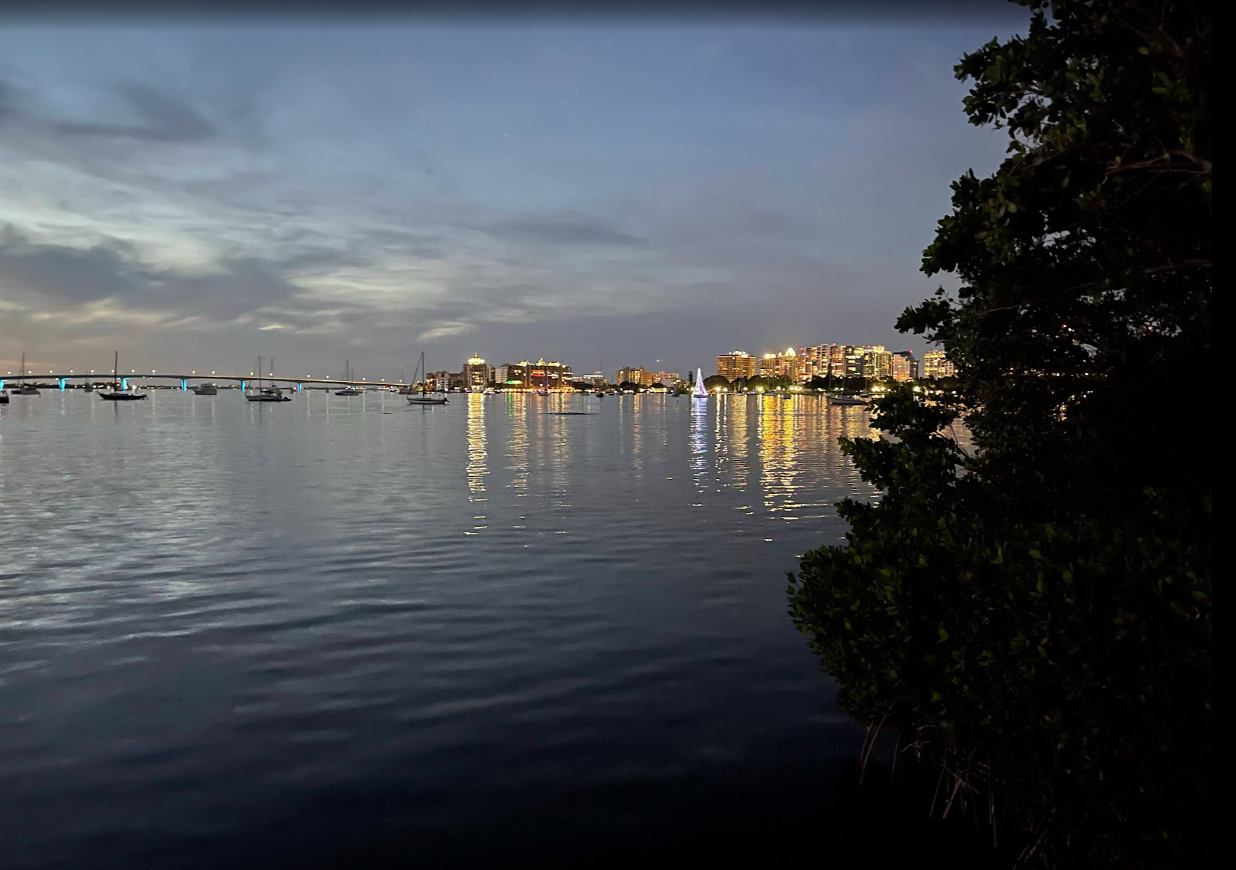
Sarasota Bay is more than just a scenic backdrop for high-rises and sailboats; it is a complex, living machine. Designated by the U.S. Congress as an Estuary of National Significance in 1989, it is one of only 28 such estuaries in the country.
Stretching from Anna Maria Sound in the north to Venice Inlet in the south, this “lagoon-type” estuary relies on a delicate balance of saltwater from the Gulf of Mexico and freshwater from the local watershed.
The Biological Foundation: Three Critical Habitats
The health of Sarasota Bay is built on three primary pillars. If one fails, the entire ecosystem feels the impact.
1. Seagrass Meadows
Seagrasses are the “lungs” of the bay. Sarasota Bay is home to five species, most notably Turtle Grass (Thalassia testudinum) and Manatee Grass (Syringodium filiforme).
- Carbon Sequestration: Seagrasses capture carbon up to 35 times faster than tropical rainforests.
- Water Clarity: Their root systems stabilize the sandy bottom, preventing sediment from clouding the water.
- The Nursery: Over 70% of Florida’s recreationally and commercially important fish (like Snook and Redfish) spend their juvenile stages hiding in these blades.
2. Mangrove Shorelines
Mangroves are the bay’s first line of defense. In Sarasota, you will find Red, Black, and White mangroves.
- Red Mangroves (Rhizophora mangle): Identifiable by their “prop roots,” they sit directly in the water, providing a massive surface area for oysters and barnacles to grow.
- Black Mangroves (Avicennia germinans): Found further inland, they use “pneumatophores” (straw-like roots) to breathe in oxygen-poor soil.
- Coastal Protection: These forests act as shock absorbers during hurricanes, breaking up wave energy and preventing shoreline erosion.
3. Oyster Reefs
Oysters are the bay’s natural filtration system. A single adult oyster can filter up to 50 gallons of water per day. By clumping together into reefs, they create “apartment complexes” for small crabs, shrimp, and baitfish.
The Charismatic Megafauna: Top Predators
Sarasota Bay is famous for hosting the world’s longest-running study of a wild dolphin population.
- Bottlenose Dolphins: Since 1970, the Sarasota Dolphin Research Program has tracked multi-generational families. These dolphins are year-round residents, meaning they don’t migrate; the bay is their permanent home.
- West Indian Manatees: These “sea cows” move into the bay during the warmer months to graze on seagrass. They are vital for nutrient cycling—consuming massive amounts of vegetation and depositing nutrients back into the ecosystem as waste.
- The Bull Shark: Often misunderstood, bull sharks use the lower-salinity areas of the bay (like the mouths of creeks) as nurseries for their pups.
Current Ecological Challenges
Despite its beauty, Sarasota Bay is a “threatened” paradise facing modern pressures:
Nutrient Overload (Nitrogen)
The biggest threat to the bay is nitrogen. Excess nitrogen comes from aging septic systems, reclaimed water used for lawn fertilizers, and stormwater runoff.
- Algal Blooms: High nitrogen acts like a “super-fertilizer” for algae. This leads to blooms that cloud the water, blocking sunlight from reaching seagrasses.
- Red Tide: While Karenia brevis (Red Tide) occurs naturally in the Gulf, land-based nutrient runoff can “fuel” these blooms once they enter the bay, leading to massive fish kills and respiratory issues for humans.
Habitat Fragmentation
As the Sarasota skyline grows, natural shorelines are often replaced by concrete seawalls. Seawalls reflect wave energy rather than absorbing it, which scours the bottom and prevents mangroves from growing. Organizations like the Sarasota Bay Estuarine Program (SBEP) are currently working to replace these with “living shorelines” made of native plants and rock.
The Path to Recovery
The story of Sarasota Bay is actually one of hope. In the 1970s and 80s, the bay was heavily polluted. Through massive infrastructure projects to move wastewater away from the bay, seagrasses made a historic comeback in the 2010s.
Today, the focus has shifted to stormwater management and large-scale restoration projects, such as the Bobby Jones Nature Park and the “The Bay” park in downtown Sarasota, which use natural marshes to filter water before it ever hits the bay.
How You Can Help
- Skip the Fertilizer: Sarasota County has a ban on nitrogen and phosphorus fertilizers from June 1 to September 30.
- Mind the Grass: If you are boating, “be shallow mindful.” Propeller scars in seagrass can take up to 10 years to heal.
- Plant Natives: Replacing a traditional lawn with Florida-native plants reduces the need for water and chemicals.
Join the Restoration: Volunteer Opportunities in Sarasota
The future of Sarasota Bay depends on community action. If you are inspired by its complex ecology and want to play a direct role in its recovery, several local organizations offer hands-on volunteer programs. Whether you prefer getting muddy planting mangroves or educating the public, there is a role for you.
Where to Give Your Time:
1. Sarasota Bay Watch (SBW) This is the “boots-on-the-ground” (or feet-in-the-water) organization dedicated entirely to citizen-led restoration.
- What You’ll Do: SBW is famous for its large-scale clam restoration projects, where thousands of native clams are released to help filter the water. They also organize scallop searches, monofilament fishing line cleanup days, and invasive species removal from local islands like Jim Neville Preserve.
- Best For: People who love active, outdoor field work and want to see immediate, tangible results.
2. Mote Marine Laboratory & Aquarium While known globally for research, Mote relies heavily on volunteers to support its mission.
- What You’ll Do: Volunteers can work in coral restoration nurseries, assist with sea turtle nesting monitoring (a vital part of bay-adjacent beach health), or serve as aquarium docents, educating visitors about the very habitats described in this article.
- Best For: Those interested in scientific education, animal husbandry, or long-term research support.
3. Sarasota Bay Estuarine Program (SBEP) As the overarching organization that manages the bay’s “National Significance” designation, SBEP focuses on large-scale policy and restoration.
- What You’ll Do: Join their “Bay Guardians” volunteer program. This group tackles projects like planting living shorelines (installing native plants and oyster reef balls), restoring tidal wetlands, and conducting air potato (invasive vine) removal.
- Best For: Volunteers passionate about habitat restoration, botany, and community-wide ecological improvements.
4. The Bay Park (Sarasota) This is the massive new signature park in downtown Sarasota, designed specifically to be a model of sustainable coastal restoration.
- What You’ll Do: The Bay Park needs volunteers to help maintain its newly created mangrove bayou and wetland mitigation zones. These areas use native plants to filter stormwater runoff from the city before it enters the bay.
- Best For: Locals who want to improve their immediate urban environment and support green infrastructure.
The Impact of Your Work
Volunteering isn’t just about manual labor; it’s about creating a personal connection to the estuary. When you help plant a Red Mangrove sapling, you aren’t just putting a tree in the mud—you are building future coastal protection, a nursery for blue crabs, and a filter for nitrogen. You become part of the very ecological balance that keeps Sarasota Bay alive.