
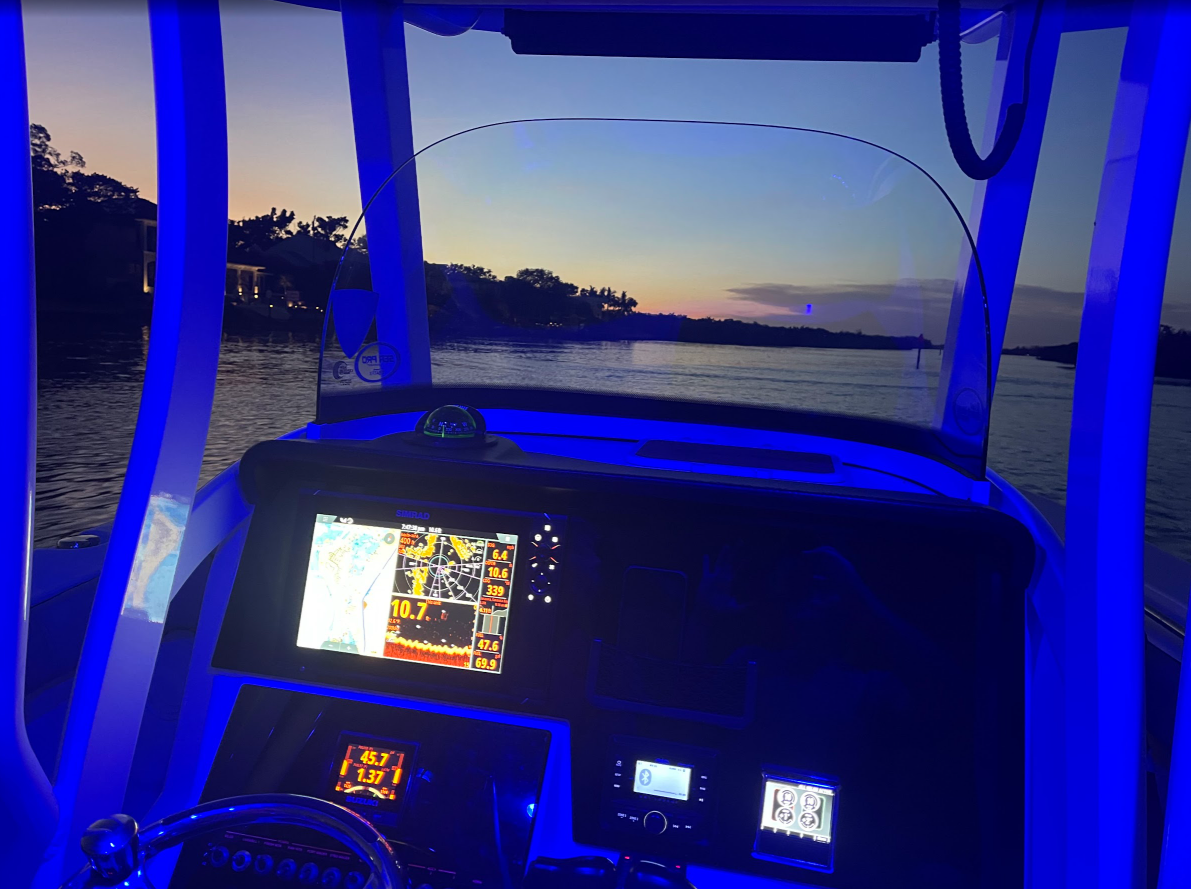
In 2026, the intersection of artificial intelligence and recreational fishing has evolved from simple logging tools to sophisticated “digital co-captains”. For anglers in Southwest Florida (SWFL), these advancements offer unprecedented precision in navigating both shallow flats and deep Gulf waters.
Advanced Technologies Transforming the Water
1. AI-Enhanced Sonar and Radar Fusion
Modern marine electronics have moved beyond raw data displays, using machine learning to filter noise and categorize underwater environments.
- Object Classification: Platforms like Tocaro Blue’s ProteusCore utilize machine learning models trained on millions of radar frames to identify and classify targets—such as buoys, small vessels, or navigational hazards—as distinct onscreen icons.
- Sonar Optimization: Systems integrated with platforms like Viam can “tune” sonar modules in real-time, adjusting for range and angle to sharpen imagery. This helps anglers identify “honey holes” by distinguishing between schools of bait and actual game fish.
- 3D Situational Awareness: The integration of AI radar with FarSounder’s Argos 3D Forward Looking Navigation Sonar allows captains to view surface and subsurface hazards on a single, unified display, essential for navigating the often-uncharted or shallow waters of the Florida coast.
2. Predictive Analytics and Environmental Modeling
AI is now used to synthesize vast amounts of environmental data to forecast fishing success.
- Pattern Recognition: Apps like Fishbrain utilize AI algorithms to provide curated recommendations based on historical catch data, local conditions, and community-shared insights.
- Species Identification: Using computer vision, tools like FishVerify and Fishbrain’s recognition features allow anglers to snap a photo and instantly identify a species, often providing details on regulations and local fishing trends.
- Data Integration: Systems can overlay sea surface temperature (SST) maps, tide charts, and bathymetric data to predict fish migration patterns, helping you spend more time in “the strike zone”.
Integrating AI into Your Boat
You do not need a professional vessel to implement these tools. Integration can be achieved through a layered approach:
- Unified Displays: Aim for Multi-Function Displays (MFDs) that support “data fusion”—the ability to pull AIS, radar, and sonar data into one clean interface.
- Smart Mobile Apps: Use apps that sync with your electronics. For example, Navionics (owned by Garmin) provides highly detailed HD bathymetric maps that can be updated wirelessly, offering some of the best high-res relief shading for locating structure.
- Sensor Add-ons: Consider peripheral sensors like FLIR thermal-imaging cameras (e.g., M460 or M560 series), which use convolutional neural networks to automatically identify and classify targets in low light, significantly reducing helm-side workload.
Best Ways to Get Started
- Log Every Catch: Use apps like ANGLR or MyCatch. These allow you to track weather, tide, and water temp variables, which the AI then uses to help you identify patterns specific to your favorite SWFL fishing spots.
- Leverage Citizen Science: Apps like MyCatch allow you to contribute to scientific research, helping government agencies manage local fish stocks more effectively.
- Stay Informed: Keep an eye on evolving marine electronics manufacturers like Furuno, Simrad, and Raymarine, as they increasingly embed AI capabilities directly into their standard MFD firmware.
Recommended Resources
- Fishbrain: Best for community-driven data, bite-time predictions, and species identification.
- Navionics (Garmin): Essential for HD bathymetric mapping and relief shading.
- Tocaro Blue: Information on AI-driven radar and collision avoidance systems.
- FarSounder: Leaders in 3D forward-looking sonar integration with AI platforms.
- MyCatch (Angler’s Atlas): A great option for logging data while supporting fisheries conservation.
A Note on Responsibility: AI tools should be used to augment your intuition, not replace it. Always verify regulations with the Florida Fish and Wildlife Conservation Commission (FWC), as fishing rules can change based on species and season, regardless of what an AI app suggests.