Southwest Florida · Living Well Outdoors
Southwest Florida stretches roughly 100 miles along the Gulf Coast — from the sprawling mangrove rivers of the Ten Thousand Islands to the pine flatwoods of Immokalee, the sugar-sand beaches of Marco Island, and the Big Cypress backcountry that bleeds into Everglades National Park. It is, by any honest measure, one of the most biologically rich and recreationally extraordinary regions in North America.
And yet most people who live here never fully use it. They drive between air-conditioned spaces, occasionally glancing at the water. This article is a reminder — and an invitation — to step outside and let this landscape do what it was born to do: optimize you.
Eight Ways Southwest Florida Transforms Your Life
1. Kayaking & Paddleboarding the Mangroves
The mangrove tunnels of Rookery Bay, Fakahatchee Strand, and the Everglades backcountry paddling trails offer one of the most meditative workout environments on the planet. A two-hour paddle through a canopied mangrove river engages your core, shoulders, and postural muscles while demanding a level of focused presence that dissolves mental chatter entirely. The combination of rhythmic movement, salt air rich in negative ions, and the sensory wonder of arched roots and rookery birds produces measurable reductions in cortisol and a near-meditative state that researchers call “soft fascination.” You come out tired in the best way — and weirdly, deeply calm.
2. Inshore Fishing: Patience as a Superpower
Southwest Florida is arguably the inshore fishing capital of the United States. Tarpon, snook, redfish, and permit patrol waters from Pine Island Sound to the backcountry flats of Chokoloskee Bay. But beyond the sport itself, fishing is a masterclass in cognitive patience, sensory sharpening, and focused presence. Reading tides, tracking bait movement, and casting accurately demand a form of mindfulness that translates directly into professional and personal focus. Studies on fishing and cognitive health show reductions in anxiety, improved executive function, and measurable boosts in feelings of competence and self-efficacy.
3. Trail Running & Cycling in the Flatwoods
The pine flatwoods of Collier County, the off-road trails of Corkscrew Regional Ecosystem Watershed (CREW), and the paved Harmony of the Everglades pathway system offer something surprising to newcomers: serious athletic training terrain. The flat topography puts full emphasis on cadence, lung capacity, and sustained aerobic efficiency — ideal for building a deep cardiovascular base. Morning trail runs through slash pine forest, lit by low light filtering through long needles and alive with Eastern bluebirds and swallow-tailed kites overhead, produce the kind of workout that no gym treadmill can replicate. The psychological lift from training in living ecosystems is well-documented and profound.
4. Sunrise Beach Walking & Barefoot Therapy
The beaches of Naples, Marco Island, and Sanibel offer a specific kind of healing that has been studied under the clinical term “grounding” or earthing — the practice of direct skin contact with the earth’s surface. Walking barefoot on wet sand transfers negatively charged electrons from the Earth’s surface into the body, measurably reducing systemic inflammation, improving sleep, and regulating circadian cortisol patterns. Combine this with the proven psychological benefits of blue space (proximity to water), the cardiovascular effect of walking on unstable soft sand, and the natural vitamin D synthesis from morning sun, and a 45-minute sunrise beach walk becomes one of the most efficient health interventions available — completely free.
5. Snorkeling, Swimming & Open Water Training
The warm Gulf waters of Southwest Florida sit between 72°F and 88°F year-round, making open-water swimming accessible to virtually everyone. Open water swimming, unlike pool swimming, demands constant proprioceptive adjustment to currents and small waves, activating stabilizer muscles that pool training misses entirely. The mental component is equally significant: overcoming the mild sensory challenge of open water builds confidence, stress resilience, and a measurable expansion of one’s physiological comfort zone. Shelling reefs near Sanibel, snorkeling the living hard-bottom habitat off Naples Pier, and freediving for scallops in Charlotte Harbor are experiences that reconnect you to the biological richness of the sea.
6. Birdwatching: Attention Training in the Wild
Southwest Florida sits within one of the great bird migration corridors of North America and hosts year-round breeding populations of species found nowhere else in the continental U.S. — roseate spoonbills, limpkins, snail kites, swallow-tailed kites, and dozens of heron and egret species. Birdwatching demands exactly the kind of deep, non-judgmental attention that mindfulness meditation trains. Tracking movement in peripheral vision, identifying subtle color patterns, listening for specific call structures — these activities build cognitive acuity, sensory awareness, and the focused attention span that modern screen life erodes. Multiple studies link birdwatching to reductions in depression, anxiety, and feelings of social disconnection.
7. Forest Bathing in the Big Cypress
The Japanese practice of Shinrin-yoku — slow, sensory immersion in forest environments — has been validated by decades of research for its effects on blood pressure, immune function, mood, and stress hormones. In Southwest Florida, the Big Cypress National Preserve and Fakahatchee Strand State Preserve offer humid, cathedral-like swamp forest environments dense with ancient cypress trees, wild orchids, and bromeliads that are perhaps the closest thing in North America to the ancient Japanese forests studied in this research. Spending 90 minutes walking slowly through these environments, attending to texture, smell, sound, and light rather than fitness metrics, has been shown to lower blood pressure, improve natural killer cell activity, and produce lasting improvements in mood for up to a week afterward.
8. Outdoor Yoga, Meditation & Breathwork
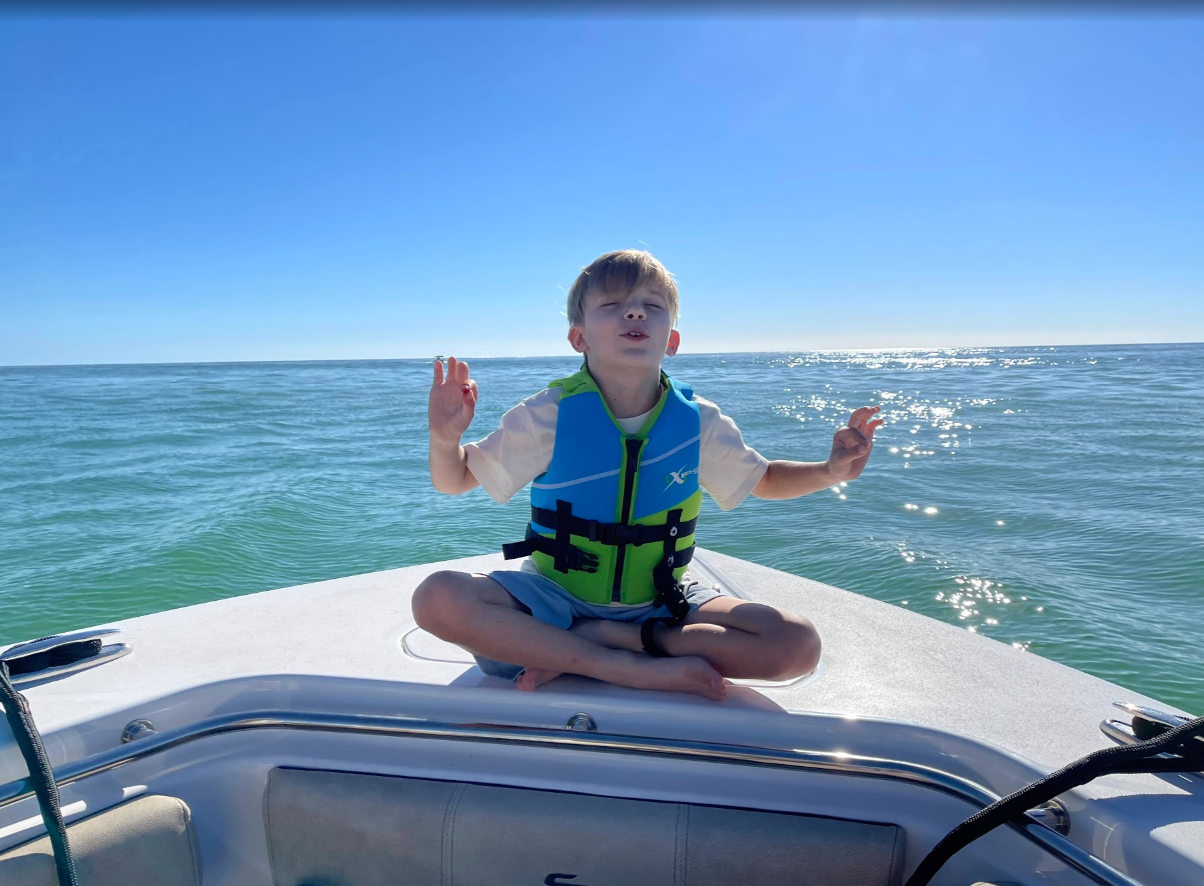
Practicing yoga or breathwork outdoors in Southwest Florida layers two powerful wellness interventions simultaneously. The outdoor environment itself — the sound of water, the warmth of sun, the scent of salt air — primes the parasympathetic nervous system before a single breath or pose is taken. The Gulf Coast offers extraordinary venues: the quiet lawns of Conservancy of Southwest Florida, the grassy banks of the Gordon River Greenway, or simply a mat placed on a quiet stretch of morning beach before tourists arrive. The combination of structured breathwork, movement, and immersion in a living ecosystem produces a physiological coherence — heart rate variability, hormonal balance, nervous system regulation — that indoor practice approximates but rarely fully achieves.
Why This Specific Landscape Heals
The Vitamin D Equation
Southwest Florida averages 271 sunny days per year. Vitamin D deficiency affects roughly 42% of the American population and is linked to depression, immune dysfunction, cardiovascular disease, and cognitive decline. Even 20 minutes of midday sun exposure on arms and legs synthesizes more than adequate daily vitamin D for most skin types. Living outdoors in Southwest Florida means this foundational nutrient is continuously available — but only if you use it. Early morning outdoor activity ensures you get light exposure before UV index peaks, maximizing benefit while minimizing risk.
Saltwater & the Nervous System
The Gulf of Mexico air is rich in negatively charged sea salt aerosols and iodine compounds that have measurable effects on respiratory health, mucous membrane function, and mood. Historical “sea cure” traditions weren’t pseudoscience — they were observational evidence of real physiological effects. The rhythmic sound of waves has been specifically shown to induce alpha-wave brain states associated with relaxed alertness, creativity, and stress recovery. Spending time in and near the Gulf is, quite literally, neurologically restorative.
Heat Adaptation & Metabolic Resilience
Southwest Florida’s subtropical heat is often framed as an obstacle. For the strategic outdoor enthusiast, it is a training tool. Deliberate heat exposure through outdoor exercise builds heat shock proteins that protect cardiovascular function, improve insulin sensitivity, and have been linked to reduced all-cause mortality. The key is progressive adaptation — starting with morning sessions during cooler hours and gradually extending into the heat. Heat-acclimated individuals show superior cardiovascular efficiency, better temperature regulation, and lower resting heart rates than those who exercise exclusively in climate-controlled environments.
Biodiversity & the Microbiome
Emerging research in environmental microbiology suggests that regular exposure to natural, biodiverse environments — soil, plants, salt water, wild air — significantly enriches the human gut and skin microbiome in ways that reduce allergy, autoimmune reactivity, and systemic inflammation. Southwest Florida’s extraordinary ecological diversity means the air, water, and ground you contact outdoors carry a breadth of beneficial microbial diversity that is essentially unavailable in built environments. Children raised in biodiverse outdoor environments show dramatically lower rates of asthma and allergy. These benefits extend throughout life.
The Daily Optimization Protocol
You don’t need a plan that is complicated. You need one that is consistent.
6:00–7:30 AM: Sunrise beach walk, barefoot on wet sand, 30 to 45 minutes. No headphones. Full sensory presence. Let the light, the sound, and the salt air do their work.
7:30–9:00 AM: Kayak paddle or open-water swim while temperatures are low and the water is glass-calm. This is your physical training, your movement meditation, and your nature immersion all at once.
Evening: Birdwatch from a nature preserve boardwalk or practice outdoor breathwork facing the sunset. The Gulf offers some of the most spectacular nightly sunsets in the world, and watching the full color arc is a deeply restorative ritual.
Weekly: One full backcountry paddle or forest-bath hike of three or more hours for a deep nervous system reset. This is the session that changes how you feel for the rest of the week.
Your Outdoor Calendar, Season by Season
November – February: Dry Season — Peak Performance
This is when Southwest Florida delivers its very best. Temperatures range from 60 to 78°F, humidity is low, and mosquito pressure drops sharply. This is the season for all-day hikes in Big Cypress, multi-day kayak camping trips in the Ten Thousand Islands, dawn-to-dusk offshore fishing, and the spectacular migration of wintering birds. Tarpon and snook fishing peaks. Mental clarity from outdoor exercise is highest during this season due to cool, dry air and extraordinary wildlife activity.
March – May: Spring — Window of Wildness
Spring is a transitional gift. The heat builds slowly, nesting season explodes across rookeries and wetlands, and sea turtle nesting begins on Gulf beaches. Snorkeling improves as water clarity peaks. The wildflowers of Corkscrew Swamp bloom in extraordinary succession. This is the ideal season for building a new outdoor habit — conditions are forgiving, the natural world is performing at peak beauty, and long daylight hours make early and late outdoor sessions easy.
June – September: Summer — The Warrior Season
Hot, humid, and afternoon-thunderstorm-prone, summer demands smart strategy but rewards it generously. Pre-7 AM sessions on the water or beach are sublime — warm, calm, quiet, and profoundly beautiful. Summer kayaking through mangrove tunnels in the low morning light is uniquely magical. Heat adaptation benefits accumulate here. Evening forest baths after afternoon rains are transcendentally beautiful, with steam rising from cypress domes and tree frogs calling from every direction.
October: The Sweet Spot
October is arguably Southwest Florida’s single greatest outdoor month. Hurricane season winds down, temperatures drop into the mid-80s, the rains taper dramatically, and the birds begin returning. Fishing reaches a year-high as baitfish concentrate and game fish stage aggressively before cold fronts arrive. The backcountry empties of summer visitors. The light turns golden and buttery. This is the month to go everywhere, do everything, and let this place remind you why you live here.
Essential Wild Places of Southwest Florida
Corkscrew Swamp Sanctuary — The largest old-growth bald cypress forest in North America. A 2.5-mile boardwalk through ancient trees, ghost orchids, and some of the most extraordinary bird life in the Southeast. Deeply restorative, even transformative.
Ten Thousand Islands & Everglades National Park — A 100-mile paddling wilderness along the Gulf coast. Dolphin escorts, manatee sightings, roseate spoonbills, and a silence that modern life cannot manufacture. Overnight kayak camping available.
Ding Darling National Wildlife Refuge, Sanibel — One of the most visited national wildlife refuges in the country. The early morning Wildlife Drive by bike or kayak is one of the most concentrated bird and wildlife experiences in North America.
Gordon River Greenway, Naples — An urban trail gem that winds through coastal scrub, tidal marsh, and mangrove along 50+ acres. Perfect for daily walking meditation just minutes from downtown Naples.
Charlotte Harbor & Pine Island Sound — One of the premier shallow-water fishing and paddling destinations in North America. Seagrass beds teeming with redfish, snook, tarpon, and manatees. The backwater paddling here is world-class.
Fakahatchee Strand Preserve State Park — Known as the “Amazon of North America.” Wild bromeliads, ghost orchids, massive royal palms, and ancient bald cypress. The swamp itself is considered among the most biodiverse ecosystems in the United States.
CREW Marsh & Bird Rookery Swamp — Over 60,000 acres of wilderness open for hiking, paddling, and birding. The Flint Pen Strand trail is particularly stunning in dry season. Free to access, rarely crowded, and endlessly rewarding.
Lovers Key State Park — A barrier island paradise offering kayaking, beach walking, dolphin watching, and exceptional shelling. Accessible, uncrowded compared to developed beaches, and rich in wildlife year-round.
Go Outside. Go Alive.
The life-changing outdoors of Southwest Florida isn’t waiting for the right season, the right gear, or the right mindset. It’s available right now, this morning, within a short drive of wherever you are.
The cure for anything is salt water — sweat, tears, or the sea. In Southwest Florida, you have all three within reach at once.
The question was never whether nature can optimize your life. It always could. The only question is whether you’ll let it.