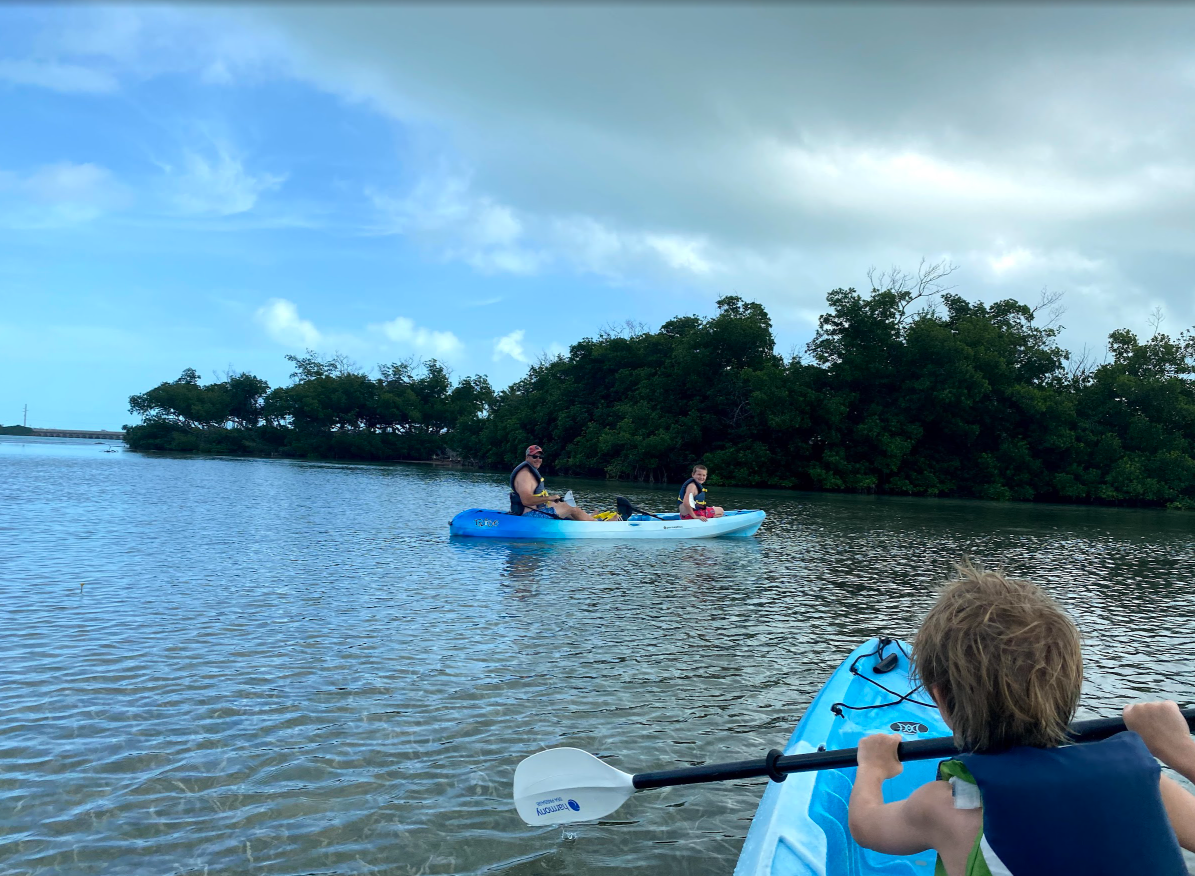
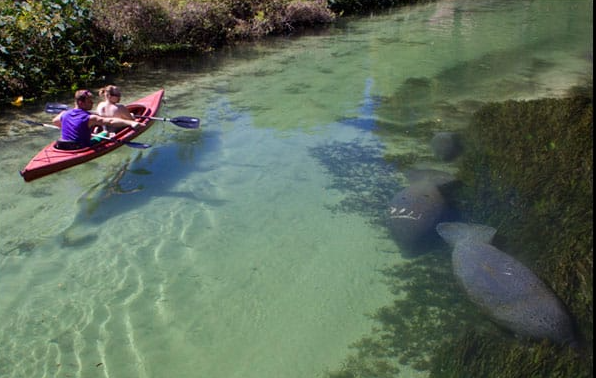
There is a moment that every kayaker in Southwest Florida has experienced at least once — the moment when you round a bend in a mangrove tunnel and the canopy closes completely overhead, the light shifts from full sun to green-filtered shadow, the sound of the outside world disappears, and you are surrounded on all sides by the arching roots and dark water of one of the most extraordinary ecosystems on the planet. Dolphins appear thirty feet off the bow. A roseate spoonbill glows pink against the mangrove wall. A manatee surfaces soundlessly alongside you and then slips below before you’ve finished drawing your breath.
That moment is available to anyone in Southwest Florida. You do not need skill, experience, expensive equipment, or even a great deal of planning to access it. You need a kayak, a paddle, and the knowledge of where to go.
This is that guide.
Southwest Florida is, without qualification, one of the premier kayaking destinations in the United States. The region offers a range of paddling experiences that spans from the calmest, most beginner-friendly mangrove channels in the Southeast to one of the most demanding multi-day wilderness expeditions in all of North America. Every skill level, every time commitment, every budget has a perfect paddle waiting here. The challenge is not finding a place to kayak. It is knowing which one matches what you’re looking for today.
Why Southwest Florida Is a Paddler’s Paradise
The case for Southwest Florida kayaking starts with the water itself. The Gulf of Mexico maintains warm, calm conditions for the majority of the year. The extensive mangrove coast creates hundreds of miles of protected, wind-sheltered waterways that offer flat-water conditions even on days when open Gulf swells would make ocean paddling challenging. The biological richness of the estuaries — seagrass beds, mangrove habitat, oyster reefs — creates the extraordinary wildlife density that makes paddling here a wildlife encounter rather than simply a workout.
The infrastructure supporting paddlers is equally strong. There are more kayak launch sites, rental operations, guided tour companies, and formal paddling trails in Southwest Florida than anywhere else in the state. The Great Calusa Blueway — a 190-mile mapped, signed paddling trail through the coastal waters of Lee County — is among the finest water trail systems in the country. The Everglades Wilderness Waterway offers one of the last true multi-day paddling wildernesses in the continental United States.
And the weather, of course, makes it all accessible. With average annual sunshine exceeding 260 days, Southwest Florida supports year-round paddling in conditions that most of the country experiences only in summer.
For Complete Beginners: How to Get Started
If you have never been in a kayak, Southwest Florida is one of the best places in the world to start. The protected waters of the region’s bays, estuaries, and mangrove channels are among the calmest and safest paddling environments anywhere — calm enough that learning the basic strokes and becoming comfortable in the boat takes less than an hour on the water for most new paddlers.
Choose the Right First Experience
For a true first time, a guided tour is the right choice. Not because the water is dangerous — it largely isn’t in the protected areas — but because a guide provides orientation to the environment, identifies wildlife you would miss on your own, handles navigation so you can focus entirely on the experience of being on the water, and ensures that your first exposure to kayaking is genuinely memorable rather than stressful.
The guided tours offered throughout the region for beginners are specifically designed to maximize this experience. Tour operators consistently use stable, sit-on-top recreational kayaks that are virtually impossible to capsize, keep groups small enough that everyone can hear the guide and ask questions, and choose routes through protected channels where weather, current, and other boating traffic are minimized.
What to Wear and Bring
Dress for swimming, not for kayaking. You will almost certainly get wet — from paddle drips, from entry and exit at shallow launches, from the general humidity of being on the water. Swimwear, board shorts, or quick-dry clothing are appropriate. A rash guard or lightweight long-sleeve shirt provides sun protection without heat buildup. Water shoes or old sneakers that can get wet are better than bare feet or flip-flops.
Bring significantly more water than you think you need. In summer, plan on at least one liter per hour of paddling — the combination of physical exertion, sun, and subtropical heat depletes hydration faster than most outdoor activities. A dry bag or waterproof case for your phone and any electronics is essential. Apply sunscreen before you launch and bring it along for reapplication — the reflection off the water intensifies UV exposure substantially.
Understanding the Basic Strokes
You do not need lessons before your first paddle — guided tours provide real-time instruction on the water — but understanding three basic concepts will make your first experience immediately more comfortable.
The forward stroke is the foundation of all kayaking: reach the paddle blade forward, plant it in the water near your feet, and pull it back while rotating your torso. The power comes from your core and back, not from your arms. Arm-only paddling is tiring and inefficient; torso rotation is fast and sustainable.
The sweep stroke turns the boat: to turn right, sweep the blade in a wide arc from bow to stern on the left side. To turn left, do the opposite. Wide arcs turn the boat; short strokes near the cockpit stabilize it.
The draw stroke moves the boat sideways without turning: plant the blade straight out to the side, parallel to the boat, and pull the boat toward it. Essential for docking and for pulling alongside something interesting in the water.
That’s the foundation. Everything else is refinement. Within thirty minutes on the water, these movements become intuitive.
Sarasota County: Where to Paddle
Lido Key Mangrove Tunnels — Ted Sperling Nature Park
Skill Level: Beginner to Intermediate | GPS Launch: 190 Taft Drive, Sarasota, FL 34236
The mangrove tunnels of Lido Key are the signature kayaking experience in Sarasota County and one of the most visually stunning short paddles in all of Florida. The tunnels form where red mangroves have arched their prop roots across narrow channels, creating enclosed corridors of living vegetation that block the sun and create a cathedral-like interior environment unique to this ecosystem.
At the South Lido Mangrove Tunnels, you can experience red, black, and white mangroves all in one kayaking trip. You’ll see marine life on these self-guided trails as well, including hermit crabs and channeled whelk, and bird lovers will see plenty of brown pelicans, great blue herons, and other coastal birds.
The tour is in the shallow, protected waters of Sarasota Bay, so there is limited influence from wind and currents, and the water is usually very clear, which makes it great for viewing sea life. Manatees are frequently seen from March through December, when the waters are warm enough for them. Dolphins may be seen year-round as they feed and travel through the surrounding mangrove islands and channels.
Guided tours are available from several Sarasota operators including Almost Heaven Kayak Adventures, Kayaking SRQ, Happy Paddler Kayak Tours & EcoVentures, and Dolphin Paddlesports, all of whom know these tunnels well. Early morning tours (8–10 AM) have a 37% higher wildlife encounter rate — arrive early for the best conditions.
For the adventurous, a guided night kayak tour explores the mangrove tunnels and the nocturnal inhabitants of the ecosystem, including the opportunity to see bioluminescent plankton in the water.
Myakka River State Park
Skill Level: Intermediate to Advanced | Launch: 13207 SR 72, Sarasota
Myakka River State Park offers a more rugged kayaking experience, with opportunities to spot alligators, turtles, and other wildlife. Its expansive waterways are perfect for exploring a less-traveled path. One of Florida’s oldest state parks, this vibrant natural area features miles of river to explore. From the seat of your kayak, you’ll spy vistas of hammocks, wetlands, prairies, and other critical habitat for aquatic birds, not to mention deer and wild turkeys.
The Upper and Lower Myakka Lakes connect via the river corridor, offering half-day to full-day paddle routes through one of Florida’s largest wilderness areas. Alligator density here is high — Myakka Lake holds one of the most concentrated alligator populations in the state — which makes the paddling here genuinely thrilling rather than simply scenic. The standard rules apply: maintain 15 feet of clearance, never approach alligators near the bank, and never feed them.
Roberts Bay and Little Sarasota Bay
Skill Level: Beginner | Launch: Multiple county parks
These tranquil waters offer stunning views and potential sightings of dolphins and manatees, perfect for paddlers seeking a quieter experience away from larger crowds. The calm, open bay water is ideal for new paddlers building confidence before attempting the mangrove tunnels, and the wildlife density is excellent throughout the year.
Oscar Scherer State Park
Skill Level: Beginner to Intermediate | Launch: 1843 S. Tamiami Trail, Osprey
Oscar Scherer State Park has a primitive picnic site outfitted with ADA-compliant fixtures, with rentals available on site and regular guided paddles you can join to learn all about the park’s flora and fauna. The park’s South Creek winds through scrub habitat that is exceptional for birding — including the Florida scrub-jay, one of the state’s most sought endemic species — and the paddling conditions are calm enough for beginners throughout most of the year.
Deer Prairie Creek, Venice
Skill Level: Intermediate | Launch: 6600 Border Rd, Venice
Down in Venice, launch and paddle through rugged Old Florida wetlands and wildlife along the banks of the Myakka River and Deer Prairie Creek. This is one of the most undervisited kayaking destinations in Sarasota County — a quiet, wild waterway with minimal boat traffic and excellent wading bird habitat. The creek meanders through conservation land that gives it an isolated, backcountry character despite being within easy driving distance of Venice.
Lee County: The Great Calusa Blueway and Beyond
The Great Calusa Blueway
Skill Level: All levels (190 miles, multiple access points)
The Great Calusa Blueway is a paddling trail that meanders through the coastal waters of Lee County from Pine Island Sound to Estero Bay, up the Caloosahatchee River and through its tributaries. The trail stretches nearly 200 miles in the pristine coastal waters and inland tributaries in the Fort Myers area, developed by Lee County Parks & Recreation and funded with tourist development tax dollars.
This is the backbone of Lee County’s paddling infrastructure, and understanding how it is organized changes how you approach kayaking in the region. The Blueway is divided into three regions: Estero Bay, Pine Island Sound, and the Caloosahatchee River. It is not intended as a continuous trail but rather a network of access points and routes within those regions.
Wildlife along the Blueway is abundant, from leggy wading birds such as half a dozen varieties of herons to seasonal white pelicans, year-round bald eagles, and soaring frigate birds.
Along with the posted signs, paddlers can use free maps and GPS coordinates available at CalusaBlueway.com, at area outfitters, parks, government facilities, marinas, chambers of commerce, and welcome centers. The Calusa Blueway app provides real-time GPS coordinates and navigation, an interactive trail map with places of interest, boating tips, and regulations.
Estero Bay Region is the Blueway’s most popular section for casual and beginner paddlers — calm, protected estuary water with excellent wildlife viewing and multiple access points from Fort Myers Beach south to Bonita Springs.
Pine Island Sound Region offers the most scenically dramatic paddling in Lee County. The open sound, mangrove-fringed islands, and the cultural richness of communities like Matlacha and Pine Island create a paddling environment that feels genuinely remote despite being accessible by car. Dolphin encounters are extremely common in Pine Island Sound.
Caloosahatchee River Region takes paddlers inland — a different character from the coastal sections, with river-specific ecology, bird life, and the historical and archaeological interest of a waterway that was central to the lives of the Calusa people for thousands of years.
Manatee Park — Orange River
Skill Level: Beginner | Launch: 10901 Palm Beach Blvd, Fort Myers
The Orange River — a warm-water tributary of the Caloosahatchee fed by Florida Power & Light’s discharge — is one of the premier manatee viewing locations in the entire state during winter months (November through March). Manatees aggregate by the hundreds in the warm outflow water when Gulf temperatures drop. Paddling slowly upstream from the Manatee Park launch in the early morning hours puts you in the middle of this aggregation at intimate distances. This is one of the most emotionally moving wildlife experiences available from a kayak in Southwest Florida.
Estero River
Skill Level: Beginner | Launch: Koreshan State Park, 3800 Corkscrew Rd, Estero
One of the finest river paddles in Lee County — a narrow, spring-fed river winding through subtropical hardwood hammock at Koreshan State Park. The current is gentle, the canopy is close and shaded, and the bird diversity along the river corridor is excellent. The river flows to Estero Bay, allowing a one-way downriver trip with shuttle if desired. Kayak rentals are available at the park.
Lovers Key State Park
Skill Level: Beginner to Intermediate | Launch: 8700 Estero Blvd, Fort Myers Beach
Lovers Key is one of the most underrated paddling destinations in Lee County. The park’s back bay system is an enclosed tidal estuary with consistent dolphin, manatee, and wading bird activity. The launch is well-maintained, the parking is straightforward, and the paddling routes thread through protected channels to Gulf-side beaches accessible only by water or foot. The combination of estuary paddling and beach access in a single outing makes Lovers Key one of the most satisfying half-day paddle destinations in the region.
Mound Key Archaeological State Park
Skill Level: Intermediate | Access by water only from Koreshan State Park or Lovers Key
Accessible only by kayak or canoe, Mound Key is an extraordinary destination that combines excellent paddling with one of the most significant archaeological sites in Florida. The island was once the capital city of the Calusa — the powerful seafaring Native Americans for whom the Calusa Blueway is named — and its shell mounds rise 30 feet above the surrounding water. A self-guided trail describes the history of the people who built this place over hundreds of years. The Calusa Blueway connects to Mound Key Archaeological State Park, which includes 30-foot mounds and a self-guided trail describing the life of these Native Americans, and the Koreshan State Historic Site, a Utopian pioneer settlement.
Collier County: Mangrove Wilderness and the Backcountry
Rookery Bay National Estuarine Research Reserve
Skill Level: Intermediate | Launch: Royal Palm Dr & Shell Island Rd, Naples
Paddle through mangrove tunnels, explore shallow bays, and cruise along the beach, all while taking in the wide variety of wildlife that Rookery Bay has to offer. Rookery Bay protects 110,000 acres of some of the most intact mangrove estuary on the Gulf Coast, and the kayak trails through its interior provide access to wildlife and habitat inaccessible by any other means. Dolphin activity in the outer bays is frequent. The mangrove channel paddling in the interior is excellent for birding, with roseate spoonbills, limpkins, and great blue herons regular companions along the route.
Naples Kayak Company and Guided Tours
For those visiting or relocating to Naples who want a guided introduction to the local waters, several outstanding operators serve the area. Top-rated Naples kayak operations include Naples Kayak, Adventures Kayaking, Pure Florida, and Get Up And Go Kayaking Naples — all offering guided eco-tours of the Naples Bay and surrounding mangrove systems.
Get Up And Go Kayaking’s clear kayaks are an exceptional way to view the surroundings, with a maximum group size of 12 paddlers. Guides share unique facts about the local coastal waterways, wildlife, and the ecosystem along the paddle, and Barefoot Beach in Naples is one of the best places for shelling on the Paradise Coast — arriving by kayak makes the experience even more special.
Ten Thousand Islands National Wildlife Refuge — Sandfly Island Loop
Skill Level: Intermediate | Launch: Gulf Coast Visitor Center, Everglades City
The Sandfly Loop kayak trail has several great things going for it: it is relatively short at about five miles, taking two to three hours of paddling plus an hour to explore Sandfly Island. On Sandfly Island, you can dock, have a picnic, and walk a one-mile trail past vestiges of pioneer homes.
This is the ideal introduction to the Ten Thousand Islands for paddlers who want a taste of the backcountry without committing to a multi-day expedition. The route passes through the outer mangrove islands of the Ten Thousand Islands refuge, where the scale and wildness of the landscape becomes immediately apparent. Dolphin encounters here are nearly guaranteed. Osprey, brown pelicans, and roseate spoonbills are constant companions.
Canoe or kayak rentals are available from Everglades Adventure Tours and Ivey House, both of which deliver kayaks to the launch area at the Gulf Coast Visitor Center.
For Advanced Paddlers: The Ultimate Expeditions
The Everglades Wilderness Waterway
Skill Level: Advanced | Distance: 99 miles | Duration: 7–10 days
The Everglades Wilderness Waterway is a 100-mile adventure through the Ten Thousand Islands in Southwest Florida’s Everglades National Park. You’ll paddle through uninhabited mangrove islets once occupied by Native Americans for thousands of years, but now home only to wild Everglades plants and animals, including crocodiles, flamingos, dolphins, sharks, rays, and countless migratory birds. After paddling and camping for 5–10 days you’ll reach the opposite end of the Waterway.
The official Wilderness Waterway route is 99 miles long and connects Flamingo and Everglades City. Most paddlers allow at least eight days to complete the trip. The campsites along the Outside Route include Pavilion Key, Turkey Key, Mormon Key, and Rabbit Key — all part of the Ten Thousand Islands Archipelago, along with chickee platforms, shell mound sites, and beach camps. Campers can obtain permits through recreation.gov for $23.00, available up to 90 days in advance.
This is not a casual undertaking. The Everglades backcountry requires navigation skills, self-sufficiency in a remote wilderness environment, knowledge of tidal patterns, and the physical conditioning to paddle 10–15 miles per day in subtropical conditions. But for the paddler who is ready for it, the Wilderness Waterway is a transformative experience — a multi-day immersion in a living ecosystem of staggering biological complexity that has no equivalent anywhere on Earth.
Everglades Adventures, based at the Ivey House Hotel in Everglades City, offers guided Wilderness Waterway expeditions from October 27 through May 1, with a 130-mile shuttle available for one-way trips. Each watercraft includes paddles, PFDs, a bilge pump, and bow and stern lines.
Burnham Guides is the only outfitter offering kayak expeditions from both Flamingo and Everglades City, offering 3–5 day loop trips and the full 8-day Wilderness Waterway traversal with experienced guides who lead paddlers through mangrove mazes to interior routes where camping is on chickees and ground sites, and out into the Gulf of Mexico to camp on gorgeous palm tree beaches.
Charlotte Harbor Backcountry
Skill Level: Advanced | Multiple access points
Charlotte Harbor’s 270-square-mile estuary offers advanced paddlers an extended exploration environment that is less structured than the formal Blueway trails but richer in the sense of genuine discovery. The Myakka River mouth, the remote Peace River delta, and the outer islands of the harbor’s Gulf shoreline all offer multi-day paddle camping opportunities for self-sufficient paddlers carrying their own gear. The combination of exceptional fishing, extraordinary birding, and minimal motor boat traffic in the harbor’s remote sections makes this one of the finest advanced paddling environments in the Southeast.
Tips for Advanced Paddlers: Getting More From Every Outing
Master tidal timing. In Southwest Florida’s shallow estuaries, tides are not merely inconvenient — they are the primary environmental variable governing where you can paddle and when. A falling tide that begins with two feet of water over a seagrass flat can leave you dragging your boat within an hour. Carry a tide chart and plan your route around water levels, not just distance. The rule of thumb: paddle into the tide on the outbound leg so the returning tide helps push you home.
Read the wind before you launch. Gulf Coast winds typically build through the morning and peak in the afternoon. Early starts on long open-water crossings or exposed Bay passages are not optional — they are the difference between a comfortable paddle and a fight against wind-chop. The first two hours after sunrise are typically the calmest and the most productive for wildlife encounters. Build your schedule around this reality.
Learn to navigate mangrove mazes. The backcountry mangrove systems of the Ten Thousand Islands and Charlotte Harbor involve navigating between islands that look remarkably similar from water level. A compass and waterproof chart (or offline GPS app) are essential for any backcountry paddling beyond the marked trails. Gaia GPS and the NPS Everglades app both offer offline mapping that works when cell service disappears.
Practice wet exits and re-entry before you need them. In a sit-on-top recreational kayak, a capsize is simply getting wet — you climb back on from the water with no complex technique required. In a sit-inside sea kayak, a wet exit involves exiting the submerged cockpit and performing a self-rescue or assisted rescue. If you’re paddling a sea kayak in open water or in the backcountry, practice both the wet exit and the paddle float re-entry technique in calm, warm water before you do it in conditions where it matters.
Carry the right safety gear. Every paddler on Southwest Florida waters — beginner or expert — should carry a personal flotation device (worn, not stowed), a whistle, a waterproof phone case or VHF radio, and sufficient water. For backcountry paddlers beyond cell range, a personal locator beacon (PLB) or satellite communicator (Garmin inReach) is the responsible standard. A float plan — a written description of your intended route, launch location, and expected return time left with someone on shore — is the practice that saves lives when something goes wrong.
Manage the heat. Heat illness is the most common paddling emergency in Southwest Florida and it is almost entirely preventable. Hydrate before you launch, not just during. Wear sun-protective clothing that covers your arms and shoulders. Take breaks in shade when possible. Know the warning signs of heat exhaustion — heavy sweating, weakness, cold or pale skin, weak pulse, nausea — and know that the treatment is immediately getting out of the sun, cooling the body, and hydrating.
Rental and Guided Tour Resources by County
Sarasota County
- Almost Heaven Kayak Adventures — Lido Key Mangrove Tunnel tours, multiple tour options, 190 Taft Drive, Sarasota (kayakfl.com)
- Kayaking SRQ / Liquid Blue Outfitters — Guided tours through mangroves and Sarasota Bay, highly rated for family groups
- Happy Paddler Kayak Tours & EcoVentures — Mangrove and bay tours, guided and rental options
- Dolphin Paddlesports — SUP and kayak tours, Sarasota Bay
- Oscar Scherer State Park — On-site rentals, guided paddles, 1843 S. Tamiami Trail, Osprey
- Myakka River State Park — Guided tours and rentals available, 13207 SR 72, Sarasota
Lee County
- Kayak Excursions — Rentals delivered to any location, guided tours in Pine Island Sound, Cape Coral, Fort Myers, and Bonita Springs (kayak-excursions.com)
- Three Brothers Boards — Dolphin and manatee kayak and SUP tours, Fort Myers/Bonita Springs corridor
- Great Calusa Blueway Website — Full launch map, GPS coordinates, outfitter directory (CalusaBlueway.com / visitfortmyers.com/calusablueway)
- Manatee Park — Public launch, onsite rentals available seasonally, 10901 Palm Beach Blvd, Fort Myers
- Lovers Key State Park — Public launch, rentals available, 8700 Estero Blvd, Fort Myers Beach
Collier County
- Get Up And Go Kayaking — Naples — Clear kayak tours, small group guided experiences, Barefoot Beach access (getupandgokayaking.com)
- Naples Kayak Company — Guided eco-tours, rentals, Naples Bay and Ten Thousand Islands access
- Paddle Marco — Marco Island guided tours and rentals
- Paddle Naples — Family-owned guided tours including the 1-hour beginner paddle tour to Big Hickory Island beach (TripAdvisor Travelers’ Choice 2022–2024)
- Jenny’s Eco Everglades Wilderness Tours — Specialty Everglades tours, backcountry access from Everglades City
Everglades / Backcountry
- Everglades Adventures / Ivey House — Full service outfitter in Everglades City for day tours through the Wilderness Waterway; guided multi-day expeditions October–May (evergladesadventures.com / iveyhouse.com)
- Burnham Guides — The only outfitter guiding the full 100-mile Wilderness Waterway; 3–8 day guided expeditions from Flamingo and Everglades City (burnhamguides.com)
- Breakwater Expeditions — Multi-day guided kayak camping tours, Ten Thousand Islands (breakwaterexp.com)
Planning Your First Paddle: A Quick-Start Checklist
Whether you’re booking a guided tour this weekend or planning a solo backcountry expedition for the dry season, these fundamentals apply to every paddle.
Check the tides and plan your launch time around water levels at your specific location. Download the free Calusa Blueway app or save offline maps for your planned route. Bring at least 1.5 liters of water per person for every two hours on the water. Apply reef-safe sunscreen before launch and bring it along. Wear or bring a PFD for every person in your group. Tell someone your put-in location, intended route, and when you’ll be back. Start earlier than feels necessary — the best paddling, the best wildlife, and the best light are in the first two hours after sunrise.
The water is out there, warm and waiting, every single morning of the year. There is no reason to do anything else with a Southwest Florida sunrise.
Rental rates, guided tour availability, and launch site facilities are subject to change. Verify current conditions and booking availability directly with tour operators before visiting. Tide charts are available free at visitfortmyers.com/calusablueway and multiple tide-prediction apps.