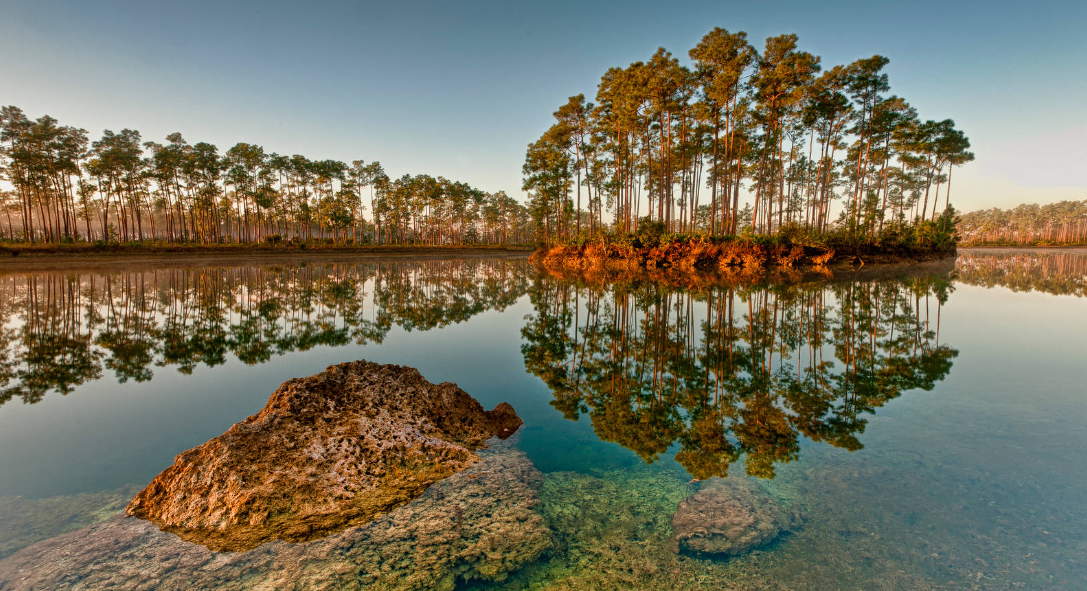
Most people who move to Naples or Marco Island arrive for the beach and the boating. What surprises them — sometimes years later — is that Collier County contains some of the most extraordinary hiking terrain in the southeastern United States. Ancient cypress forests, bromeliad-draped swamps, pine flatwood prairies, coastal scrub ridges, and the fringes of the Everglades wilderness all lie within an hour’s drive of downtown Naples. You just have to know where to go.
This guide ranks the best trails in Collier County by difficulty and scenery so you can find the right hike for the right day — whether you have 45 minutes before lunch or an entire weekend to disappear into the backcountry.
The Difficulty Scale Used Here
Easy: Flat, well-marked, paved or boardwalk surface, no significant water crossings. Suitable for all ages and fitness levels.
Moderate: Unpaved natural surface, some wet sections seasonally, requires navigation attention, 3–8 miles. Good footwear recommended.
Strenuous: Extended mileage, off-trail or minimally marked sections, wet or flooded terrain possible, requires preparation and navigation skills.
1. Corkscrew Swamp Sanctuary Boardwalk
Difficulty: Easy | Scenery: ★★★★★
Distance: 2.5-mile loop | Surface: Elevated wooden boardwalk | Fee: Yes (~$17 adults)
No trail in Collier County — and arguably in all of Florida — delivers a more awe-inspiring visual experience than the boardwalk through Corkscrew Swamp Sanctuary. You are walking through the largest remaining old-growth bald cypress forest in North America. Trees here are over 500 years old, rising 100 feet above a dark, mirror-still swamp floor carpeted in ferns, bromeliads, and the occasional ghost orchid in bloom.
The boardwalk is entirely flat and accessible, making it the one trail in this region that truly has no physical barrier to entry. Yet it consistently produces encounters with wildlife that leave experienced naturalists speechless: wood storks nesting in cathedral-like rookeries, river otters sliding beneath the boards, barred owls perched at eye level, and during wet season, alligators drifting just feet below your feet.
Best time to visit: November through March. Wood stork nesting peaks January–March and is one of the great wildlife spectacles in North America. Arrive by 7:30 AM before organized tour groups.
Insider tip: Walk the boardwalk slowly and quietly. The birds here are habituated to the walkway but respond strongly to noise and sudden movement. The middle section of the trail, near the wet prairie pond, produces the highest wildlife concentration.
GPS Trailhead: 375 Sanctuary Road West, Naples, FL 34120 (26.3733° N, 81.5993° W)
2. Bird Rookery Swamp Trail (CREW)
Difficulty: Easy–Moderate | Scenery: ★★★★½
Distance: Up to 12 miles (multiple loops available) | Surface: Grass and hardpack | Fee: Free
Bird Rookery Swamp is the best-kept secret in Collier County hiking. Part of the larger CREW (Corkscrew Regional Ecosystem Watershed) land trust network, this trail system winds through pine flatwoods, cypress dome forests, and swamp prairie on wide, mowed paths that are navigable by virtually anyone in dry season.
The main loop runs approximately 11 miles and circumnavigates the swamp’s edge. Shorter out-and-back options of 3–5 miles are easy to configure. The trail offers no boardwalk, no fee, and no crowds — a remarkable contrast to its famous neighbor Corkscrew just a few miles away.
Wildlife is exceptional: sandhill cranes, wild turkey, white-tailed deer, Florida black bears (track sightings), and a tremendous variety of wading birds in the cypress pond areas. In wet season (June–September), portions may be ankle-to-knee deep in water — which is either an obstacle or an adventure depending on your mindset.
Best time to visit: November through April for dry conditions. Early mornings reward birders and wildlife photographers with dramatic light filtering through the cypress.
Gear note: Bring more water than you think you need. The trail is entirely exposed in flatwood sections and solar heat builds quickly even in winter.
GPS Trailhead: 1295 Sanctuary Road West, Naples, FL 34120 (26.3750° N, 81.5894° W)
3. Florida Panther National Wildlife Refuge Trails
Difficulty: Easy–Moderate | Scenery: ★★★★
Distance: 1.3-mile loop (Hiking Trail) | Surface: Natural | Fee: Free
Located in the heart of prime Florida panther habitat, this refuge offers one of the few places in the continental United States where you are genuinely in an active large predator’s territory. Panthers are almost never seen — they’re among the most elusive animals on the continent — but the knowledge that you’re in their range adds an unmistakable wildness to every step.
The main hiking trail is a short loop through pine flatwoods and cypress sloughs that packs a surprising density of wildlife into its 1.3 miles. Wild hog, deer, and a remarkable array of songbirds make this trail an excellent choice for a focused 45-minute nature walk. A separate wildlife drive allows extended vehicle-based exploration.
The refuge is only open Wednesday through Sunday and access is limited — which keeps it uncrowded and genuinely peaceful.
Best time to visit: Late November through February. Migratory songbirds are exceptional here during winter months.
GPS Trailhead: 12085 State Road 29 South, Immokalee, FL 34142 (26.0863° N, 81.3870° W)
4. Fakahatchee Strand Preserve — Jane’s Scenic Drive & Boardwalk
Difficulty: Easy–Moderate | Scenery: ★★★★★
Distance: 2,000-foot boardwalk + 20-mile scenic drive option | Surface: Boardwalk / unpaved road | Fee: Free
Fakahatchee Strand is called the “Amazon of North America” with justification. The strand is a broad, linear swamp forest running north to south, carrying freshwater through a landscape so dense with epiphytes, orchids, and bromeliads that it feels closer to a Costa Rican cloud forest than anything most Americans imagine when they think of Florida.
The main public boardwalk is a short out-and-back through old-growth bald cypress and pop ash forest loaded with wild pine bromeliads, royal ferns, and — if you visit during dry season and look carefully — ghost orchids clinging to the trunks above the waterline. Ghost orchids bloom primarily June through August and represent the holy grail of Florida wildflower sightings.
For a more extended experience, Jane’s Scenic Drive is a one-lane unpaved road that runs 12 miles through the heart of the strand and can be walked, cycled, or driven. It passes royal palm hammocks, cypress domes, and freshwater sloughs that attract wading birds and alligators throughout the year.
Best time to visit: November–March for dry access and clear water views. June–August for ghost orchid bloom potential.
GPS Boardwalk: Big Cypress Bend, US-41, Copeland, FL 34137 (25.9019° N, 81.4128° W)
5. Picayune Strand State Forest — Prairie Canal Trails
Difficulty: Moderate | Scenery: ★★★½
Distance: Multiple trails, 2–20+ miles | Surface: Unpaved roads and levees | Fee: Free
Picayune Strand is a vast, largely undiscovered outdoor space in eastern Collier County — a 76,000-acre restoration landscape that was once a failed housing development called “Golden Gate Estates South” and is now being converted back to functioning Everglades watershed. The scale is enormous, the solitude is almost guaranteed, and the bird diversity in the early morning hours rivals anything in the region.
The main access points offer hiking along wide levee-top trails and forest roads through pine flatwoods, cypress sloughs, and open prairie. Hunting is permitted in designated areas and seasons, so check the FWC calendar and wear blaze orange in season.
This is not a destination trail with manicured surfaces and interpretive signage. It is vast, quiet, and raw — exactly what serious hikers and naturalists are looking for when they want to escape organized outdoor recreation.
Best time to visit: November–April. Avoid summer wet season unless you’re comfortable with knee-deep water and heavy mosquito pressure.
GPS Entry: Everglades Boulevard and 22nd Avenue SE, Naples, FL (26.1264° N, 81.4167° W)
6. Collier-Seminole State Park Hiking Trail
Difficulty: Moderate | Scenery: ★★★★
Distance: 6.5-mile loop | Surface: Natural path, wet sections common | Fee: Yes (State Park entry fee)
Collier-Seminole sits at the biological meeting point of three distinct ecosystems: the Big Cypress Swamp, the Everglades, and the Ten Thousand Islands mangrove coast. The hiking trail explores the interior of this convergence zone through tropical hardwood hammock, pine flatwoods, and freshwater slough.
Wildlife is exceptional and unpredictable. Black bears, bobcats, river otters, alligators, and a remarkable diversity of wading birds and migratory songbirds all use this corridor. The trail is marked but relatively primitive, passing through sections that flood seasonally and require comfortable footwear that can get wet.
The park also offers a primitive canoe/kayak camping trail that launches directly into the mangrove backcountry — making it a natural pairing with the hiking trail for a full outdoor day.
Best time to visit: December–March. The trail floods significantly in wet season and the mosquito density in summer is extraordinary.
GPS Trailhead: 20200 Tamiami Trail East, Naples, FL 34114 (25.9948° N, 81.4303° W)
7. Big Cypress National Preserve — Loop Road & Backcountry
Difficulty: Moderate–Strenuous | Scenery: ★★★★★
Distance: Variable, 1 mile to multi-day | Surface: Unpaved, often flooded | Fee: Free
Loop Road — a 24-mile unpaved scenic drive off US-41 — is one of the great wildlife corridors in the Southeast and can be explored on foot, by bicycle, or by vehicle. On foot, any section of it offers world-class birding, alligator and crocodile habitat, and access to the kind of unmediated wilderness that is vanishingly rare in the eastern United States.
Beyond the road, the Big Cypress backcountry offers designated primitive campsites and a network of off-road vehicle trails repurposed for hiking. The landscape shifts between pine island hammocks, open sawgrass prairie, and cypress sloughs — each with its own atmosphere and wildlife community.
This is the terrain for experienced outdoors people who are comfortable with navigation, heat, wildlife hazard management, and self-sufficiency. Water is always present in wet season; dry season opens vast flats of dried sawgrass that crunch under foot for miles in every direction.
Best time to visit: December–February for the driest, coolest conditions and peak dry-season wildlife concentration at watering points.
GPS Loop Road Access: Turner River Road at US-41, Ochopee, FL (25.8580° N, 81.2997° W)
8. Gordon River Greenway
Difficulty: Easy | Scenery: ★★★½
Distance: 2–4 miles | Surface: Paved path and natural boardwalk | Fee: Free**
For Naples residents who want a daily nature walk without driving anywhere, the Gordon River Greenway is an underappreciated gem. The trail winds through coastal scrub, tidal mangrove fringe, and freshwater marsh just minutes from downtown Naples, offering remarkable birdwatching for such an urban setting.
Osprey, bald eagles, roseate spoonbills, and great blue herons are regular sightings. The paved surface makes it ideal for morning walks, running, and cycling. The natural boardwalk section crosses tidal flats where herons hunt at low tide.
It’s not wilderness — you can hear highway noise in places — but as a daily outdoor habit within city limits, it’s exceptional and chronically underused by the residents who live closest to it.
GPS Trailhead: 4200 Greenway Road, Naples, FL 34116 (26.1498° N, 81.7497° W)
Essential Gear for Collier County Hiking
Year-round: Waterproof trail shoes or hiking boots (dry season trails become wet quickly after rain), sun protection (hat, long-sleeved light shirt, SPF 50+), minimum 2L of water per person for any hike over 3 miles, and insect repellent with DEET or Picaridin for anytime off pavement.
Wet season additions (June–October): Quick-dry lower body clothing, a dry bag for electronics, and a rain layer for afternoon thunderstorms that build with remarkable speed. Lightning is the primary safety hazard on open flatwood trails.
Wildlife awareness: Give alligators a minimum of 15 feet of clearance and never approach one near water’s edge. Cottonmouth water moccasins are common in wet areas and are not defensive but should never be approached. Carry a first aid kit on any trail longer than 3 miles.
The Seasonal Reality
Collier County hiking divides cleanly into two seasons. November through April is the golden window — comfortable temperatures, minimal mosquitoes, extraordinary bird diversity, and trail conditions ranging from excellent to good. This is when you hike as much as possible.
May through October is survivable with the right strategy: early starts (pre-7 AM), short durations, and a willingness to turn back when afternoon storms build. Some trails are impassable without wading. The reward is a landscape that feels more alive — lush, green, teeming, and entirely yours.
The outdoors here doesn’t stop in summer. It just changes the terms of engagement.