For anyone who has ever dropped below the surface of the ocean, the feeling is unmistakable: an immediate shift from the heavy, noisy world above to a serene, weightless sanctuary. But for individuals living with physical or cognitive disabilities, that transition to zero gravity is much more than just a peaceful escape—it is a profound form of therapy, freedom, and empowerment.
Adaptive scuba diving is breaking down barriers across the globe, proving that the ocean doesn’t care about limitations on land.
The Therapeutic Power of the Water Column
When you submerge into the water, gravity loses its grip. For individuals managing spinal cord injuries, amputations, multiple sclerosis, or cerebral palsy, this weightlessness provides massive physical relief. On land, everyday life can mean navigating constant pain, joint pressure, and mobility limitations. Underwater, the water column supports the body entirely, allowing for a freedom of movement that is often impossible on solid ground.
The therapeutic benefits of scuba diving extend far beyond the physical:
- Physical Relief & Mobility: The weightless environment relieves pressure on the spine and joints, reducing chronic pain. Clinical observations have shown that adaptive diving can trigger significant neurological and physical comfort for individuals with severe physical trauma.
- Psychological Healing: The rhythmic, deep breathing required in scuba diving naturally calms the nervous system. This has proven remarkably effective at reducing symptoms of anxiety, depression, and PTSD, offering an underwater sanctuary away from daily stressors.
- Confidence & Self-Esteem: Mastering complex dive skills builds immense independence. When someone conquers the challenge of diving, it completely reshapes their perspective on what else they can achieve on land.
Spotlight on South Florida: Scuba 4 Good
While international organizations like Diveheart and the Handicapped Scuba Association (HSA) do incredible work across the country, South Florida has become a major hub for adaptive diving, largely driven by grassroots, community-first networks.
Standing at the center of this regional ecosystem is Scuba 4 Good, an initiative of the G4Good Foundation. Their mission is focused and impactful: make adaptive diving accessible to any adult, child, or veteran with a disability by working with local dive shops, specialized instructors, and other non-profits to eliminate financial and logistical barriers.
How Scuba 4 Good Drives Impact
Scuba 4 Good acts as a vital bridge for the local adaptive diving community, raising funds to support local programs through four key pillars:
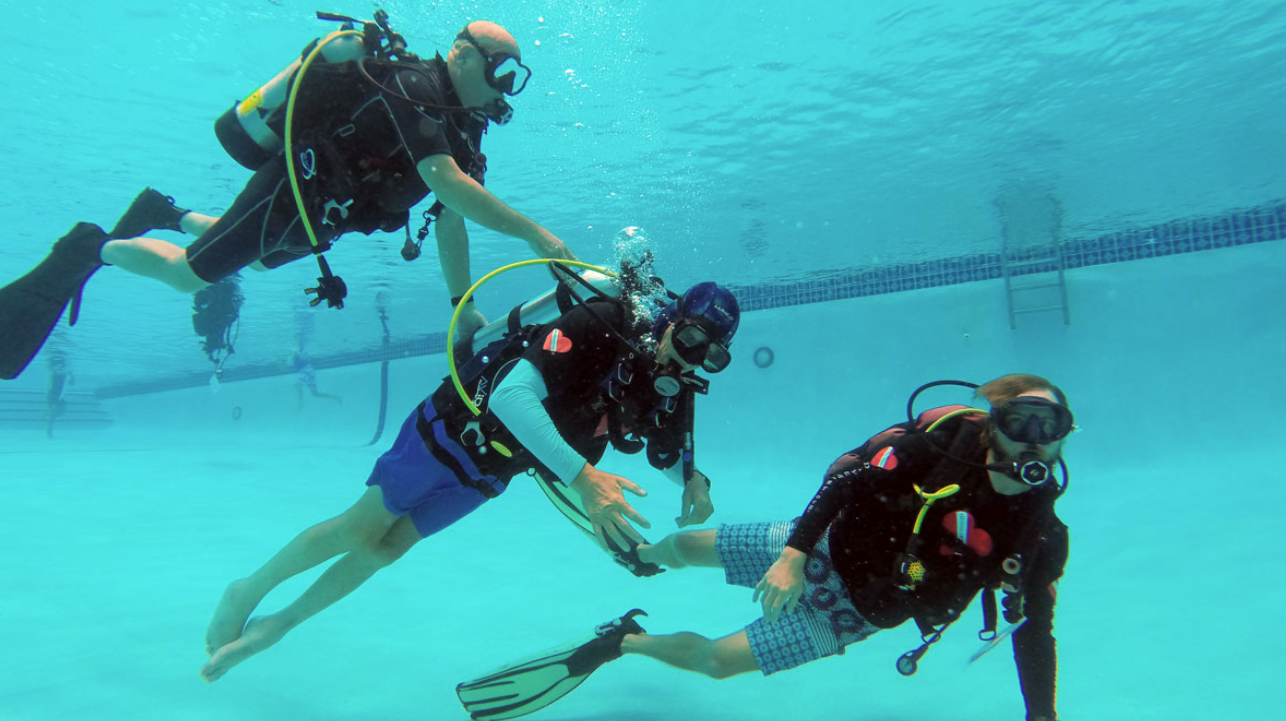
- Discover Scuba Experiences: They help coordinate and support free introductory “Try Scuba” events, giving individuals a safe, zero-pressure environment to test the waters in a local pool before committing to open-water training.
- Training Scholarships: Adaptive diving requires specialized education for both the diver and their support team. Scuba 4 Good funds scholarships for adaptive divers, specialized instructors, and adaptive “dive buddies”.
- Subsidizing Dive Trips: Taking adaptive divers out onto open-ocean reefs involves specialized boat crews and extra logistics. Scuba 4 Good helps absorb these costs so that financial barriers don’t keep people from experiencing Florida’s beautiful living reefs.
- Equipment Provision: They supply specialized, adaptive dive gear tailored to unique physical needs, ensuring safety and comfort under the waves.
They work side-by-side with a dedicated network of South Florida partners, including Grateful Divers Worldwide, Aquanauts, Dive 4 Vets, and local hubs like Gold Coast Scuba and Jupiter Dive Center. Together, they form an unbreakable local support system built on safety, dignity, and absolute inclusion.
A Force for Good: Shifting Perspectives
These organizations are powerful forces for good because they completely flip the script on disability. Instead of focusing on what a person cannot do, adaptive diving focuses entirely on what they can achieve with the right team and techniques.
Furthermore, this movement actively heals families and support networks. By incorporating loved ones into the training as certified adaptive dive buddies, organizations like Grateful Divers Worldwide ensure that a disability doesn’t isolate an individual—instead, adventure becomes a deeply bonding, shared family experience.
How to Get Involved and Support
The beauty of the adaptive diving movement is that you don’t even have to be a certified diver to help change a life. Here is how you can jump in and support the mission:
1. Become an Adaptive Support Diver
If you are already a certified rescue diver or above, you can elevate your training by taking an Adaptive Support Diver Specialty course. You’ll learn the physics, psychology, and specific handling techniques required to act as a mindful, capable dive buddy for individuals with unique physical or cognitive needs.
2. Volunteer for Surface Support
Not a diver? Non-profits always need passionate hands on land. You can assist with event logistics, manage equipment pool-side during Discover Scuba days, help with social media outreach, or organize community fundraisers.
3. Join Local Events & Fundraisers
If you live in or visit South Florida, you can experience this community firsthand. The annual Scuba4Good Music Festival is a prime example—held right on the beachfront at El Prado Park in Lauderdale-by-the-Sea. It stands as the single largest adaptive diving fundraiser in the region, bringing together live music, local food trucks, and massive charity raffles where 100% of the proceeds fund local adaptive dive scholarships and trip subsidies.
4. Sponsor or Donate
Direct donations keep these programs entirely free for veterans and children with disabilities. Sponsoring a diver’s certification costs or contributing toward specialized adaptive gear ensures the ocean remains open to everyone, regardless of their circumstances on land.
The ocean is a space where barriers disappear and everyone is equal under the waves. By supporting adaptive diving, you aren’t just helping someone try a new hobby—you are giving them back their freedom.