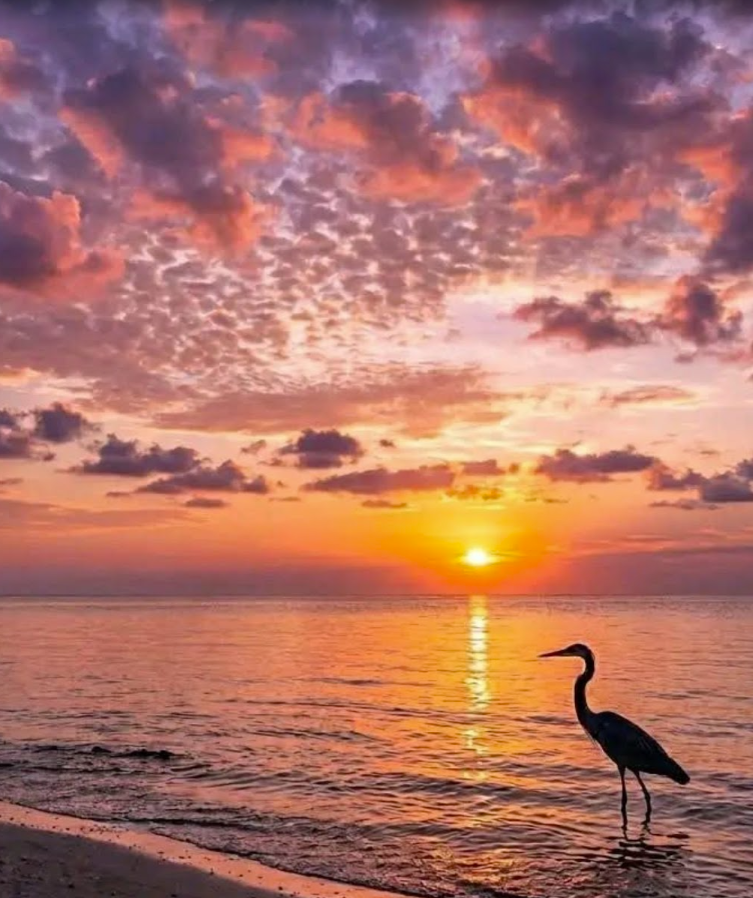
Spend enough time on the water in Southwest Florida — fishing the flats of Charlotte Harbor before sunrise, kayaking through a Rookery Bay mangrove tunnel, watching a roseate spoonbill work a tidal marsh at Ding Darling — and you develop an instinctive relationship with the health of this ecosystem. You notice when the water runs green instead of clear. You mark the years when red tide keeps you off the beach for weeks. You remember what it felt like to find dead fish lining the shore and wonder whether the next generation of anglers will find what you found here.
The waterways, estuaries, and wild lands of Southwest Florida are not in steady decline. They are in a battle — one fought daily by scientists, nonprofit advocates, government agencies, grassroots volunteers, and coastal residents who have decided that this region’s extraordinary natural wealth is worth defending.
This article tells the story of that battle: who is fighting it, where the victories have been won, where the most urgent threats remain, and how the conservation organizations working in Southwest Florida are doing work that matters far beyond the boundaries of this coastline.
The Ecosystems at Stake
To understand the conservation story of Southwest Florida, you first have to understand what this region is biologically. Southwest Florida encompasses three of the most ecologically significant estuarine systems in the entire Gulf of Mexico: Tampa Bay, Charlotte Harbor, and the Ten Thousand Islands/Everglades complex. Together with the Sarasota Bay system that connects them to the north, these waters form the fourth-largest estuary complex in the entire Gulf. They are nursery grounds for fisheries that sustain both a multi-billion-dollar recreational economy and the livelihoods of commercial fishermen across the eastern Gulf.
Seagrass meadows — the underwater prairies that are the foundation of these ecosystems — stabilize sediments, cycle nutrients, support fisheries from snook and tarpon to manatees and sea turtles, and serve as the most sensitive and reliable indicator of overall estuarine health. Mangrove forests protect shorelines from storm surge, filter nutrients from runoff, and provide the critical habitat structure that makes Southwest Florida’s coastal fisheries possible. The freshwater wetlands upstream — the Big Cypress, the Caloosahatchee watershed, the Myakka River system — regulate the flows that maintain the salt balance those coastal ecosystems depend on.
All of these systems are under pressure. All of them have passionate, capable organizations fighting to protect and restore them.
Tampa Bay: A Story of Recovery — and a Warning
The Comeback
Tampa Bay is one of the most cited conservation success stories in North American environmental history, and the praise is largely deserved. In the 1970s, Tampa Bay was an ecological disaster. Decades of unchecked point-source pollution from sewage treatment plants, industrial discharges, and agricultural runoff had reduced the bay’s seagrass coverage from an estimated 40,000 acres in the 1950s to fewer than 18,000 acres by 1982. The water was turbid, oxygen-depleted, and biologically impoverished.
Beginning in the late 1980s and accelerating after Tampa Bay’s designation as an “estuary of national significance” by the EPA in 1990, a coalition of government agencies and community organizations launched what would become one of the most comprehensive estuarine restoration programs in the United States. Community efforts to reduce pollution in Tampa Bay meant that by 2014, seagrass amounts were restored to their original 1950s levels — a recovery that took nearly 30 years and is now studied by restoration ecologists worldwide.
The Tampa Bay Estuary Program’s (TBEP) “hold the line” commitment to limiting nutrient loadings entering the bay to what was being discharged in the early 1990s — even as the region’s population continued to grow — drove the recovery. Initially, those loadings came primarily from point sources, where they could be traced. Working with partners across the watershed, those regulated point source loadings have been significantly reduced and continue to meet targets.
The Organizations Behind It
The primary agencies involved in habitat restoration in the Tampa Bay region include the Southwest Florida Water Management District’s Surface Water Improvement and Management Program (SWIM); the Florida Department of Environmental Protection (FDEP); Hillsborough, Manatee, and Pinellas Counties; the cities of Tampa, St. Petersburg, and Clearwater; the Tampa Bay Estuary Program; Audubon of Florida; and Keep Tampa Bay Beautiful and Tampa Bay Watch, community stewardship organizations.
Each year, TBEP works to secure funds from federal, state, and local governments; private sector donations; philanthropic gifts; environmental fines; and revenue from the “Tarpon Tag” specialty license plate to support partner-directed research and restoration projects through community grant programs like Bay Mini-Grants and the Tampa Bay Environmental Restoration Fund.
The Tampa Bay Environmental Restoration Fund, a strategic partnership between TBEP and Restore America’s Estuaries, funds cost-effective projects that protect, restore, or enhance the natural resources of Tampa Bay and its contributing watershed, including on-the-ground habitat restoration, water quality improvement, applied research and monitoring, and community-based social marketing campaigns.
The Unresolved Problem: Old Tampa Bay
The success story has a troubling asterisk. More than 30% of Tampa Bay’s seagrasses have been lost since 2016, with acreage in Old Tampa Bay at the lowest level ever recorded. Throughout the bay, seagrasses declined by 11,599 acres from the high of 41,655 posted in 2016.
The culprit is not the return of conventional point-source pollution — those discharges remain controlled. Setbacks in recovery have been observed in the northern region called Old Tampa Bay primarily due to recurring blooms of Pyrodinium bahamense, a toxic dinoflagellate. These large blooms limit the light that reaches seagrass during growing months, causing large declines.
Current research is investigating whether altering the construction of a causeway that runs through Old Tampa Bay may improve tidal circulation, potentially reducing the conditions that sustain these harmful blooms. This work represents the next frontier of Tampa Bay restoration — moving from reducing known point-source inputs to understanding and managing more complex ecological dynamics.
The Tampa Bay story is simultaneously the region’s greatest conservation triumph and its most urgent ongoing challenge. It demonstrates both that recovery is possible and that the work is never finished.
Charlotte Harbor: The Estuary of National Significance
Stretching roughly 270 square miles between the Peace and Myakka rivers, Charlotte Harbor is one of the least-developed and most ecologically intact large estuaries on the Gulf of Mexico. Designated an “Estuary of National Significance” in 1995, Charlotte Harbor includes Charlotte, Lee, and a portion of Sarasota County within its 4,400-square-mile watershed. Three main challenges exist in the watershed: alteration and loss of coastal uplands and wetlands due to development; spread of non-native animal and plant species; and degraded water quality from point and non-point source pollutant and nutrient loading.
The harbor’s relative ecological health compared to more urbanized estuaries is not accidental — it reflects decades of policy, management, and advocacy work by organizations that recognized what was at stake before it was lost.
The Charlotte Harbor National Estuary Program
The Charlotte Harbor National Estuary Program (CHNEP) is the coordinating body for conservation and management across the harbor’s entire seven-county watershed, running from Venice in the north to Bonita Springs in the south. CHNEP is a partnership working to protect the natural environment in Florida, focusing on the seven-county watershed from Venice to Bonita Springs to Winter Haven, giving citizens, elected officials, resource managers, and commercial interests a structure to work together.
The Charlotte Harbor National Estuary Program has incorporated artificial reefs in its Comprehensive Conservation and Management Plan and Habitat Master Plan, and the Coastal and Heartland National Estuary Partnership has developed online resources, including the CHNEP Water Atlas and CCMP Connection, which provide ways for stakeholders and the public to engage with data.
The economics of conservation in Charlotte Harbor are straightforward and compelling. In Charlotte Harbor, recreational fishing contributes over $400 million to the local economy each year. The northern half of the estuary includes important nursery habitat for snook and tarpon — both of which are economically important sportfish in the region.
Research supported by NOAA’s RESTORE Science Program is directly focused on those fish populations. A collaborative project team including the Florida Fish and Wildlife Conservation Commission, the Bonefish & Tarpon Trust, Charlotte County, and the Coastal & Heartland National Estuary Partnership is characterizing juvenile Common Snook and Tarpon habitat to guide conservation and restoration of coastal wetlands in Charlotte Harbor.
Lemon Bay Conservancy: Protecting Charlotte Harbor’s Northern Edge
At the boundary where Charlotte Harbor meets the coastline of Englewood, one of Southwest Florida’s most effective grassroots conservation organizations has spent decades protecting land, monitoring water, and educating residents about the ecosystems that define this community.
Lemon Bay Conservancy (LBC) is a nonprofit organization that operates almost entirely on volunteer labor, member donations, and grants. LBC plays a crucial role in safeguarding the delicate ecosystems of Lemon Bay, Charlotte Harbor, and the surrounding watersheds through land conservation, habitat restoration, water quality monitoring, and wildlife protection programs.
The breadth of their work on the ground is impressive. LBC owns and manages several pieces of land for conservation, with Wildflower Preserve at the heart of it all. They also secure conservation easements on private properties to safeguard more local ecosystems. Through their “LemonWatch” program, they monitor local water conditions, spearhead projects to clean up the bay, and keep an eye out for anything that threatens the water or the habitats it supports. LBC also builds habitats for pollinators like butterflies and bees and manages special programs to protect vulnerable animals, including the burrowing owl.
The Lemon Creek Wildflower Preserve — an 80-acre former golf course purchased by LBC in 2010 — is the organization’s most tangible achievement: a piece of land converted from a landscaped recreation amenity back to native habitat, now serving as a wildlife refuge and outdoor education center for the Englewood community.
Over the years, LBC has been involved in saving hundreds of acres of land from development. Partnering with the Florida Fish & Wildlife Conservation Commission and the Bonefish and Tarpon Trust, they are expanding scientific knowledge with the first-ever study of juvenile tarpon in Lemon Creek at Wildflower Preserve.
That tarpon study is significant beyond its local scope. Understanding the early life history of tarpon — specifically where juveniles spend their critical first years — is essential for the fisheries management decisions that determine whether tarpon populations remain healthy. LBC’s Wildflower Preserve may turn out to be one of the few accessible research windows into a process that happens largely in remote, inaccessible coastal habitats.
Mote Marine Laboratory: The Science Foundation
No organization has contributed more to the scientific foundation of marine conservation in Southwest Florida than Mote Marine Laboratory, and no conservation story about this region is complete without understanding what Mote does and why it matters.
Founded in 1955 by Eugenie Clark in Placida, Florida — known as the Cape Haze Marine Laboratory until 1967 — Mote aims to advance marine science and education, supporting conservation and sustainable use of marine resources. Since 1978, the laboratory has expanded to include a 10.5-acre campus in Sarasota, the Elizabeth Moore International Center for Coral Reef Research and Restoration on Summerland Key, a Boca Grande outreach office, and the Mote Aquaculture Research Park in eastern Sarasota County.
Mote is not a policy advocacy organization or a land trust. It is a research institution, and its contribution to conservation is the production of rigorous scientific knowledge that underpins the management decisions made by governments, agencies, and advocacy groups across the region. When TBEP needs data on nutrient dynamics, when FWC needs population estimates for threatened species, when community groups need peer-reviewed evidence for policy positions, Mote’s research is frequently the source.
Sea Turtle Research and Conservation
Mote has been studying nesting sea turtles on Longboat Key through Venice, Florida, since 1982. Findings support conservation of these threatened and endangered reptiles. In a recent season, the 4th highest loggerhead nesting season recorded in Mote’s 43 years of turtle conservation and research was documented by Mote scientists and volunteers on beaches from Longboat Key through Venice, Florida.
The Sea Turtle Conservation and Research Program monitors and protects nesting sites along approximately 35 miles of Sarasota County beaches annually, collecting data that feeds directly into federal and state conservation management decisions for loggerhead, green, and leatherhead sea turtles. Sea turtle nesting season runs from April 15 to October 31 in Southwest Florida, and during those months, Mote’s trained volunteers walk assigned beach sections nightly, marking nests, recording data, and protecting eggs from disorientation by artificial lighting and disturbance by vehicles and beachgoers.
Seagrass Restoration: The SERRC Initiative
In August 2025, Mote opened three new research facilities that mark a significant escalation in the region’s seagrass restoration capacity. At its Aquaculture Research Park in Sarasota, Mote hosted a ribbon-cutting to celebrate the opening of its three new state-of-the-art research facilities designed to advance the restoration, resilience, and long-term sustainability of Florida’s seagrass ecosystems. The new facilities — the Ron and Marla Wolf Seagrass Restoration Center for Ocean Sustainability Greenhouse Facility, the Biogeochemical Carbon Sequestration Lab, and the Publix Seagrass Genetics Research Hub — fall under the umbrella of Mote’s Seagrass Ecosystem Restoration Research Compound (SERRC).
In 2023, the state of Florida established the Seagrass Restoration Technology Development Initiative, allowing a cohort of public and private research entities to develop methodology and technology to address the loss of seagrass and the ecological and economic impacts of that loss to communities. Mote’s SERRC positions the institution to be at the leading edge of that initiative, developing scalable methodologies for seagrass restoration that could be deployed across the region’s estuaries.
Red Tide Research: Fighting the Region’s Most Visible Threat
No environmental issue generates more alarm, economic damage, and community frustration in Southwest Florida than red tide — the harmful algal blooms caused primarily by the dinoflagellate Karenia brevis. Mote has made combating red tide a central research mission.
Cynthia Heil leads the Red Tide Institute at Mote, where researchers have tested more than a hundred compounds designed to reduce the intensity of red tide blooms. At Mote Marine Laboratory, researchers are testing treatments that have shown promise in reducing algae levels without harming marine life.
A new study by Mote Marine Laboratory has revealed a potential link between red tide algal blooms and long-term acidification of Florida’s estuaries — a finding with implications that extend well beyond red tide itself, connecting the algal bloom problem to the broader trajectory of ocean chemistry under climate change.
Manatee and Shark Conservation
Mote scientists have documented Florida manatee populations for decades using photo-ID techniques and airplane-based surveys, and findings help reveal population trends and support conservation. Mote is also leading international shark conservation efforts by expanding the world’s largest reef shark survey, Global FinPrint.
The manatee work is particularly important given the ongoing population crisis for Florida manatees, which have suffered unprecedented mortality events in recent years due to seagrass loss in the Indian River Lagoon and continued boat strike incidents. Mote’s long-term population data provides the baseline against which conservation interventions are measured.
Sanibel-Captiva Conservation Foundation: Science at the Island’s Heart
Established in 1967 on Sanibel Island to protect the island’s interior freshwater system, the Sanibel-Captiva Conservation Foundation (SCCF) has evolved into one of the most scientifically credible and politically effective conservation organizations in Southwest Florida.
SCCF is the largest private landowner on Sanibel, protecting around 1,800 acres on the island, plus more than 300 additional acres in the region including on other islands.
The organization’s marine lab, led by Eric Milbrandt, operates RECON — a network of real-time environmental monitoring sensors deployed throughout the Caloosahatchee Estuary that provides continuous data on water temperature, salinity, turbidity, chlorophyll, and other parameters. This data stream is publicly accessible and is used by water managers, researchers, and policy advocates to track conditions and respond to emerging threats.
SCCF’s work on the connection between Lake Okeechobee releases and red tide severity represents some of the most consequential environmental research in recent Florida history. Research by SCCF researcher Mark Thompson and others, including a peer-reviewed paper correlating extended red tide blooms with excess nitrogen in Southwest Florida waters, connected large Army Corps of Engineers releases from Lake Okeechobee into the Caloosahatchee River — water polluted with nutrients from decades of excessive fertilizer use around the lake — with red tide intensification along the coast.
A study co-authored by SCCF’s Eric Milbrandt, published in Science of the Total Environment, found that nitrogen-enriched discharges from the highly managed Caloosahatchee watershed intensify red tide blooms in Southwest Florida. “It’s not saying that we start the red tides, but that we can make them worse,” Milbrandt noted, “and this happens consistently over time.”
This research transformed a community grievance — the widely held suspicion that agricultural pollution was making red tides worse — into peer-reviewed evidence with policy implications for how the Army Corps manages Lake Okeechobee releases. The science produced by SCCF has been cited in legislative testimony, EPA proceedings, and federal water management reviews.
Calusa Waterkeeper: The Watchdog
While Mote and SCCF operate primarily as research and conservation institutions, Calusa Waterkeeper fills a different and equally critical role: citizen enforcement and public accountability.
Calusa Waterkeeper is Southwest Florida’s chapter of the international Waterkeeper Alliance — an organization founded on the principle that people have the right to swimmable, drinkable, fishable water, and that someone needs to be constantly watching to ensure that right is protected.
Calusa Waterkeeper joined the Center for Biological Diversity, the Waterkeeper Alliance, the Sanibel-Captiva Conservation Foundation, and the Conservancy of Southwest Florida in submitting comments to the U.S. Environmental Protection Agency with the intent to develop a policy on the determination of a Harmful Algal Bloom and hypoxia as an Event of National Significance in freshwater systems.
Calusa Waterkeeper monitors for fecal bacteria contamination in the Caloosahatchee and its tributaries, tracks harmful algal bloom development and movement, files regulatory complaints against dischargers violating Clean Water Act permits, and maintains a public-facing communications operation that keeps the region’s residents informed about water quality conditions in near real time.
Their aerial monitoring partnership with photographer Ralph Arwood has produced some of the most widely circulated documentation of red tide extent along the Lee and Charlotte County coast, providing visual evidence that drives both public awareness and regulatory attention.
The organization represents the essential enforcement arm of the conservation ecosystem — the watchdog that ensures promises made by regulatory agencies and polluters alike are actually kept.
The Conservancy of Southwest Florida: Policy and Wildlife
The Conservancy of Southwest Florida, located on 21 acres in Naples, dates back to 1964 when a small group of concerned citizens succeeded in stopping the construction of a roadway through Rookery Bay. Since then, the Conservancy has focused on protecting the water, land, and wildlife of Southwest Florida through environmental policy, science, education, and wildlife rehabilitation.
The Conservancy’s von Arx Wildlife Hospital — a full-service wildlife rehabilitation facility — treats hundreds of injured and orphaned animals each year, including sea turtles, manatees, shorebirds, raptors, and coastal wading birds. The hospital is both a conservation service and a public education tool: visitors who observe rehabilitation work develop a direct emotional connection to the wildlife their policy and consumer choices affect.
The Conservancy focuses its efforts in five Southwest Florida counties — Collier, Charlotte, Lee, Hendry, and Glades — and operates extensive environmental policy advocacy, science programs, and the interactive Dalton Discovery Center, all housed in buildings constructed to LEED standards with geothermal cooling systems.
Reef Innovations and the Artificial Reef Ecosystem
Southwest Florida’s conservation story extends beneath the surface — literally — through the artificial reef programs that have become a critical component of marine habitat management throughout the region.
Reef Innovations, a company based in Florida, has been at the forefront of designing and manufacturing artificial reef structures deployed throughout Southwest Florida’s offshore and nearshore waters. Their concrete reef systems are engineered to maximize habitat complexity, providing shelter for juvenile fish, substrate for invertebrate colonization, and the vertical profile that attracts pelagic species including amberjack, grouper, and snook.
National Estuary Programs in Tampa Bay, Sarasota, and Charlotte Harbor have all incorporated artificial reefs in their Comprehensive Conservation and Management Plans. The Tampa Bay Estuary Program developed the Tampa Bay Nekton Index, studying the fish assemblage associated with seagrass and hard-bottom habitats within Tampa Bay, and has facilitated reef deployments in Manatee County. The Sarasota Bay Estuary Program focused on oyster and artificial reef restoration, and found that deep-cover reefs support juvenile gag grouper populations.
The economic justification for artificial reef investment in Southwest Florida is substantial. Artificial reefs contribute significantly to local economies, providing recreational opportunities for anglers and divers, and generating at least $3.1 billion of economic activity in Florida. In Southwest Florida specifically, Pinellas County alone maintains 43 artificial reefs along the Gulf coast from Tarpon Springs to St. Pete Beach, located from 200 yards to 38 miles offshore.
Southwest Florida has recognized some of the challenges to adding additional reefs, including finding appropriate staging areas and organizing annual reef clean-ups to remove debris that inevitably collects on these sites — old anchors, fishing line, nets — which is increasingly important to keep reefs free of marine debris that could threaten divers or sea life.
The Florida Fish and Wildlife Conservation Commission’s artificial reef program provides annual grants for construction and monitoring, with funding drawn from excise taxes on fishing equipment and motor fuel and from state fishing license fees — a direct user-pays-user-benefits structure that aligns economic incentives with conservation outcomes.
Sarasota Bay: A Rare Modern Victory
In a conservation landscape often defined by setback and struggle, Sarasota Bay has delivered genuinely good news in recent years.
The Sarasota Bay Estuary Program documented a 19% increase in seagrass coverage from 2022 to 2024 — an important indicator of the bay’s recovery. Despite the multiple impacts from 2024’s active hurricane season, seagrass increases documented in the previous two years were not only maintained but continued to improve.
David Tomasko, the Sarasota Bay Estuary Program’s executive director, noted: “A cleaner bay is a more resilient bay, and Sarasota Bay is moving in the right direction. With a continued focus on nutrient management, habitat restoration, and public education, there’s no reason why this positive trend can’t continue.”
The Sarasota Bay success is notable precisely because it comes in the context of Tampa Bay’s recent struggles. Two bays in the same region, facing similar pressures, producing different recent trajectories — a reminder that local management choices, community investment, and sustained attention to nutrient inputs can make a measurable difference even as regional climate pressures increase.
The Red Tide Crisis: The Challenge That Unites Them All
No issue more directly connects every conservation organization working in Southwest Florida than red tide, and no issue better illustrates both the complexity of the challenge and the power of collaborative science and advocacy.
Red tide blooms of Karenia brevis are a natural feature of Gulf of Mexico ecology — they have occurred in Florida waters for millennia. What conservation science has increasingly established is that human activity makes them worse: nitrogen-enriched discharges from agricultural and developed watersheds intensify red tide blooms, and this intensification happens consistently over time.
The primary nutrient driver identified by researchers is Lake Okeechobee discharges into the Caloosahatchee River — water carrying nutrient loads accumulated from decades of farming and development around the lake, which flows down the river and into the coastal waters where red tide blooms are sustained and intensified.
The organizations responding to this challenge are doing so on multiple fronts simultaneously. Mote is developing compounds to reduce bloom intensity. SCCF is monitoring the Caloosahatchee system in real time and publishing peer-reviewed science on the nutrient connection. Calusa Waterkeeper is documenting conditions, filing regulatory actions, and keeping the public informed. The Charlotte Harbor National Estuary Program is working to improve water quality management at the watershed scale. The Conservancy of Southwest Florida is engaged in policy advocacy at the state level for Everglades restoration and agricultural nutrient reduction.
None of these efforts alone is sufficient. Together, they represent a comprehensive scientific, legal, and policy response to a problem that threatens not only the ecology of Southwest Florida’s coast but the economic and cultural identity of a region that depends on clean, productive water.
Conservation Land Acquisition: Protecting What’s Left
Alongside the water quality and restoration battles, a quieter but equally important conservation effort continues in the terrestrial and wetland landscapes of Southwest Florida — the acquisition and permanent protection of lands before they are converted to development.
Conservation land acquisition programs are active across the Tampa Bay counties, with citizens and nonprofit groups working alongside county governments to identify and fund the purchase of natural Florida land threatened by development. In Pinellas County, Kay and Tex Carter spent five years raising money to protect a 14-acre slice of natural Florida land, and at the height of public concern over state park development plans, donations to their nonprofit nearly doubled, with more than 500 new donors pitching in from across the state.
The Lemon Bay Conservancy has secured conservation easements on dozens of private properties in the Charlotte Harbor watershed over its history, preventing development on parcels that would otherwise face no regulatory protection from conversion.
The Conservancy of Southwest Florida has been a primary advocate for the expansion of the Corkscrew Regional Ecosystem Watershed and other protected lands in Collier County — working to ensure that the watershed feeding Corkscrew Swamp Sanctuary remains intact as development pressure in eastern Collier County increases.
The Path Forward: What It Requires
The conservation organizations working in Southwest Florida share a candid understanding of what genuine progress requires. It is not simply more science, though the science matters. It is not simply more advocacy, though the advocacy is essential. Real progress requires changes at the scale of the systems that are causing harm — agricultural nutrient management in the Lake Okeechobee watershed, septic system conversion to modern wastewater treatment throughout the coastal counties, management of stormwater runoff from the region’s rapidly expanding urban footprint, and the completion of major Everglades restoration infrastructure including the C-43 reservoir that would store and clean Caloosahatchee discharges before they reach the estuary.
Those are large, expensive, politically complicated undertakings. They are also underway — imperfectly, incrementally, sometimes frustratingly slowly — because the organizations described in this article, and many others not named here, have spent decades making the case that the cost of action is far lower than the cost of inaction.
Tampa Bay’s recovery proves that recovery is possible. Decades of science-based management and collaboration restored seagrass that people once believed was gone forever. “It took nearly 30 years for our system to recover,” said TBEP senior scientist Marcus Beck. “It’s not something that can be done overnight, and even after recovery, the work continues.”
That patient, persistent, science-guided approach is the model. The waters of Southwest Florida are worth it.
How You Can Support This Work
Conservation in Southwest Florida is not a spectator activity. Every organization described in this article depends on community support — financial, volunteer, and civic — to continue work that ultimately benefits every resident, every angler, every paddler, every family that visits a Gulf beach.
Lemon Bay Conservancy — lemonbayconservancy.org | Volunteer at Wildflower Preserve, participate in LemonWatch water quality monitoring, support land acquisition campaigns.
Mote Marine Laboratory — mote.org | Become a member, volunteer for the sea turtle conservation program, support specific research funds including the Seagrass Restoration and Red Tide Institute.
Sanibel-Captiva Conservation Foundation — sccf.org | Visit the marine lab, support RECON monitoring, participate in native plant restoration and shorebird protection programs.
Calusa Waterkeeper — calusawaterkeeper.org | Report water quality violations, participate in water sampling programs, support independent monitoring operations.
Conservancy of Southwest Florida — conservancy.org | Volunteer at the von Arx Wildlife Hospital, attend environmental policy programs, become a member to support advocacy work.
Charlotte Harbor National Estuary Program — chnep.net | Participate in public engagement processes, use the CHNEP Water Atlas to understand watershed health data, attend public meetings where management decisions are made.
Tampa Bay Estuary Program — tbep.org | Get a Tarpon Tag specialty license plate, apply for or support Bay Mini-Grant projects, volunteer for restoration events.
The Gulf Coast that generations of Southwest Florida residents have fished, paddled, photographed, and loved does not maintain itself. It is maintained by the people who decide it is worth maintaining — and by organizations that show up every day to do that work.
This article was researched using current data from the Tampa Bay Estuary Program, NOAA RESTORE Science Program, Mote Marine Laboratory, the Sanibel-Captiva Conservation Foundation, Calusa Waterkeeper, the Charlotte Harbor National Estuary Program, the Lemon Bay Conservancy, the Conservancy of Southwest Florida, Sarasota Bay Estuary Program, Florida Sea Grant, and the Florida Fish and Wildlife Conservation Commission.
