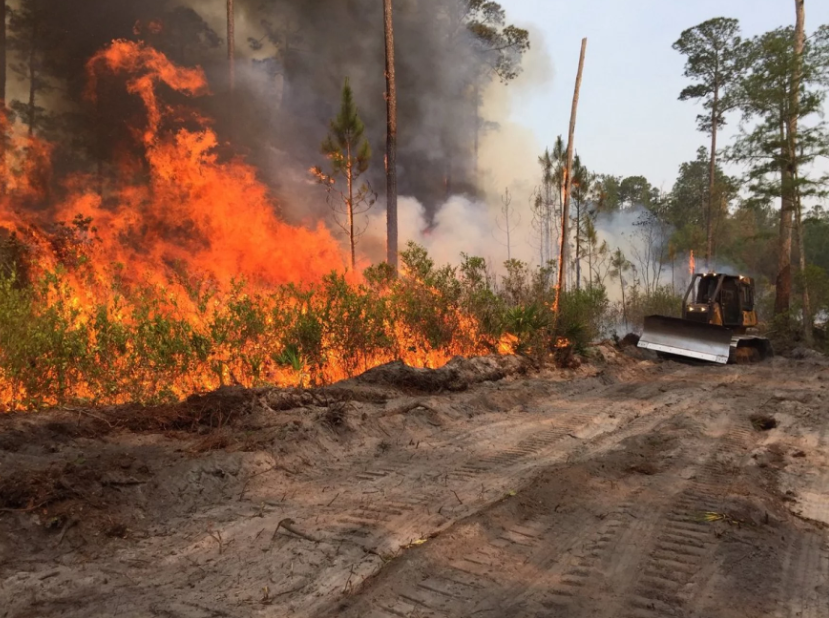
South Florida is currently facing its most severe wildfire crisis in over a decade. Fuelled by a historic drought and an aggressive start to the peak fire season, massive blazes are tearing through hundreds of thousands of acres of critical wetlands, pine flatwoods, and scrub, threatening residential communities and blanketting urban corridors with hazardous smoke. While fire is a natural component of Florida’s ecology, the current intensity and behavior of these fires, magnified by climatic shifts, are presenting unprecedented challenges.
Below is a detailed breakdown of the ongoing situation.
Current Wildfire Map (April 14, 2026)
This map shows the general location of the largest active wildfires in South Florida. Note: Fire perimeters are fluid and change hourly.
Ignition: The Critical Juncture
The current wildfire season in South Florida has been historically catastrophic, with early indicators suggesting this spring will set new records.
Natural Ignition vs. Human Cause
Florida’s ecosystems are intrinsically linked to fire; historically, lightning strikes in the pre-monsoon season ignited fires that would burn until the summer rains. However, as of April 2026, the Florida Forestry Service reports that the majority of significant fires—including the “Newman Drive Complex” in Collier County and the “Hilux Fire” in Big Cypress National Preserve—are under investigation for human causes, often related to debris burning or equipment sparks. The “Loxahatchee Slough Fire” along the Loxahatchee National Wildlife Refuge boundary in Palm Beach and Broward County is also suspected of being human-caused.
The Drought Catalyst
The singular driver of this crisis is the severity of the drought. The Florida Department of Agriculture describes the winter and spring of 2026 as the driest in over a decade. All of South Florida is experiencing D2 (Severe) to D3 (Extreme) drought conditions according to the U.S. Drought Monitor. Groundwater levels are critically low, and moisture content in “flashy fuels” (grasses, sawgrass) is effectively zero. Firefighters are witnessing ignition events from sources that would normally be non-threatening.
Rapid Spread: A System Out of Balance
How these fires are spreading differs significantly from historical norms, defying standard containment strategies.
“Fuel-Driven, Wind-Enhanced”
The 2026 wildfires are spreading rapidly across vast, contiguous landscapes. The key distinction this year is that standard natural barriers, like small cypress domes or hydrated marl prairies, are bone dry. Fires are burning through and around areas that usually halt or slow them.
The 1,500-acre Newman Drive Fire near Naples (Collier County), for example, exploded to that size in only 12 hours. It is currently moving swiftly towards residential communities to its southeast, driven by erratic westerly winds. The low humidity—which plummeted to near 25% this week—means ignition from flying embers is nearly guaranteed up to a mile ahead of the main fire front.
Sub-Surface Peat Fires: The Long Burn
Most critically in the Everglades ecosystem, the drought has allowed fire to consume not just the surface vegetation but the organic peat soil itself. Peat fires can smolder underground for weeks, migrating undetected. They produce tremendous amounts of dense, oily, acrid smoke, making visibility a major issue and conventional aerial suppression useless. Fire suppression in peat soils often requires laborious drenching or creating deep “wetlines,” which is difficult in remote swamp areas.
Ecological Impact: Adaptation vs. Overload
Fire is essential to the health of South Florida’s landscapes, but this season’s fires are testing the limits of ecosystem resilience.
The Benefits: Pinelands and Prairies
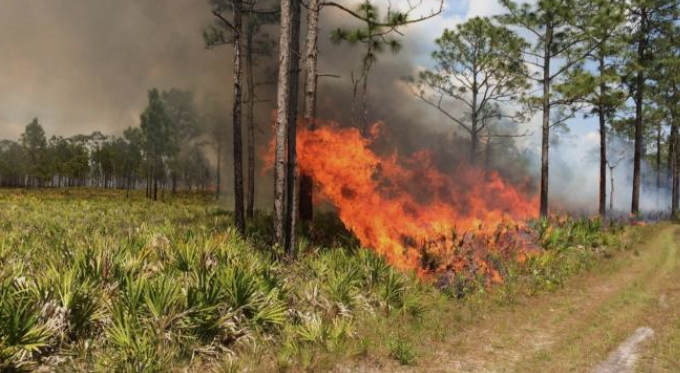
Ecosystems like pine flatwoods and wet prairies (the “River of Grass”) are fire-adapted. Regular, low-intensity fires (often conducted via prescribed burning) are vital.
- Benefits: They release nutrients back into the soil, regenerate fire-dependent plants (like longleaf pine), and clear out hardwood shrub encroachment (keeping the prairies open for water flow). They create a mosaic of habitat types necessary for species like the Gopher Tortoise and numerous bird species.
The Risks: The Damage to Peat and Tree Islands
The 2026 fires, however, are not low-intensity. When fires are too hot and frequent:
- Tree Islands (Hammocks): These biodiversity hotspots, higher in elevation and often containing rare subtropical hardwoods, cannot tolerate severe fire. An extreme blaze can consume a hammock completely, sterilizing its seed bank and leaving a barren limestone scar that may take centuries to recover.
- Peat Soil Degradation: The burning of peat is the most significant loss. Peat is carbon stored over millennia. Its destruction releases massive amounts of CO2 (magnifying climate change feedbacks) and physically lowers the land elevation, altering hydrology and water storage capacity forever.
- Mangrove Encroachment: In coastal prairies, extreme fires can kill freshwater vegetation, allowing saltwater-tolerant mangroves to migrate inland, permanently altering the delicate salinity balance.
Affecting Local Communities: Smoke and Evacuations
The fires have moved beyond remote wilderness, imposing severe disruptions on South Florida’s urban fringe.
Specific Communities Involved (By County)
- Collier County: This is the nexus of the crisis. Residents in the vicinity of Newman Drive, near Beck Boulevard, and areas east of Collier Boulevard (specifically the Forest Glen neighborhood including Loblolly Bay Drive) were under mandatory evacuation on April 13.
- Evacuation Shelters: An pet-friendly emergency shelter was opened at the Golden Gate Community Center (4701 Golden Gate Parkway, Naples).
- Broward County: While the fires themselves are currently contained within the Everglades boundaries, the primary impact is smoke. Communities such as Weston, Sunrise, and Coral Springs are experiencing periodic heavy smoke in the early mornings as the sea breeze pushes smoke from the Loxahatchee fires eastward.
- Palm Beach County: Small, spot fires have erupted in suburban areas, including a residential fire in Greenacres that displaced five people. Larger brush fires near the Loxahatchee Slough are impacting communities in Jupiter and Palm Beach Gardens with heavy smoke.
Infrastructure and Air Quality
- Transportation: The fires in Collier County near Naples are creating extreme visibility issues along I-75 (Alligator Alley). Troopers from the Florida Highway Patrol are closely monitoring the highway, ready to enact full closures if visibility drops to near-zero, which has already occurred on sections west of Mile Marker 40.
- Air Quality and Public Health: The massive smoke plume from the 2026 wildfires has degraded air quality across much of the southern portion of the state. Health advisories have been issued from Collier all the way to urban Miami-Dade County, urging sensitive populations (children, elderly, asthmatics) to avoid outdoor activities when smoke is visible.
